
First-Time Homebuyer Guide USA 2026 — Step-by-Step From Zero to Keys
Buying your first home in 2026 is still absolutely achievable — even with elevated mortgage rates, high home prices, and a complex financing landscape. What separates buyers who close successfully from those who stay renters forever is not luck or a massive salary: it's a clear, step-by-step strategy. This guide walks you through every stage of the homebuying process, from checking your credit score to picking up your keys, with the programs, tools and expert advice that make it happen in today's market.
Key Takeaways — First-Time Buyers USA 2026
- Minimum down payment: 3% conventional, 3.5% FHA, 0% VA/USDA
- Average home price USA 2026: $412,000 (median) — down slightly from 2024 peak
- Best credit score to start: 620 minimum, 700+ recommended for best rates
- Average time from decision to closing: 4–6 months for prepared buyers
- Down payment assistance available: Up to $25,000 in grants in most US states
- First-time buyer tax credit: Check HUD.gov — federal and state programs updated annually
- Biggest mistake: Skipping pre-approval and shopping homes before knowing your budget
Who Qualifies as a First-Time Homebuyer in 2026?
The definition is broader than most people think. According to HUD (US Department of Housing and Urban Development), a first-time homebuyer is anyone who has not owned a primary residence in the past 3 years. This means divorced individuals who gave up a home in a settlement, long-term renters, and even people who previously owned but sold years ago can all qualify for first-time buyer programs and benefits.
This matters because first-time buyers have access to a wide range of programs — including FHA loans, USDA zero-down loans, state grants, and down payment assistance — that are not available to repeat buyers. Taking full advantage of these programs can reduce your upfront costs by $5,000 to $25,000.
The 8 Steps to Buying Your First Home in the USA
Check & Build Your Credit Score
Your credit score is the single most impactful number in your homebuying journey. It determines whether you qualify, which loan programs you can access, and critically — your interest rate. A 40-point difference in credit score can translate to $80,000+ in additional interest over 30 years. Pull your free reports from AnnualCreditReport.com (all three bureaus: Equifax, Experian, TransUnion), dispute any errors, and start building 6–12 months before you plan to buy.
Calculate Your True Budget
Most first-time buyers only think about the monthly mortgage payment. The reality is your true housing cost includes property taxes (0.5–2.5% of home value annually), homeowner's insurance ($1,200–$2,500/year), HOA fees if applicable ($200–$600/month in many communities), and maintenance (budget 1–2% of home value per year). Apply the 28/36 rule: housing costs should not exceed 28% of gross monthly income, and total debt payments should not exceed 36%.
Save for Down Payment & Closing Costs
You need two separate pots of money: the down payment (3–20% of purchase price) AND closing costs (2–5% of loan amount), which are paid separately at closing. On a $350,000 home with 5% down, that's $17,500 down + up to $14,000 closing costs = $31,500 needed at closing, minimum. Down payment assistance programs (see below) can dramatically reduce this number.
Get Pre-Approved by 2–3 Lenders
Pre-approval is not optional — it's the foundation of a successful home search. Without it, you don't know your real budget, sellers won't take your offers seriously, and you have no rate to compare. Apply to at least 2–3 lenders simultaneously within a 45-day window (so it counts as one credit inquiry). Compare their Loan Estimates on APR, not just interest rate. Top lenders for first-time buyers: Rocket Mortgage, Guild Mortgage, and Better.com.
Find a Buyer's Agent
A buyer's agent is paid by the seller in most transactions — meaning their services cost you nothing. Yet they represent your interests exclusively, have access to MLS listings before they hit Zillow, and can negotiate price reductions, repair credits, and closing cost concessions that save you thousands. Since the 2024 NAR settlement, buyer agent compensation is now explicitly negotiated — ask about their commission upfront and confirm it's seller-paid in your market.
Make an Offer & Negotiate
In 2026, most US markets have shifted away from the extreme seller's market of 2021–2022. Buyers now have more negotiating power in most metros — expect to negotiate 1–3% off list price, seller-paid closing costs (up to 3% for conventional), and repair credits after inspection. Have your agent pull recent comparable sales (comps) within 0.5 miles and 90 days before making any offer. Never waive a home inspection contingency regardless of market pressure.
Home Inspection & Appraisal
A home inspection ($350–$600) is one of the best investments in the entire process. Inspectors check over 400 items — roof, foundation, electrical, HVAC, plumbing, insulation. Major issues discovered give you leverage to renegotiate or walk away without losing your earnest money (if you have an inspection contingency). The appraisal is required by your lender to confirm the home is worth what you're paying — if it comes in low, you can renegotiate the price or challenge the appraisal.
Close on Your Home
Closing day involves signing approximately 100 pages of documents (don't panic — your title company or attorney will guide you through each one), paying your closing costs, and receiving the keys. Do a final walkthrough 24 hours before closing to confirm the property's condition hasn't changed. Bring a cashier's check or wire transfer for closing costs — personal checks are typically not accepted. Closing takes 1–2 hours. Then you get the keys and officially become a homeowner.
Understanding Your Credit Score — The Gateway to Homeownership
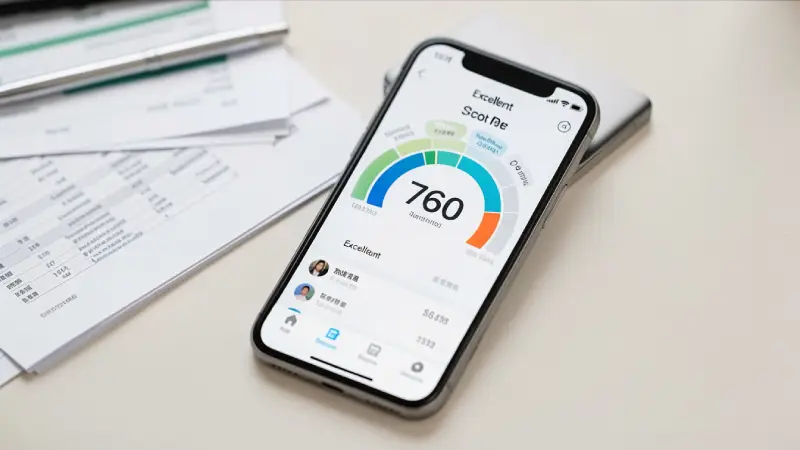
Your FICO score, ranging from 300 to 850, directly controls both your loan eligibility and the interest rate you'll pay. According to MyFICO, the rate difference between a 620 and 760 score on a $300,000 mortgage can exceed 1.5% — translating to over $103,000 in additional interest over 30 years.
| Credit Score | Loan Options | Estimated 30yr Rate | Monthly Payment* | Action Needed |
|---|---|---|---|---|
| 760–850 | All loan types, best terms | 6.41% | $1,875 | Apply now |
| 700–759 | Conventional, FHA, VA | 6.63% | $1,915 | Apply now |
| 680–699 | Conventional, FHA, VA | 6.80% | $1,948 | Apply, consider improving |
| 640–679 | FHA, VA, USDA | 7.20% | $2,030 | 6 months improvement recommended |
| 580–639 | FHA (3.5% down) | 7.80% | $2,147 | 12 months credit building |
| 500–579 | FHA only (10% down) | 8.40%+ | $2,270+ | Rebuild credit first |
| Below 500 | No conventional options | N/A | N/A | 12–24 months rebuilding |
*Based on $300,000 loan, 30-year fixed, 20% down. For illustration only.
How to Improve Your Credit Score Before Applying
- Pay down revolving balances to below 30% of each card's limit — this alone can raise your score 20–40 points within 30–60 days
- Dispute errors on all three credit reports — 1 in 5 Americans has an error that affects their score, according to the FTC
- Don't close old accounts — length of credit history accounts for 15% of your FICO score
- Don't open new accounts in the 6 months before applying — new inquiries temporarily lower your score
- Become an authorized user on a family member's old account with good payment history
- Set up autopay on all accounts — one missed payment can drop your score 50–110 points
How Much Down Payment Do You Actually Need?
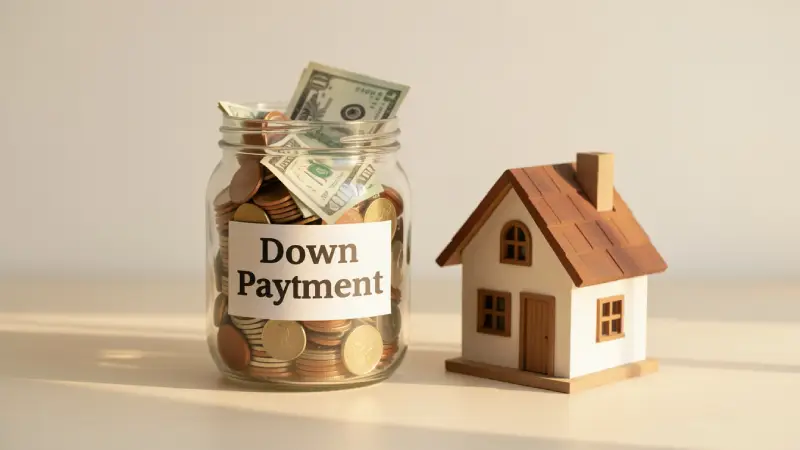
The 20% down payment myth stops more Americans from buying homes than any other misconception in personal finance. The reality: most first-time buyers put down far less, and programs exist to get you into a home with as little as 0–3.5% down. Here's the full breakdown:
| Loan Type | Min. Down Payment | Min. Credit Score | PMI Required? | Best For |
|---|---|---|---|---|
| Conventional (Fannie/Freddie) | 3% | 620 | Yes, until 20% equity | Good credit buyers |
| FHA Loan | 3.5% | 580 | Yes, for life of loan | Lower credit buyers |
| VA Loan Best Deal | 0% | 620 | No PMI ever | Veterans & military |
| USDA Loan | 0% | 640 | Annual fee (0.35%) | Rural/suburban areas |
| Fannie Mae HomeReady | 3% | 620 | Reduced PMI rate | Low-moderate income |
| Freddie Mac Home Possible | 3% | 660 | Reduced PMI rate | Very low income |
💡 The PMI Reality: If you put less than 20% down on a conventional loan, you'll pay Private Mortgage Insurance — typically 0.5–1.5% of the loan amount per year. On a $350,000 loan, that's $145–$438/month added to your payment until you reach 20% equity. FHA MIP runs slightly lower but lasts the full loan term unless you refinance.
Down Payment Assistance Programs — Up to $25,000 Free
According to Down Payment Resource, there are over 2,400 homebuyer assistance programs available across the US — most of which go completely unclaimed because buyers don't know they exist. Here are the most impactful:

FHA Loan Program Federal
The most popular first-time buyer program in the US. Backed by the Federal Housing Administration, FHA loans offer 3.5% down with a 580 credit score, flexible debt-to-income requirements, and competitive rates. Available nationwide through approved lenders including Rocket Mortgage, Guild Mortgage, and Chase.
Fannie Mae HomeReady Federal
Designed for low-to-moderate income buyers, HomeReady allows 3% down with reduced PMI rates and accepts non-traditional income sources including roommate rental income. Income must be at or below 80% of area median income. Check eligibility at FannieMae.com.
USDA Rural Development Loan Zero Down
Zero down payment for buyers in eligible rural and suburban areas — which covers approximately 97% of US land area including many suburbs of major cities. Use the USDA eligibility map to check your target area. Income limits apply (typically 115% of area median income).
State Housing Finance Agency (HFA) Programs Grants Available
Every state operates a Housing Finance Agency that offers first-time buyer programs — many providing outright grants (not loans) of $5,000–$25,000 for down payment assistance. California's CalHFA, Texas's TSAHC, Florida's Florida Housing — every state has one. Find yours at NCSHA.org. These programs have income limits and home price limits, but most middle-income buyers qualify.
Good Neighbor Next Door (HUD) 50% Discount
Teachers, firefighters, law enforcement officers and EMTs can buy HUD-owned homes at 50% off the list price in designated revitalization areas. The discount comes as a silent second mortgage that is forgiven after 3 years of living in the home. Check available properties at HUD.gov.
Understanding Closing Costs — What First-Time Buyers Always Forget
Closing costs are the fees paid to finalize your mortgage and transfer property ownership. They are separate from your down payment and typically range from 2–5% of the loan amount. On a $350,000 loan, budget $7,000–$17,500 for closing costs alone. Here's what's included:
| Closing Cost Item | Typical Cost | Negotiable? | Notes |
|---|---|---|---|
| Loan origination fee | 0.5–1% of loan | Yes | Some lenders (Better.com) charge none |
| Home appraisal | $350–$650 | No | Required by lender |
| Home inspection | $300–$600 | No | Separate from appraisal — buyer pays |
| Title search & insurance | $700–$1,500 | Partially | Protects against title defects |
| Attorney/closing fee | $500–$1,500 | Partially | Required in some states |
| Property taxes (prepaid) | 2–3 months | No | Deposited into escrow |
| Homeowner's insurance (prepaid) | $800–$2,000 | No | First year paid upfront |
| Recording fees | $100–$300 | No | County government fee |
| Transfer taxes | 0–2% of price | No | Varies by state — NY, MD high |
| Points (optional) | 1% per point | Yes | Buy down your rate |
💡 Seller-Paid Closing Costs: In 2026's more balanced market, you can often negotiate for the seller to pay 2–3% of closing costs. On a $350,000 purchase, that's up to $10,500 back in your pocket — enough to significantly reduce your cash needed at closing. Always ask; in competitive markets sellers will often agree rather than lose a qualified buyer.
Choosing the Right Mortgage: FHA vs Conventional vs VA vs USDA

The right loan type depends on your credit score, military status, location, and how long you plan to stay in the home. Here is a direct comparison:
| Loan Type | Best If... | Rate Advantage | Key Downside | Avoid If... |
|---|---|---|---|---|
| Conventional | Good credit (680+), 20% down | Best rate at 760+ score | PMI under 20% equity | Credit below 660 |
| FHA | Credit 580–679, limited savings | Lower rate for weak credit | MIP for life of loan | Strong credit — pays too much MIP |
| VA | Veterans, active military | Lowest rates, no PMI | Funding fee 1.25–3.3% | Non-military (ineligible) |
| USDA | Rural/suburban, moderate income | Low rate, no down payment | Location & income limits | Urban buyers, high earners |
When to Choose FHA Over Conventional
Choose FHA if your credit score is below 680 or your debt-to-income ratio is above 43%. FHA's more flexible underwriting standards make approval easier — but the mandatory mortgage insurance premium (MIP) added for the life of the loan makes it more expensive long-term than conventional for buyers who could qualify for both. If your credit is 680+ and you have 5%+ down, conventional is almost always cheaper over a 10+ year horizon. See the CFPB's loan comparison tool for side-by-side calculations.
The Real Cost of Homeownership Beyond the Mortgage
First-time buyers routinely underestimate the true monthly cost of owning a home. Your mortgage payment is just one piece. Here is what a realistic $350,000 home costs monthly in 2026:
| Cost Item | Monthly Estimate | Annual Total | Notes |
|---|---|---|---|
| Mortgage payment (P&I) | $1,964 | $23,568 | 30yr at 6.72%, 10% down |
| PMI (if <20% down) | $175 | $2,100 | Until 20% equity reached |
| Property taxes | $292 | $3,500 | National avg. 1% of value/year |
| Homeowner's insurance | $150 | $1,800 | Varies by state/location |
| HOA fees (if applicable) | $250 | $3,000 | Not all properties — check |
| Maintenance & repairs | $292 | $3,500 | Budget 1% of home value/year |
| Utilities (delta over renting) | $150 | $1,800 | Larger space = higher bills |
| Total True Monthly Cost | $3,273 | $39,268 | No HOA scenario |
⚠️ Maintenance Reality: The 1% annual maintenance rule is a minimum estimate. Older homes (20+ years), properties in harsh climates, or homes with aging roofs/HVAC systems should budget 1.5–2%. A new roof ($8,000–$15,000), HVAC replacement ($5,000–$10,000), or foundation repair ($3,000–$30,000) can be catastrophic without adequate reserves. Build a dedicated home repair fund separate from your emergency fund.
First-Time Buyer Mistakes That Cost $10,000–$50,000
Mistake 1 — Not Shopping Multiple Lenders
According to Freddie Mac research, borrowers who get only one quote leave an average of $1,500/year on the table compared to those who get five quotes. Over a 30-year loan, that's $45,000 wasted. Getting pre-approved by 3 lenders takes 2 hours and costs nothing — it's the highest-ROI activity in the entire homebuying process.
Mistake 2 — Making Large Purchases Before Closing
Between pre-approval and closing, do not buy a car, open a new credit card, make large deposits, or change jobs. Lenders run a final credit check days before closing. Any of these actions can change your debt-to-income ratio, lower your credit score, or trigger a full re-underwriting — potentially killing your loan just days from the finish line.
Mistake 3 — Buying at the Top of Your Pre-Approved Amount
Lenders pre-approve you for the maximum they're willing to lend — not the maximum you should borrow. If you're pre-approved for $450,000, that doesn't mean you can comfortably afford a $450,000 home. Use the 28% rule (housing costs ≤28% of gross income) to set your comfort zone, then look at homes 10–15% below your ceiling to leave room for bidding wars.
Mistake 4 — Skipping the Home Inspection
In competitive 2021–2022 markets, some buyers waived inspections to win bidding wars. In 2026's more balanced market, this is almost never necessary — and never smart. A $400 inspection that reveals a $15,000 foundation issue or $8,000 roof replacement pays for itself instantly. Never waive this protection.
Mistake 5 — Not Accounting for Closing Costs
Saving exactly enough for your down payment and showing up to closing short on funds is one of the most common — and most preventable — first-time buyer disasters. Always budget an additional 3–5% of the purchase price on top of your down payment for closing costs. Ask your lender for a Loan Estimate early in the process to know your exact closing cost projection.
How Long Does Buying a First Home Actually Take?
| Stage | Time Required | Key Actions |
|---|---|---|
| Credit building | 3–12 months | Pay down balances, dispute errors, set autopay |
| Saving for down payment | 6–36 months | Automate savings, research assistance programs |
| Pre-approval | 3–7 days | Apply to 2–3 lenders, compare Loan Estimates |
| Home search | 1–4 months | Work with buyer's agent, attend showings |
| Offer to acceptance | Days–weeks | Make competitive offer, negotiate terms |
| Under contract to close | 30–45 days | Inspection, appraisal, underwriting, final walkthrough |
| Total (prepared buyer) | 4–6 months | From pre-approval to keys |
Pre-Closing Checklist — Don't Miss a Single Step
First-Time Buyer Master Checklist
- Pull credit reports from all 3 bureaus (Equifax, Experian, TransUnion)
- Dispute any errors on your credit reports
- Calculate your true budget using the 28/36 rule
- Research down payment assistance programs in your state
- Save for both down payment AND closing costs (2–5% extra)
- Gather documents: 2 years W-2s, 2 months bank statements, pay stubs, tax returns
- Get pre-approved by at least 2–3 lenders simultaneously
- Compare Loan Estimates on APR (not just interest rate)
- Find a buyer's agent with first-time buyer experience
- Research neighborhoods: schools, crime, flood zones, future development
- Get a home inspection — never waive this contingency
- Review the appraisal when it comes in
- Lock your mortgage rate once under contract
- Do NOT make large purchases or open new credit before closing
- Do a final walkthrough 24 hours before closing
- Bring cashier's check or wire confirmation for closing costs
Best Resources for First-Time Homebuyers in 2026
Beyond working with a great lender and agent, these official and independent resources are invaluable for first-time buyers:
- HUD.gov — official first-time buyer information, HUD-approved housing counselors (free)
- CFPB Owning a Home — rate explorer, loan comparison tools, closing cost worksheet
- Fannie Mae HomeReady — eligibility checker and approved lenders for the HomeReady program
- USDA Eligibility Map — check if your target area qualifies for zero-down USDA loans
- NCSHA State Programs — directory of all state housing finance agency programs and grants
- Zillow Mortgage Calculator — estimate all-in monthly payments including taxes and insurance
- AnnualCreditReport.com — free credit reports from all three bureaus
- Nexuora — Best Mortgage Lenders 2026 — our full comparison of top US lenders with live rates
FAQ — First-Time Homebuyer Guide USA 2026
Related Guides on Nexuora

Ahmada Ndao is a financial research analyst and independent journalist
specializing in US consumer finance, legal rights, and insurance markets.
With over 5 years covering American financial products, he has helped
thousands of readers navigate complex insurance decisions, find the right
legal representation, and optimize their credit strategies. His research
methodology combines primary data analysis, direct outreach to industry
professionals, and continuous monitoring of federal regulatory changes.
Ahmada’s work has been cited by financial communities across the US and
reviewed by licensed attorneys and insurance professionals for accuracy.