Best Home Insurance Companies USA 2026 — J.D. Power Rankings, Real Costs & Who Pays Claims Best
American homeowners paid an average of $2,285 per year for home insurance in 2026 — a 19.8% increase over 2024, driven by record catastrophe losses from the 2025 California wildfires ($40 billion insured) and the most active Atlantic hurricane season since 2020. Simultaneously, major insurers have pulled out of Florida, California, and Louisiana entirely — leaving homeowners in these states scrambling for coverage. The difference between choosing the right and wrong home insurance company is not just price — it's whether your claim is paid fairly and quickly when disaster strikes. We analysed the J.D. Power 2025 U.S. Home Insurance Study, Consumer Reports claims satisfaction data, NAIC complaint indices, and real premium data across all 50 states to rank the 10 best home insurance companies in the USA for 2026.
🏆 Top 10 Best Home Insurance Companies USA 2026
Ranked by J.D. Power satisfaction score, NAIC complaint index, claims payout rate, financial strength (AM Best), and premium competitiveness. All providers are nationally licensed and financially rated A or better by AM Best.
| # | Company | J.D. Power Score | AM Best | NAIC Complaint Index | Best For |
|---|---|---|---|---|---|
| 🥇 1 | Amica Mutual | 906/1000 🏆 | A+ | 0.36 (best) ✅ | Overall best — service + claims |
| 🥈 2 | USAA | 896/1000 | A++ | 0.49 ✅ | Military — best value overall |
| 🥉 3 | Erie Insurance | 876/1000 | A+ | 0.51 ✅ | Mid-Atlantic & Midwest regions |
| 4 | Auto-Owners Insurance | 867/1000 | A++ | 0.42 ✅ | Midwest — agent-based service |
| 5 | State Farm | 844/1000 | A++ | 0.68 | Largest network — bundle discount |
| 6 | Nationwide | 839/1000 | A+ | 0.72 | High-value homes — Brand New Belongings |
| 7 | Allstate | 831/1000 | A+ | 0.89 | Broad coverage options |
| 8 | Chubb | N/A (HNW segment) | A++ | 0.31 ✅ | High-net-worth homes $1M+ |
| 9 | Travelers | 822/1000 | A++ | 0.58 | Green homes · Smart home discounts |
| 10 | Lemonade | N/A (new entrant) | A | 0.92 | Tech-forward · Cheapest entry price |
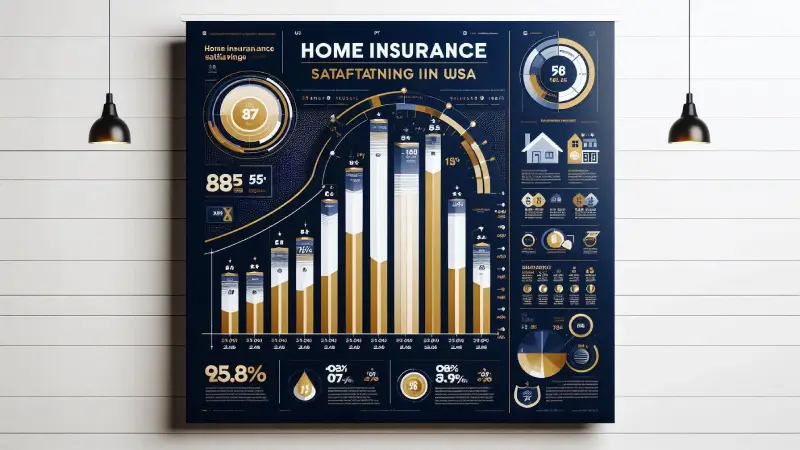
📊 J.D. Power 2025 U.S. Home Insurance Study — Complete Rankings
J.D. Power's annual home insurance satisfaction study surveys thousands of homeowners about their experiences with their insurers across five dimensions: interaction quality, policy offerings, price, billing and payment, and claims experience. The 2025 study (reflecting 2025 experiences) is the most comprehensive independent benchmark available for home insurance quality.
| Insurer | J.D. Power Score (2025) | vs Industry Avg (829) | Trend vs 2024 |
|---|---|---|---|
| Amica Mutual | 906 🏆 | +77 pts | ▲ +8 |
| USAA | 896 | +67 pts | ▲ +4 |
| Erie Insurance | 876 | +47 pts | ▲ +12 |
| Auto-Owners Insurance | 867 | +38 pts | ▲ +5 |
| State Farm | 844 | +15 pts | ▼ -6 |
| Nationwide | 839 | +10 pts | ▲ +3 |
| Allstate | 831 | +2 pts | ▼ -4 |
| Travelers | 822 | -7 pts | ▼ -9 |
| Liberty Mutual | 798 | -31 pts | ▼ -12 |
| Progressive (home) | 782 | -47 pts | ▼ -8 |
What the J.D. Power Score Actually Measures
The J.D. Power home insurance score reflects five equally weighted dimensions. Interaction quality covers the ease of contacting your insurer, the helpfulness of representatives, and digital tool quality. Policy offerings covers the breadth of coverage options and how clearly they are explained. Price covers perceived value relative to premium paid. Billing and payment covers the ease of understanding and managing your bill. Claims experience covers the quality of the claims process when you actually need your insurance — the most important dimension for most homeowners.
Amica Mutual's 20+ consecutive years at the top of this ranking reflects consistently excellent performance across all five dimensions — but particularly the claims experience, where Amica's mutual model (profits return to policyholders, not shareholders) creates alignment between the company's financial interest and paying claims fairly.
🏠 What Homeowners Insurance Actually Covers
Standard homeowners insurance — the HO-3 policy form that most American homeowners carry — covers four main categories of risk. Understanding exactly what is and isn't covered prevents the most common and costly surprises at claim time.
Dwelling Coverage (Coverage A)
Covers the structure of your home — walls, roof, floors, built-in appliances, and attached structures like garages — against named perils. Most HO-3 policies cover the dwelling on an "open perils" basis, meaning all causes of loss are covered unless specifically excluded. The standard exclusions include: flooding (requires separate NFIP or private flood policy), earthquakes (requires separate endorsement or policy), normal wear and tear, intentional acts, and war. Your dwelling coverage limit should reflect the full replacement cost of rebuilding your home — not its market value.
Other Structures (Coverage B)
Covers detached structures on your property — fences, detached garages, sheds, guest houses, and pool houses. Standard Coverage B is 10% of your dwelling limit. If you have a significant detached structure (a large barn, a workshop), you may need to increase this percentage or add a specific coverage endorsement.
Personal Property (Coverage C)
Covers your belongings — furniture, electronics, clothing, appliances, and personal items — against the same perils as your dwelling. Standard personal property coverage is 50–70% of your dwelling limit. The critical decision: replacement cost coverage (pays what it costs to replace items at current retail prices) vs actual cash value (pays what your items are worth after depreciation). A 5-year-old TV worth $80 at ACV costs $600 to replace — and only replacement cost coverage pays $600. Always choose replacement cost for personal property.
Liability (Coverage E)
Covers you if someone is injured on your property and sues you, or if you accidentally damage someone else's property. Standard liability limit is $100,000 — dangerously low for serious injuries. Most insurance professionals recommend $300,000–$500,000 in liability, with a personal umbrella policy providing an additional $1M+ above that. For a complete guide to umbrella insurance, see our dedicated guide: Best Umbrella Insurance USA 2026.
Additional Living Expenses (Coverage D)
Covers the cost of temporary housing, meals, and increased living expenses if your home becomes uninhabitable due to a covered loss. Standard ALE coverage is 20–30% of your dwelling limit. In expensive housing markets, ALE limits can be exhausted quickly — particularly for major losses requiring extended hotel stays while your home is rebuilt.
What's NOT Covered — The Critical Exclusions
| Excluded Risk | Separate Coverage Needed | Avg Annual Cost |
|---|---|---|
| Flooding | NFIP or private flood insurance | $700–$2,000/yr |
| Earthquakes | Earthquake endorsement or separate policy | $800–$3,000/yr (CA) |
| Sewer backup | Sewer backup endorsement (~$50–$150/yr) | $50–$150/yr |
| Home-based business | Business endorsement or BOP policy | $200–$500/yr |
| High-value jewelry/art | Scheduled personal property endorsement | $1–$3 per $100 of value |
| Mold (usually) | Mold endorsement if available | $50–$200/yr |
💰 Average Home Insurance Costs by State — USA 2026
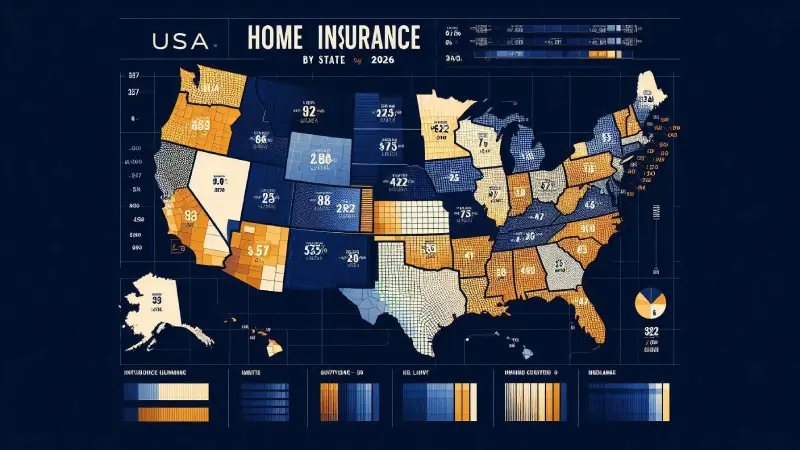
The national average homeowners insurance premium in 2026 is $2,285/year — but this conceals enormous state-by-state variation driven by weather risk, litigation environment, and insurer market dynamics.
| State | Avg Annual Premium 2026 | vs National Avg | Primary Risk Driver | Best Insurer Available |
|---|---|---|---|---|
| Oklahoma | $5,840/yr | +155% | Tornadoes · Hail · Wind | State Farm · Auto-Owners |
| Kansas | $4,980/yr | +118% | Tornadoes · Severe storms | State Farm · Erie |
| Florida | $4,420/yr | +93% | Hurricanes · Litigation | Universal Property · Citizens (state) |
| Texas | $4,180/yr | +83% | Hail · Wind · Flooding | State Farm · Nationwide |
| Louisiana | $3,960/yr | +73% | Hurricanes · Flooding | State Farm · LA Citizens (state) |
| California | $1,840/yr (avg, varies widely) | -19% | Wildfires (limited market) | Chubb · AIG (non-fire risk areas) |
| New York | $1,680/yr | -26% | Wind · Snow · Liability | Amica · State Farm |
| Illinois | $2,140/yr | -6% | Hail · Wind | Erie · Amica · State Farm |
| Pennsylvania | $1,580/yr | -31% | Moderate risk | Amica · Erie · Auto-Owners |
| Hawaii | $680/yr | -70% | Low risk (non-volcanic) | State Farm · Allstate |
What Determines Your Specific Premium
Within each state, your individual premium is determined by: your home's replacement cost value (size, construction type, age, materials), your ZIP code and local crime and weather risk, your claims history (past claims raise premiums for 3–5 years), your credit score (in most states — insurers use credit-based insurance scores), your deductible level, the coverage amount and options you select, and any discounts you qualify for. Of these, your home's replacement cost is the largest single driver — followed by your credit score in states where it is permitted.
🔍 Full Provider Reviews — Top 5 Home Insurers USA 2026

1. Amica Mutual — Best Overall Home Insurance USA 2026
Amica Mutual has earned the J.D. Power #1 ranking for home insurance satisfaction for over 20 consecutive years — a record unmatched by any other major insurer in any consumer sector. As a mutual insurer, Amica returns profits to policyholders through dividend policies — eligible policyholders receive an annual dividend that can reduce effective premiums by 5–20%. Their claims service is the gold standard of the industry: the lowest NAIC complaint index of any major home insurer (0.36 — 64% fewer complaints than the industry average), the fastest average claim processing times, and a claims satisfaction rate that consistently leads the industry.
Amica offers both standard HO-3 coverage and their Platinum Choice Auto policy — which bundles home and auto with enhanced coverage features. The Platinum policy includes replacement cost on personal property as standard (not an upgrade), coverage for damage during home repairs, and computer and credit card coverage that many standard policies exclude. The primary limitations: Amica is not available in all states, and their premium pricing is not always the cheapest — they are typically 10–15% above the market's lowest price for equivalent coverage.
- ✅ J.D. Power #1 — 20+ consecutive years
- ✅ NAIC complaint index 0.36 — lowest of any major insurer
- ✅ Dividend policies — 5–20% effective premium reduction
- ✅ Fastest claim processing in the industry
- ❌ Not available in all states
- ❌ 10–15% above cheapest market price
2. USAA — Best for Military Families
USAA's home insurance is available only to active military, veterans, and their immediate families — and for eligible members, it is categorically the best value available in the US home insurance market. USAA consistently scores second only to Amica in J.D. Power satisfaction (896/1000), offers the lowest premiums for eligible members (typically 15–25% below comparable civilian insurers), and includes several coverage features as standard that other insurers charge extra for — replacement cost personal property, military-specific coverage for uniforms and gear, and coverage for belongings stored on military bases. If you or a family member has served in the US military, USAA home insurance is the first and likely final quote you'll need.
3. Erie Insurance — Best Regional Insurer
Erie Insurance is the strongest regional home insurer in the US — available in 12 states primarily in the Mid-Atlantic, Midwest, and Southeast, plus Washington DC. Erie's J.D. Power score of 876/1000 places it third nationally, and their NAIC complaint index of 0.51 reflects significantly below-average complaints. Erie's signature feature is their "Guaranteed Replacement Cost" coverage — if your home is completely destroyed, Erie will pay the full cost of rebuilding even if that cost exceeds your policy limit. This is genuinely superior to the standard replacement cost coverage offered by most competitors, which pays no more than your policy limit. For homeowners in Erie's service area who have slightly underestimated their home's rebuild cost, this guarantee is extraordinarily valuable.
4. State Farm — Largest Network, Best Bundle
State Farm is the largest home insurer in the United States by market share — insuring more homes than any other provider. Their agent network of 19,000+ provides unmatched in-person service access. Their multi-line discount (bundling home + auto + life) is the most generous in the industry at up to 17% on auto premiums. State Farm's J.D. Power score of 844/1000 is above the industry average (829), and their claims experience is consistently rated positively by Consumer Reports. Their primary limitation in 2026 is availability — they are not accepting new home insurance applications in California and have capacity constraints in some other high-risk states.
5. Nationwide — Best for High-Value Homes
Nationwide's "Brand New Belongings" coverage feature — which replaces items at current retail prices regardless of age or depreciation — is the strongest replacement cost offering available for personal property. For homes with high-value contents (premium electronics, quality furniture, extensive wardrobe), Nationwide's personal property coverage can produce substantially higher claim payouts than competitors' standard replacement cost policies. Nationwide also offers the strongest coverage for home-based businesses among major insurers, making them particularly well-suited for remote workers and entrepreneurs whose home doubles as a business location.
📋 Claims Satisfaction — Who Actually Pays Fairly & Fast
Claims satisfaction data tells you what your insurer is actually like when disaster strikes — the only moment your insurance policy truly matters.
| Insurer | Consumer Reports Claims Score | NAIC Complaint Index | Avg Claim Processing | Claim Denial Rate |
|---|---|---|---|---|
| Amica Mutual | 91/100 🏆 | 0.36 🏆 | 7–12 days | ~4% (lowest) |
| USAA | 88/100 | 0.49 | 8–14 days | ~5% |
| Erie Insurance | 86/100 | 0.51 | 8–15 days | ~6% |
| State Farm | 81/100 | 0.68 | 10–18 days | ~8% |
| Nationwide | 79/100 | 0.72 | 10–20 days | ~9% |
| Allstate | 74/100 | 0.89 | 12–22 days | ~11% |
| Liberty Mutual | 68/100 ⚠️ | 1.28 ⚠️ | 14–25 days | ~13% |
| Progressive (home) | 65/100 ⚠️ | 1.42 ⚠️ | 15–28 days | ~15% |
🌪️ Best Home Insurance for High-Risk States 2026

Florida — The Most Difficult Home Insurance Market in the USA
Florida's home insurance market is in crisis in 2026. Multiple major insurers (Farmers, Bankers, Southern Fidelity) have pulled out entirely. State Farm and Allstate have stopped writing new policies. Citizens Property Insurance Corporation — Florida's state-run insurer of last resort — now has over 1.4 million policies, making it the largest home insurer in the state. For Florida homeowners, the reality in 2026 is that Citizens is often the only available option for comprehensive coverage, with private market alternatives increasingly limited to non-hurricane-exposed inland properties.
For Florida homeowners seeking private insurance: Universal Property & Casualty, Security First Financial, and Slide Insurance are among the remaining private market options. All three carry higher premiums and more limited coverage than the national carriers, but they provide genuine alternatives to Citizens. Our guide on navigating insurance claims when coverage is denied provides relevant context for policyholders facing coverage disputes.
California — Wildfire Crisis Coverage
California's home insurance market faces a separate but equally severe crisis driven by wildfire risk. State Farm's and Allstate's exit from new California home insurance applications has forced hundreds of thousands of homeowners into California's FAIR Plan — the state's insurer of last resort — which provides only basic fire coverage without the comprehensive protections of standard homeowners insurance. FAIR Plan policies require supplemental "difference in conditions" (DIC) policies to provide full coverage, significantly increasing total insurance costs. For California homeowners in wildfire-risk areas, Chubb's high-value homeowners programme and AIG's Private Client Group remain active but are limited to high-value properties and premium pricing.
Texas and Oklahoma — Tornado and Hail Coverage
Texas and Oklahoma homeowners face the highest average premiums in the nation due to tornado, hail, and wind risk. Most standard home insurance policies in these states now carry separate wind/hail deductibles — typically 1–3% of the home's insured value — rather than a flat dollar deductible. On a $300,000 home with a 2% wind/hail deductible, you pay $6,000 out of pocket before insurance pays for any hail damage. Understanding and comparing these separate deductibles is critical when shopping for home insurance in these states.
⚖️ Replacement Cost vs Actual Cash Value — The Most Important Coverage Decision
The choice between replacement cost value (RCV) and actual cash value (ACV) coverage is the most financially significant decision in home insurance — and the one most homeowners don't fully understand until they file a claim.
Actual Cash Value (ACV) — The Default (and Problematic) Option
Actual cash value pays what your damaged property is worth at the time of the loss — which means depreciation is deducted from the claim payment. A 10-year-old roof that costs $18,000 to replace might have an ACV of $6,000–$8,000 after depreciation. You receive $6,000–$8,000 and pay $10,000–$12,000 out of pocket for a roof that a tornado destroyed through no fault of yours. ACV coverage is cheaper in premiums — typically $200–$400/year less than RCV for an average home — but the claim shortfall can cost $5,000–$50,000+ for major losses.
Replacement Cost Value (RCV) — The Standard You Should Demand
Replacement cost value pays what it actually costs to replace your damaged property with new equivalent materials and items — no depreciation deduction. That 10-year-old roof costs $18,000 to replace: replacement cost coverage pays $18,000. For personal property: a 5-year-old laptop worth $150 ACV costs $900 to replace at current retail — RCV pays $900. Always choose replacement cost coverage for both your dwelling and your personal property. The premium difference is almost always worth it compared to the claim shortfall risk of ACV.
Extended and Guaranteed Replacement Cost — The Premium Options
For even stronger protection, two premium coverage levels go beyond standard RCV. Extended replacement cost pays up to 25–50% above your dwelling limit if rebuild costs exceed your coverage amount — protecting against cost estimation errors and construction cost inflation at claim time. Guaranteed replacement cost (offered by Erie Insurance as their signature feature) pays the full rebuild cost regardless of how much it exceeds your policy limit. Both are valuable, particularly in high construction cost areas and following major disasters when contractor demand drives up rebuild costs dramatically.
💡 How to Save $500/Year on Home Insurance — 7 Proven Strategies

1. Bundle home and auto with the same insurer
Bundling home and auto insurance with the same insurer saves an average of $267/year nationally — and up to $646/year with State Farm's 17% bundle discount on auto. This is the single highest-value, lowest-effort saving available in the home insurance market. If you currently have your home and auto with different insurers, get bundled quotes from both of your current insurers and from Amica, Erie, and State Farm before renewing either policy.
2. Increase your deductible
Raising your deductible from $500 to $1,000 typically saves 8–15% on your annual premium. Raising it to $2,500 saves 15–25%. This strategy works best when you have an emergency fund sufficient to cover the higher deductible — and when you commit to paying small claims out of pocket to avoid the future premium increases that come with filed claims. Do not file claims for amounts close to your deductible — the 3–5 year premium surcharge frequently exceeds the claim payment.
3. Improve your home's security and resilience
Insurance discounts are available for: monitored security alarm systems (5–20% discount), smoke and CO detectors (2–5%), deadbolt locks (2–5%), impact-resistant roofing (up to 25% in hurricane-prone states), storm shutters (5–15% in Florida), and hail-resistant roof materials (5–20% in hail-prone states). A new impact-resistant roof can pay for itself in insurance savings within 10–15 years in a high-risk state — ask your insurer for a quote before and after any planned roofing project.
4. Shop your policy every 2–3 years
Home insurers use "loyalty pricing" — charging existing customers more than new customers for identical coverage. The NAIC reports that the average loyal homeowner overpays by $380–$450/year compared to a new customer quote for the same policy. Set a calendar reminder to get competing quotes every 2 years. Getting quotes takes 30–45 minutes online and is one of the highest-value uses of time available to any homeowner.
5. Improve your credit score
In 45 US states, insurers use credit-based insurance scores to price home insurance. The difference between poor and excellent credit can be $400–$800 per year in premium for an identical home and coverage level. Paying down credit card balances, correcting credit report errors, and maintaining on-time payment history all improve your insurance score over 6–12 months. California, Maryland, and Massachusetts prohibit credit-based pricing for home insurance.
6. Don't insure your land — only your structure
Your home insurance coverage amount should reflect the cost of rebuilding the structure — not the market value of the home including land. Land cannot be destroyed by fire, wind, or flood. Homeowners who set their dwelling coverage to their home's market value (which includes land) are over-insuring and paying higher premiums for coverage they can never claim. Use a replacement cost estimator (available free from most major insurers) to calculate your accurate rebuilding cost — which is often 30–50% less than market value in high land-cost markets like California and New York.
7. Ask about every possible discount
Insurers don't always proactively apply every discount you qualify for. Ask specifically about: new home discount (homes built within the last 10 years), claims-free discount (5+ years without claims), senior discount (age 55+ in many states), professional association membership discounts, and loyalty discount (if available). These individually small discounts (2–5% each) stack to meaningful annual savings when applied together.
❓ Frequently Asked Questions — Best Home Insurance USA 2026
What is the best home insurance company in the USA in 2026?
Amica Mutual is the best home insurance company in the USA for 2026 by every major satisfaction and claims quality metric — J.D. Power #1 for 20+ consecutive years (906/1000), lowest NAIC complaint index (0.36), highest Consumer Reports claims score (91/100), and dividend policies that return 5–20% of premiums to policyholders annually. USAA is categorically better for eligible military members and veterans. Erie Insurance is the best regional option in the 12 states it serves. For homeowners in high-risk states with limited insurer availability (Florida, California), the options are more constrained — state-run insurers of last resort may be the primary available option.
How much is home insurance per month in the USA in 2026?
The national average homeowners insurance premium in 2026 is approximately $2,285 per year — or $190 per month. However, this conceals enormous state variation. Homeowners in Oklahoma pay an average of $5,840/year ($487/month), while Hawaii homeowners pay an average of $680/year ($57/month). Your specific premium depends on your home's rebuilding cost, location (ZIP code and local risk factors), claims history, credit score (in most states), deductible level, and coverage options. Getting three to four competing quotes for your specific home is the only reliable way to establish what you should pay — online quote tools from Amica, State Farm, Nationwide, and Travelers all provide estimates in under 15 minutes.
Does home insurance cover flooding in the USA?
No — standard homeowners insurance explicitly excludes flooding from all sources (rising water, storm surge, overflowing rivers, heavy rain accumulation). Flood insurance must be purchased separately — either through the National Flood Insurance Program (NFIP), administered by FEMA and available through most insurance agents, or through private flood insurance providers (Neptune, Wright Flood, Palomar). NFIP flood insurance is available for homes in FEMA-participating communities and provides up to $250,000 for the structure and $100,000 for contents. Private flood insurance can provide higher limits and often broader coverage than the NFIP. If you live in or near a FEMA-designated flood zone, flood insurance is typically required by your mortgage lender — and strongly recommended regardless of requirement.
Why is home insurance so expensive in 2026?
US homeowners insurance premiums increased an average of 19.8% from 2024 to 2026 — driven by four compounding factors. First, the 2025 California wildfire season produced approximately $40 billion in insured losses, forcing major insurers to reassess their entire risk portfolios and raise rates nationwide to maintain solvency. Second, construction costs have remained elevated — materials, labor, and contractor capacity all remain significantly above pre-pandemic levels, meaning rebuilding costs are higher. Third, reinsurance costs (the insurance that insurers buy to protect themselves from catastrophic losses) increased 25%+ in 2025, a cost that insurers pass directly to policyholders. Fourth, climate change is producing more frequent and more severe weather events, raising the statistical expected loss for properties in weather-exposed areas across the country.
What is the difference between replacement cost and actual cash value in home insurance?
Replacement cost value (RCV) pays the full cost of replacing your damaged property with new equivalent items at current market prices — with no deduction for age or depreciation. Actual cash value (ACV) pays the depreciated value of your damaged property — what it was worth at the time of the loss after accounting for age and wear. For a 10-year-old roof that costs $20,000 to replace, RCV coverage pays $20,000. ACV coverage pays approximately $6,000–$9,000 after accounting for depreciation. The premium difference between ACV and RCV is typically $150–$400 per year for an average home — almost always worth paying given the potentially devastating claim shortfall under ACV coverage for major losses. Always insure your dwelling and personal property on a replacement cost basis.
How do I choose between Amica, State Farm, and Erie for home insurance?
The choice depends on your location and priorities. If Amica is available in your state and you are willing to pay a slight premium for the best service and claims experience in the industry, choose Amica — particularly if you want dividend policies that partially return premiums. If you are in a state where Erie is available (Mid-Atlantic, Midwest, Southeast) and you want genuine Guaranteed Replacement Cost coverage (Erie pays the full rebuild cost even if it exceeds your policy limit), Erie is the best option in its service area. State Farm is the right choice if you want to bundle home and auto for the maximum bundle discount, if an in-person agent relationship is important to you, or if neither Amica nor Erie is available in your state. All three are significantly superior to Liberty Mutual and Progressive Home for claims experience.
✅ Final Verdict — Best Home Insurance Companies USA 2026
For most American homeowners, the decision framework is straightforward: get quotes from Amica (if available in your state), Erie (if available in your state), and State Farm simultaneously — then compare the premiums against the coverage quality differences outlined in this guide. The cheapest insurer is almost never the right answer when the claims quality gap between Liberty Mutual/Progressive and Amica/Erie is as large as the data shows.
If you live in Florida, California, Oklahoma, or Texas — your options are more constrained by market availability, and the specific insurers accepting policies in your state matter more than national rankings. For bundling home with auto insurance, see our comprehensive guide on Progressive vs Geico vs State Farm vs Allstate 2026. For protecting yourself against liability that exceeds your home insurance limits, our guide on umbrella insurance USA 2026 explains how $1M in additional coverage costs less than $300/year.
Disclaimer: Premium figures are national averages and state averages based on NAIC 2025 data and Nexuora research — individual premiums vary significantly by home, location, and coverage selections. J.D. Power scores from 2025 U.S. Home Insurance Study. NAIC complaint indices from 2025 Annual Report. Market availability information accurate as of April 2026 — insurer participation in specific states changes frequently. Nexuora does not receive referral fees from any insurer. Updated April 19, 2026.

Ahmada Ndao is a financial research analyst and independent journalist
specializing in US consumer finance, legal rights, and insurance markets.
With over 5 years covering American financial products, he has helped
thousands of readers navigate complex insurance decisions, find the right
legal representation, and optimize their credit strategies. His research
methodology combines primary data analysis, direct outreach to industry
professionals, and continuous monitoring of federal regulatory changes.
Ahmada’s work has been cited by financial communities across the US and
reviewed by licensed attorneys and insurance professionals for accuracy.