
Best Bankruptcy Lawyers USA 2026 — Top Attorneys, Chapter 7 vs Chapter 13 & How to File for a Fresh Start
Filing for bankruptcy is one of the most consequential financial decisions an American can make — and doing it without the right attorney increases the risk of case dismissal, losing assets you could have kept, and missing the debt relief you qualified for. The U.S. Courts report that over 480,000 Americans filed for bankruptcy in 2025 — and of those who filed without an attorney, dismissal rates were 3.5x higher than for represented filers. The right bankruptcy attorney is not a luxury — it is the difference between a successful discharge that eliminates your debt and a dismissed case that leaves you worse off. This guide identifies what makes a top bankruptcy attorney, explains the critical differences between Chapter 7 and Chapter 13, reveals exactly what bankruptcy costs, and gives you the complete framework to choose the right attorney for your specific situation.
Key Facts — Bankruptcy Lawyers USA 2026
- Chapter 7 eliminates most unsecured debt in 3–6 months — best for low-income filers with few assets
- Chapter 13 restructures debt over 3–5 years — best for homeowners wanting to keep their house
- Automatic stay stops all collection calls, lawsuits, wage garnishments, and foreclosure the moment you file
- Attorney fee ranges: Chapter 7 $1,000–$3,500 · Chapter 13 $3,000–$6,000 (court-regulated in most districts)
- Means test determines Chapter 7 eligibility — your income must be below your state median
- Pro se dismissal rate is 3.5x higher than represented filers — never file without an attorney
- Exemptions vary by state — a good attorney maximizes what you keep (home equity, car, retirement accounts)
- Credit impact: Chapter 7 stays on credit report 10 years · Chapter 13 stays 7 years

Chapter 7 vs Chapter 13 Bankruptcy — The Decision That Defines Your Case
Before hiring any attorney, you need to understand the fundamental difference between the two primary personal bankruptcy chapters — because the wrong choice can cost you your home, your car, or years of unnecessary repayment.
✓ Chapter 7 — Liquidation
3–6 MonthsBest for: Filers with income below state median, primarily unsecured debt (credit cards, medical bills, personal loans), few non-exempt assets, and no home at risk of foreclosure.
What happens: A bankruptcy trustee reviews your assets, exemptions are applied, and eligible unsecured debt is discharged — eliminated entirely. Most Chapter 7 cases are "no-asset" cases where filers keep everything through exemptions.
Attorney fee: $1,000–$3,500 · Filing fee: $338 · Duration: 3–6 months to discharge.
→ Chapter 13 — Reorganization
3–5 YearsBest for: Homeowners behind on mortgage who want to keep their home, filers with income above Chapter 7 means test threshold, and those with non-exempt assets they want to protect.
What happens: You propose a 3–5 year repayment plan to the court. You keep all assets and catch up on mortgage arrears through the plan. At completion, remaining eligible unsecured debt is discharged.
Attorney fee: $3,000–$6,000 (paid through plan) · Filing fee: $313 · Duration: 3–5 years.

What Debts Bankruptcy Eliminates — And What It Cannot Touch
The most dangerous misconception about bankruptcy is that it eliminates all debt. Understanding exactly what is and is not dischargeable determines whether bankruptcy is the right solution for your specific situation.
Debts typically discharged in bankruptcy:
- Credit card debt — discharged in Chapter 7, restructured in Chapter 13
- Medical bills — one of the most common reasons Americans file; fully dischargeable
- Personal loans and lines of credit — dischargeable if unsecured
- Utility bills and lease obligations — dischargeable in most cases
- Business debts from failed business — dischargeable if personally guaranteed
- Older income tax debt — dischargeable if 3+ years old and returns were filed on time (specific conditions apply)
⚠️ Non-dischargeable debts — bankruptcy cannot eliminate these: Student loans (in virtually all cases), recent income taxes (within 3 years), child support and alimony, debts from fraud or intentional wrongdoing, criminal fines, and DUI-related injury debts. If your primary debt burden is student loans, bankruptcy may not be the right solution — consult an attorney who specializes in student loan restructuring alternatives.
Best Bankruptcy Attorneys & Firms USA 2026 — What to Look For
Unlike malpractice or personal injury law, bankruptcy attorneys are not ranked by settlements won. They are evaluated on case outcomes, exemption maximization, trustee relationships, and plan confirmation rates. Here is what separates top bankruptcy attorneys from average practitioners.
Example: A California homeowner with $150,000 in home equity can protect it entirely under California's System 1 exemption — but only if their attorney elects the correct system. The wrong election could expose that equity to the trustee. This is a one-time, irrevocable decision made at filing. It requires expertise, not guesswork. Ask any attorney you interview: "Which exemption system would you use for my case and why?"
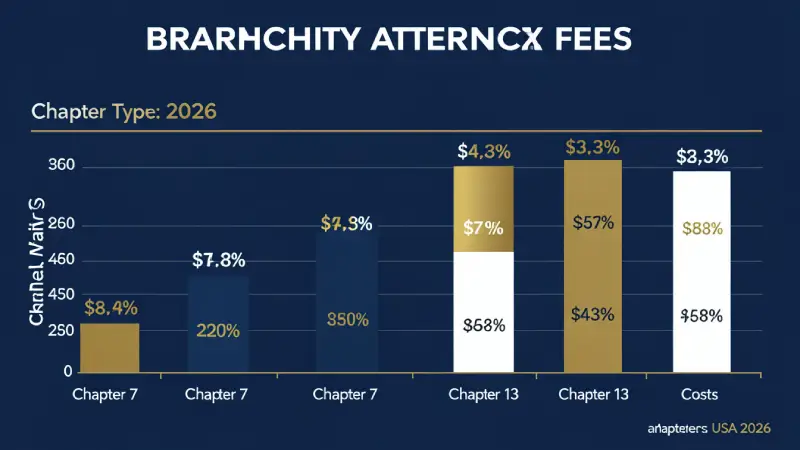
Bankruptcy Costs — Complete Fee Breakdown 2026
| Cost Component | Chapter 7 | Chapter 13 | Notes |
|---|---|---|---|
| Attorney Fee | $1,000–$3,500 | $3,000–$6,000 | Ch.13 paid through repayment plan |
| Court Filing Fee | $338 | $313 | Waivable for income below 150% poverty line |
| Credit Counseling (required) | $20–$50 | $20–$50 | Required before filing, online available |
| Debtor Education (required) | $20–$50 | $20–$50 | Required before discharge |
| Total Typical Cost | $1,378–$3,938 | $3,353–$6,413 | Ch. 13 spread over 3–5 years |
| Average Debt Discharged | $38,000+ | Variable (plan-based) | ROI: often 10:1 or better |
The Automatic Stay — The Most Powerful Benefit of Filing

The automatic stay is the most immediate and powerful protection bankruptcy provides — and it activates the instant your petition is filed with the court, before any court hearing, before any judge review, before any notice to creditors.
What the automatic stay immediately stops:
- All collection calls — creditors are legally barred from contacting you the moment your case is filed
- Wage garnishment — your employer must stop withholding garnished wages within days of receiving notice
- Bank account levies — frozen accounts must be released in many cases
- Lawsuits and judgments — all pending civil suits for money are immediately stayed
- Foreclosure proceedings — a Chapter 13 filing halts a foreclosure auction, even one scheduled for the next day
- Vehicle repossession — the lender cannot pick up your car while the stay is in effect
- Utility disconnection — utility companies cannot disconnect service for at least 20 days after filing
✅ Emergency filing strategy: If you have a foreclosure sale scheduled or a wage garnishment taking a significant portion of your paycheck, an experienced bankruptcy attorney can file an emergency petition within 24–48 hours — triggering the automatic stay immediately. This emergency relief is one of the most powerful tools in bankruptcy law and is frequently underutilized because filers wait too long to consult an attorney.
The Means Test — Do You Qualify for Chapter 7?
Chapter 7 bankruptcy eligibility is determined by the means test — a standardized calculation that compares your current monthly income to your state's median income for your household size.
| State | 1-Person Median | 2-Person Median | 4-Person Median |
|---|---|---|---|
| California | $67,980/yr | $84,840/yr | $110,040/yr |
| New York | $67,320/yr | $83,796/yr | $106,992/yr |
| Texas | $57,420/yr | $73,176/yr | $96,720/yr |
| Florida | $58,560/yr | $72,348/yr | $96,528/yr |
| Illinois | $64,440/yr | $80,424/yr | $103,596/yr |
| National Average | $59,124/yr | $74,028/yr | $97,668/yr |
If your income is below your state median → you automatically pass the means test and qualify for Chapter 7.
If your income is above the median → a second calculation applies. Your attorney performs the full means test calculation subtracting allowed monthly expenses from your income. If the result leaves insufficient "disposable income" for a Chapter 13 plan, you may still qualify for Chapter 7.
💡 Means test strategy: The 6-month income average used in the means test creates planning opportunities. If you recently lost a job or took a significant pay cut, your 6-month average may qualify you for Chapter 7 even if your current income exceeds the median. Conversely, if you expect income to decrease, filing now rather than in 3 months may be strategically better. A good bankruptcy attorney evaluates timing as part of case strategy.
How to Find the Best Bankruptcy Attorney in Your State — 8-Point Checklist

Bankruptcy Attorney Evaluation Checklist — 2026
- Files 50+ bankruptcy cases per year — not a general practitioner who "also does bankruptcy"
- Practices exclusively or primarily in your federal bankruptcy district
- Board certified in consumer bankruptcy law (available in most states)
- Member of National Association of Consumer Bankruptcy Attorneys (NACBA)
- Explains which exemption system is optimal for your state and situation specifically
- Performs full means test calculation in consultation — not a rough estimate
- Transparent fee quote in writing — with breakdown of included services
- For Chapter 13: explains plan payment, trustee process, and what happens if you miss a payment
- Reviews all debts for dischargeability before recommending which chapter to file
- Explains automatic stay timing and how to use it for your specific creditor situation
- No disciplinary history with your state bar
- Free initial consultation offered — most reputable bankruptcy attorneys offer this
What to Bring to Your First Bankruptcy Consultation
Preparation for your first bankruptcy consultation determines how accurately your attorney can assess your case, which chapter is appropriate, and whether emergency filing is needed. Bring every document you can gather — the more complete your picture, the more precise your attorney's advice.
- 6 months of pay stubs — required for means test calculation
- 2 years of federal tax returns — establishes income history
- All debt statements — credit cards, medical bills, personal loans, student loans, tax debts. Include account numbers and current balances.
- All bank account statements — last 6 months for all accounts
- Mortgage statement — current balance, payment amount, and whether you are behind
- Vehicle documents — title, loan balance, current value (use Kelley Blue Book)
- Property deed or lease — for any real estate you own
- Any pending lawsuits, judgments, or garnishments — court documents if available
- Retirement account statements — 401k, IRA balances (these are typically exempt)
- Life insurance policies — cash value policies may be an asset
FAQ — Best Bankruptcy Lawyers USA 2026

Ahmada Ndao is a financial research analyst and independent journalist
specializing in US consumer finance, legal rights, and insurance markets.
With over 5 years covering American financial products, he has helped
thousands of readers navigate complex insurance decisions, find the right
legal representation, and optimize their credit strategies. His research
methodology combines primary data analysis, direct outreach to industry
professionals, and continuous monitoring of federal regulatory changes.
Ahmada’s work has been cited by financial communities across the US and
reviewed by licensed attorneys and insurance professionals for accuracy.