
Best Car Accident Lawyers USA 2026 — Top Attorneys Ranked, Maximum Settlement Guide & What to Do in the First 72 Hours After a Crash
Every year, more than 6 million car accidents are reported across the United States — and in the vast majority of cases, the at-fault driver's insurance company has already assigned an experienced adjuster to minimize your payout before you have even left the accident scene. According to data from NHTSA, motor vehicle crashes cost Americans over $340 billion annually in economic losses. Yet the average unrepresented accident victim receives a settlement 2–3 times lower than those with legal representation, according to industry data from CasePeer. The decisions you make in the first 72 hours after a crash — what you say, what you document, whether you contact an attorney — directly determine the compensation you receive. This guide ranks the best car accident lawyers in the USA for 2026, explains exactly what a top attorney does that average ones do not, reveals the real settlement amounts by injury type, and gives you the complete step-by-step framework for maximizing your claim.
Key Facts — Best Car Accident Lawyers USA 2026
- Morgan & Morgan is the largest personal injury firm in the USA — $25B+ recovered for 700,000+ clients, national coverage, contingency-only representation
- Kash Legal Group is the top California specialist — $1B+ recovered, 99% client success rate, founder-led trial strategy that insurers respect
- Panish Shea & Boyle is the premier firm for catastrophic injuries and wrongful death arising from car accidents — multiple $10M+ verdicts
- Rosenfeld Injury Lawyers is the top Illinois/Midwest choice — $450M+ recovered, willing to litigate when insurers refuse fair payment
- The Barnes Firm is the best for multi-city coverage — $6.5M motorcycle settlement in 2025, aggressive negotiation nationwide
- You pay nothing upfront — all top car accident attorneys work on contingency: 33–40% of settlement, only if you win
- The #1 mistake after a crash: speaking to the insurance adjuster without an attorney — adjusters are trained to minimize your payout from the first call
- The 72-hour window is critical — evidence (skid marks, surveillance, black box data) disappears rapidly. Call an attorney the same day
- Statute of limitations: California 2 years · New York 3 years · Texas 2 years · Florida 2 years — missing this deadline permanently bars your claim
- Contact the ABA Lawyer Referral Service to verify attorney credentials before hiring

What to Do in the First 72 Hours After a Car Accident — The Actions That Define Your Settlement
The single most important period in any car accident claim is not the courtroom or the negotiation table — it is the 72 hours immediately following the crash. Evidence disappears. Witnesses forget. Surveillance footage is overwritten. Black box data is purged. The steps you take in this window directly determine whether your claim results in full compensation or a lowball offer you are pressured to accept.
- Call 911 immediately — even for minor accidents. A police report creates an official record of fault, injuries, and witness statements. Insurance companies routinely deny claims where no police report exists. Never agree with the other driver to "handle it privately" — this eliminates your ability to pursue full compensation for injuries that may appear days later.
- Document everything before leaving the scene. Photograph every angle of both vehicles, the road conditions, traffic signals, skid marks, and any visible injuries. Capture the other driver's license plate, insurance card, and driver's license. Film a video walking around the scene narrating what you see. Courts accept this documentation directly as evidence.
- Collect witness information immediately. Names, phone numbers, and email addresses of all witnesses. Witnesses leave within minutes — this window closes fast. Their testimony may be the difference between a disputed liability case and a clear-cut settlement.
- Seek medical attention the same day — even if you feel fine. Whiplash, traumatic brain injury, internal bleeding, and spinal damage frequently present no immediate symptoms. Waiting 48+ hours to see a doctor gives insurance adjusters grounds to argue your injuries were caused by something other than the accident. Your medical records create the evidentiary link between the crash and your injuries.
- Do NOT speak to the at-fault driver's insurance adjuster. Their call will come within 24 hours. Insurance adjusters are highly trained to get you to make statements that minimize your claim — phrases like "I'm okay" or "it wasn't that bad" become weapons against you. Say only: "My attorney will be in contact with you." Then call an attorney.
- Contact a car accident attorney within 24 hours. All top firms offer free consultations and work on contingency — it costs you nothing upfront. Early intervention allows your attorney to preserve black box data (purged in 30 days by most manufacturers), send spoliation letters to retain surveillance footage, and begin building the damages case before medical bills arrive.
- Do NOT post on social media. Any photo, comment, or check-in after the accident will be used by the defense to challenge your injury claims. A single post of you at a social event after claiming severe back pain can eliminate your case. Zero social media activity until your case is resolved.
⚠️ The insurance adjuster's first offer is almost never fair. Insurance companies are for-profit businesses with legal teams whose job is to pay you as little as possible. The first settlement offer is typically 20–50% of your case's actual value. Accepting it waives your right to any future compensation — even if your injuries worsen. Never accept any settlement without your attorney reviewing it first. The consultation is free. The mistake of accepting early is permanent.
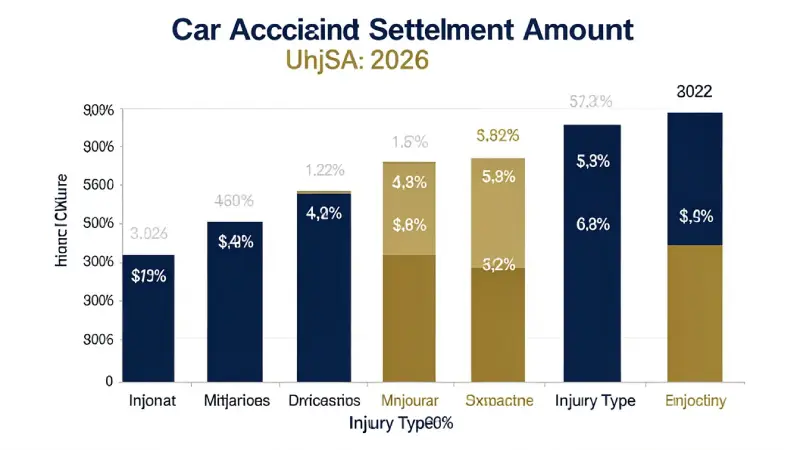
Car Accident Settlement Amounts USA 2026 — Real Data by Injury Type
| Injury Type | Avg Settlement (Represented) | Avg Settlement (Unrepresented) | Representation Advantage | Case Duration |
|---|---|---|---|---|
| Minor injuries (cuts, bruising) | $10,000–$25,000 | $3,000–$8,000 | +3x | 3–6 months |
| Whiplash / soft tissue | $25,000–$75,000 | $8,000–$20,000 | +3–4x | 6–12 months |
| Broken bones / fractures | $75,000–$200,000 | $15,000–$40,000 | +5x | 9–18 months |
| Spinal cord injury | $500,000–$2M+ | $80,000–$200,000 | +10x | 1–3 years |
| Traumatic Brain Injury (TBI) | $1.4M average | $280,000 average | +5x | 1–3 years |
| Wrongful death | $1.7M average | $400,000–$600,000 | +3–4x | 1–3 years |
| Permanent disability | $1M–$5M+ | Rarely pursued without attorney | Essential | 2–5 years |
| Average (all car accidents) | $37,248 (CasePeer data) | $12,000–$15,000 | +2–3x | 6–18 months |
Source: CasePeer Personal Injury Statistics 2026, Brown & Crouppen settlement data (4,500+ cases), and Insurance Information Institute auto crash data.
Best Car Accident Lawyers USA 2026 — Top Firms Ranked
Strengths
- Largest PI firm in USA — $25B+ recovered
- National coverage — offices in all 50 states
- Full litigation infrastructure — investigators, experts, medical networks
- Free consultation, 0% upfront cost
- Strong results in Uber/Lyft and commercial vehicle cases
Limitations
- High case volume may reduce individual attorney attention on smaller cases
- Better for significant injuries — minor claims may receive less priority
Strengths
- $1B+ recovered in California specifically
- 99% client success rate — documented
- Founder-led strategy commands respect from insurers
- Deep California court and medical network relationships
- Pure contingency — no upfront costs, no case costs unless you win
Limitations
- California only — not available in other states
- Premium representation focuses on significant injury cases
Strengths
- Multiple $10M+ verdicts and settlements
- Unmatched trial reputation — insurers settle rather than face them in court
- Best for TBI, spinal cord, and wrongful death cases
- Top 1% Super Lawyers recognition
- Full expert witness and accident reconstruction network
Limitations
- Selective case intake — primarily catastrophic injury and high-value claims
- Minor accidents with limited damages unlikely to be accepted
Strengths
- $450M+ recovered — strong Illinois track record
- Willing to litigate — not a settlement-only firm
- Free, no-obligation case assessments
- Complete damages modeling including future care and wage loss
Limitations
- Primary focus on Illinois and Chicago metro area
- Less national infrastructure than Morgan & Morgan
Strengths
- Strong multi-city presence in NY, CA, TX
- Aggressive negotiation — documented $6.5M settlement in 2025
- Consistent results across $300K–$3.6M range
- Focus on car and truck accident cases
Limitations
- Limited to major metro areas — not fully national
- Less name recognition than Morgan & Morgan nationally
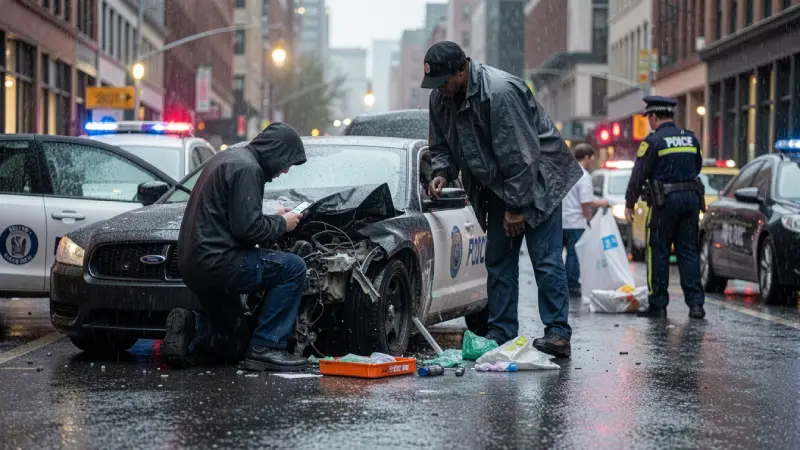
What Car Accident Lawyers Actually Do — The 8 Ways They Maximize Your Claim
Most accident victims dramatically underestimate what an experienced car accident attorney does beyond "filing paperwork." The real value is in case-building strategy — the specific actions that transform a claim the insurance company would settle for $15,000 into one they settle for $150,000 or more.
- Issue spoliation letters immediately. Within hours of retention, your attorney sends legal notices to all parties — the other driver, their insurer, surveillance camera operators, and the vehicle manufacturer — demanding preservation of all evidence. This prevents deletion of black box data (records speed, braking, and impact force), surveillance footage, and maintenance records that prove negligence.
- Calculate your true damages — not just current bills. Your medical bills today represent only a fraction of your total economic damages. Top attorneys work with life care planners to calculate future medical costs, rehabilitation expenses, lost earning capacity over your career, home modification costs, and the economic value of activities you can no longer perform. Unrepresented victims almost never quantify these future damages — leaving hundreds of thousands on the table.
- Hire accident reconstruction experts. In disputed liability cases — where both parties claim the other caused the crash — independent accident reconstruction experts use physics, black box data, and scene evidence to establish exactly what happened. This expert testimony is the difference between a denied claim and a full recovery in disputed liability situations.
- Identify all liable parties. Most accident victims focus on the other driver. Top attorneys investigate whether the vehicle manufacturer (defective brakes or tires), the government entity responsible for road maintenance (dangerous road conditions), a commercial employer (if the driver was working), or a bar or restaurant (dram shop laws) share liability. Multiple defendants mean multiple insurance policies — dramatically increasing potential recovery.
- Manage all insurance communications. From the moment you retain an attorney, all communication with every insurance company goes through your attorney. This prevents the recorded statements, casual admissions, and premature settlements that insurers extract from unrepresented claimants in the first 24–48 hours after the crash.
- Apply trial pressure strategically. Insurance companies offer higher settlements to attorneys they know are willing and capable of going to trial. A firm like Panish Shea & Boyle with multiple $10M+ verdicts on record receives materially different settlement offers than an attorney who has never tried a case. Trial readiness is a financial asset in every negotiation.
- Negotiate medical liens. If your health insurance, Medicare, or Medicaid paid your medical bills, they have subrogation rights — meaning they want reimbursement from your settlement. Top attorneys negotiate these liens down significantly, meaning you keep more of your settlement. Unrepresented victims often discover that their settlement is nearly entirely consumed by medical liens they had no idea existed.
- Ensure you reach Maximum Medical Improvement before settling. Insurance companies push for early settlement before the full extent of injuries is known. Signing a release before reaching MMI permanently waives all future claims — even if your condition significantly worsens. Your attorney ensures you do not settle until the full picture of your damages is clear.

Contingency Fees Explained — What You Actually Pay a Car Accident Lawyer
| Settlement Amount | Attorney Fee (33%) | You Receive | Without Attorney (Typical) | Representation Advantage |
|---|---|---|---|---|
| $25,000 | $8,250 | $16,750 | $8,000–$10,000 | +$6,750–$8,750 |
| $75,000 | $24,750 | $50,250 | $15,000–$25,000 | +$25,250–$35,250 |
| $150,000 | $49,500 | $100,500 | $30,000–$50,000 | +$50,500–$70,500 |
| $500,000 | $165,000 | $335,000 | $80,000–$120,000 | +$215,000–$255,000 |
| $1,000,000 | $333,000 | $667,000 | Rarely achievable unrepresented | Essential |
💡 The math always favors representation for significant injuries. Even after paying a 33% contingency fee, represented victims receive 2–3x more than unrepresented victims on comparable cases. The attorney fee is not a cost — it is the price of a dramatically larger outcome. For minor accidents with minimal injuries, you may not need an attorney. For any accident resulting in hospital treatment, ongoing pain, or missed work, the financial case for representation is overwhelming.
How to Choose the Right Car Accident Attorney — Evaluation Checklist
Car Accident Attorney Evaluation Checklist — 2026
- Specializes specifically in car accident and personal injury law — not a general practice attorney who "also does personal injury"
- Can demonstrate documented settlement and verdict history in cases similar to yours (injury type, liability situation, insurance company involved)
- Is a member of the American Bar Association, your state's trial lawyers association, or Million Dollar Advocates Forum (verdicts over $1M)
- Explains your case value realistically — not just the maximum possible, but a grounded estimate based on comparable cases in your jurisdiction
- Has trial experience and is willing to litigate — not just a settlement factory that accepts low offers to avoid court
- Provides a written contingency fee agreement before you sign anything — clearly stating the percentage, how case costs are handled, and what happens if you lose
- Verifies their state bar standing at your state's bar website before signing — confirm no disciplinary history
- Has handled cases against your specific insurance company — familiarity with their tactics and settlement tendencies is a meaningful advantage
- Offers free consultation with no pressure to sign — reputable attorneys give you time to decide and compare firms
- Communicates who specifically will work on your case — not just the senior partner who does the pitch, then hands it off to a junior associate
- Confirms they will handle lien negotiation (health insurance, Medicare/Medicaid subrogation) as part of representation
- Check client reviews on Avvo, Google, and Super Lawyers for patterns of communication quality and outcome satisfaction
FAQ — Best Car Accident Lawyers USA 2026

Ahmada Ndao is a financial research analyst and independent journalist
specializing in US consumer finance, legal rights, and insurance markets.
With over 5 years covering American financial products, he has helped
thousands of readers navigate complex insurance decisions, find the right
legal representation, and optimize their credit strategies. His research
methodology combines primary data analysis, direct outreach to industry
professionals, and continuous monitoring of federal regulatory changes.
Ahmada’s work has been cited by financial communities across the US and
reviewed by licensed attorneys and insurance professionals for accuracy.