
Best Health Insurance Companies USA 2026 — Plans, Costs & How to Choose the Right Coverage
Health insurance is the most consequential financial decision most Americans make every year — yet most people choose a plan by looking only at the monthly premium and hoping for the best. A $200/month plan that leaves you with a $8,000 deductible is not "cheap" — it is catastrophically expensive the moment you actually need care. This guide cuts through the complexity: we rank the best health insurance companies in the USA for 2026, explain every plan type in plain English, break down the true cost of coverage, and give you a precise framework to choose the right plan for your health needs and budget.
Key Facts — Health Insurance USA 2026
- Average individual premium: $456/month ($5,472/year) on ACA marketplace
- Average family premium: $1,437/month ($17,244/year) employer-sponsored
- Average deductible (individual): $1,763/year for employer plans; $4,500+ for marketplace bronze plans
- ACA subsidies available to households earning up to 400% of federal poverty level — millions qualify and don't know it
- Open enrollment: November 1 – January 15 for ACA marketplace plans
- Best overall insurer: Blue Cross Blue Shield — widest network, available in all 50 states
- Best for low premiums: Kaiser Permanente — if available in your area
- 28 million Americans remain uninsured — many qualify for free or subsidized coverage
The 8 Best Health Insurance Companies USA — 2026 Rankings
We evaluated insurers across six criteria: network size and physician availability, plan variety, average premium competitiveness, customer satisfaction scores (NCQA ratings, J.D. Power), claims payment reliability, and financial strength. Here are the top picks for 2026.
| Company | Best For | States Available | NCQA Rating | Avg. Premium | Score |
|---|---|---|---|---|---|
| Blue Cross Blue Shield Editor's Pick | Widest network, all needs | All 50 | 4.0/5 | $$ | ⭐ 4.8/5 |
| Kaiser Permanente | Lowest premiums, integrated care | 8 states + DC | 4.5/5 (highest) | $ | ⭐ 4.9/5 |
| UnitedHealthcare | Largest network, employer plans | All 50 | 3.5/5 | $$$ | ⭐ 4.5/5 |
| Aetna (CVS Health) | Pharmacy integration, seniors | All 50 | 3.8/5 | $$ | ⭐ 4.5/5 |
| Cigna | International coverage, expats | All 50 | 3.6/5 | $$ | ⭐ 4.4/5 |
| Humana | Medicare Advantage, seniors | All 50 | 4.0/5 | $$ | ⭐ 4.5/5 |
| Molina Healthcare | Medicaid, low-income families | 19 states | 3.5/5 | $ | ⭐ 4.2/5 |
| Oscar Health | Tech-forward, younger adults | 18 states | 3.8/5 | $$ | ⭐ 4.3/5 |
Blue Cross Blue Shield (BCBS) is not a single company — it is an association of 33 independent regional insurers operating under one brand, collectively covering over 115 million Americans. This structure means unmatched geographic breadth: BCBS plans are available in every state, and the BlueCard program gives members access to providers nationwide when traveling or living in multiple states. They offer every plan type — HMO, PPO, EPO, and HDHP — at every metal tier. For anyone who values maximum network access and plan flexibility, BCBS is the default benchmark. Find your local plan at BCBS.com.
✓ Pros
- Available in all 50 states
- Largest physician network nationally
- Every plan type and metal tier
- BlueCard — nationwide coverage when traveling
- Strong customer satisfaction scores
✗ Cons
- Quality varies by regional affiliate
- Not always cheapest premium option
- PPO plans can be expensive
Kaiser Permanente consistently earns the highest health plan quality ratings of any insurer in the United States — achieving the top NCQA scores year after year. Their integrated model (insurer + hospital system + physicians all in one organization) eliminates the billing complexity and coverage gaps that plague traditional insurance. Preventive care, chronic disease management, and mental health services are all seamlessly coordinated. Premiums are typically 15–25% below comparable BCBS or United plans in markets where Kaiser is available. The limitation is geographic — Kaiser operates only in 8 states and Washington D.C. If Kaiser is available in your area, it is almost always the best choice. Learn more at KP.org.
✓ Pros
- Highest NCQA quality ratings nationally
- Premiums 15–25% below comparable plans
- Integrated care — no referral complexity
- Excellent preventive and mental health care
- Strong digital tools and telehealth
✗ Cons
- Only 8 states + DC — limited availability
- Must use Kaiser's own doctors and hospitals
- Limited coverage outside Kaiser network
UnitedHealthcare operates the largest proprietary physician and hospital network in the United States — over 1.3 million providers — making it the go-to choice for people who need maximum flexibility in choosing doctors. Particularly strong for employer-sponsored group plans, large families with complex healthcare needs, and anyone who travels frequently within the US. Their digital tools, including the Rally health platform and extensive telehealth options, are among the best in the industry. Premiums tend to be higher than Kaiser or some BCBS affiliates. Visit UHC.com to compare plans.
✓ Pros
- 1.3M+ provider network — largest in USA
- All 50 states available
- Excellent digital tools and telehealth
- Strong employer group plan options
✗ Cons
- Higher premiums than competitors
- Claims denial rates above industry average
- Customer service inconsistent by region
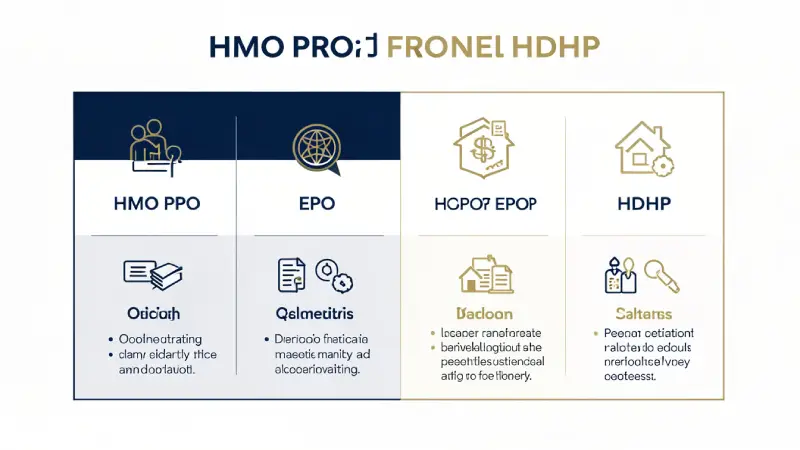
Health Insurance Plan Types — HMO vs. PPO vs. EPO vs. HDHP Explained
The plan type you choose matters more than the insurer brand. The same insurer (e.g., Blue Cross) offers vastly different products under HMO and PPO structures. Here is an honest breakdown:
HMO — Health Maintenance Organization Best Value
You choose a primary care physician (PCP) who coordinates all your care. Referrals required to see specialists. Coverage only within the HMO network — no out-of-network benefits except emergencies. In exchange: lowest premiums and lowest out-of-pocket costs of any plan type. Best for healthy people who don't need specialists frequently and live near good in-network providers.
PPO — Preferred Provider Organization Most Flexible
See any doctor — in-network or out-of-network — without a referral. In-network care is cheaper; out-of-network care is covered at a lower rate. No primary care physician required. Maximum flexibility for people who want to choose their own specialists, see out-of-state doctors, or manage complex chronic conditions across multiple providers. Premium: significantly higher than HMO.
EPO — Exclusive Provider Organization
A hybrid: like a PPO in that no PCP or referrals are required, but like an HMO in that coverage is strictly limited to the network (except emergencies). Lower premiums than PPO while maintaining referral-free specialist access. Good middle-ground for people who want direct specialist access without paying PPO premiums and who are confident in their local network coverage.
HDHP + HSA — High Deductible Health Plan Tax Advantage
Lower monthly premiums, but you pay all costs out-of-pocket until you hit a high deductible ($1,650+ individual in 2026). The powerful advantage: HDHPs are HSA-eligible — you can contribute up to $4,300/individual or $8,550/family to a Health Savings Account (HSA) in 2026, with triple tax benefits (pre-tax contributions, tax-free growth, tax-free withdrawals for medical expenses). Best for healthy, high-income individuals who can fund an HSA and want to use it as a long-term tax-advantaged investment vehicle.
Health Insurance Metal Tiers — Bronze, Silver, Gold, Platinum
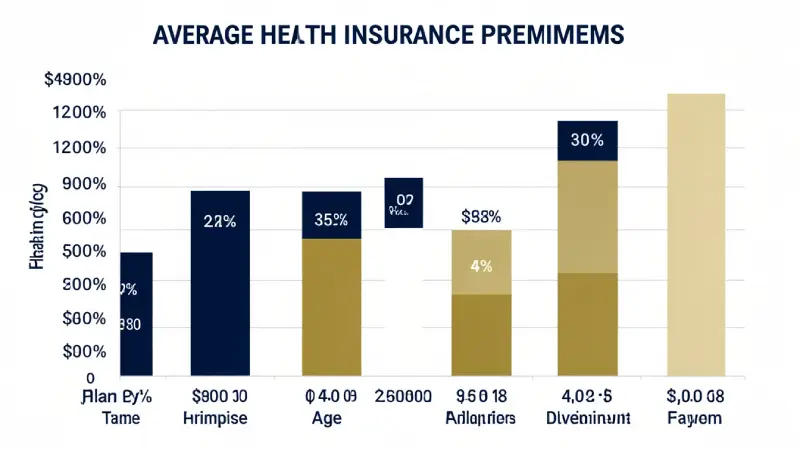
ACA marketplace plans are categorized into four metal tiers that define how costs are split between you and the insurer:
| Tier | Insurer Pays | You Pay | Avg. Monthly Premium (40yr) | Best For |
|---|---|---|---|---|
| Bronze Lowest Premium | 60% | 40% | $350–$450 | Healthy, low healthcare use, HSA pairing |
| Silver Most Popular | 70% | 30% | $450–$600 | CSR subsidy eligible (under 250% FPL) |
| Gold | 80% | 20% | $600–$800 | Regular healthcare users, chronic conditions |
| Platinum Highest Coverage | 90% | 10% | $800–$1,100 | High healthcare users, expensive conditions |
💡 Silver Plan Secret — Cost-Sharing Reductions (CSR): If your household income is between 100–250% of the federal poverty level, you qualify for Cost-Sharing Reductions that only apply to Silver plans. A CSR Silver plan can give you Gold or Platinum-level out-of-pocket costs at Silver premiums — making Silver the only logical choice for eligible households. Check your eligibility at Healthcare.gov.
Average Health Insurance Costs by Age — 2026
| Age | Bronze (Individual) | Silver (Individual) | Gold (Individual) | Family of 4 (Silver) |
|---|---|---|---|---|
| 21 | $220/mo | $310/mo | $410/mo | — |
| 30 | $280/mo | $370/mo | $490/mo | — |
| 40 | $350/mo | $456/mo | $600/mo | $1,200/mo |
| 50 | $490/mo | $640/mo | $840/mo | $1,600/mo |
| 60 | $740/mo | $970/mo | $1,270/mo | $2,200/mo |
| 64 (pre-Medicare max) | $900/mo | $1,150/mo | $1,500/mo | — |
*Before subsidies. Actual premiums vary by state, insurer, and plan. Source: KFF Health Insurance Marketplace Calculator, March 2026.

ACA Subsidies — How Much Could You Save?
The Affordable Care Act provides two types of subsidies that dramatically reduce the cost of marketplace coverage — and millions of Americans who qualify don't know it:
Premium Tax Credits (PTC)
Available to households earning 100–400% of the federal poverty level (FPL). The American Rescue Plan expanded these credits — households above 400% FPL now also qualify if marketplace premiums would exceed 8.5% of household income. A family of four earning $60,000 may qualify for $500–$800/month in premium tax credits, making Gold-level coverage affordable. Use the KFF Subsidy Calculator to estimate your credits in minutes.
Cost-Sharing Reductions (CSR)
Available to households earning 100–250% FPL who enroll in Silver plans. CSRs reduce your deductible, copays, and out-of-pocket maximum — effectively giving you Platinum-level benefits at Silver premiums. This is the most powerful and least-understood ACA benefit. For 2026, 100–150% FPL: deductible as low as $150, out-of-pocket max as low as $1,500. Apply only through Healthcare.gov or your state marketplace.
| Household Income (Family of 4) | FPL % | Est. Monthly Subsidy | Net Silver Premium |
|---|---|---|---|
| $31,200 | 100% | $1,100+/mo | $0–$50/mo |
| $46,800 | 150% | $900–$1,000/mo | $50–$150/mo |
| $62,400 | 200% | $700–$800/mo | $150–$300/mo |
| $93,600 | 300% | $400–$550/mo | $400–$550/mo |
| $124,800 | 400% | $100–$300/mo | $700–$900/mo |
| $187,200+ | 600%+ | Limited or none | Full premium |
Medicaid & CHIP — Free or Low-Cost Coverage
If your household income is below 138% of the federal poverty level and you live in a Medicaid expansion state (40 states + DC as of 2026), you qualify for Medicaid — comprehensive health coverage at zero or near-zero cost. Medicaid covers doctor visits, hospital stays, prescriptions, mental health, dental, and vision for eligible individuals. Apply through Medicaid.gov or your state's health department — enrollment is year-round with no open enrollment deadline.
CHIP (Children's Health Insurance Program) covers children in households that earn too much for Medicaid but too little for marketplace coverage — typically up to 200–300% FPL depending on state. Premiums are minimal (often $0–$50/month). Apply through InsureKidsNow.gov. An estimated 5 million eligible children are not enrolled in CHIP — check eligibility now.

Understanding Your True Cost — Deductible, Copay, Coinsurance & Out-of-Pocket Max
Most people understand the premium. Few understand the full cost structure — which is where most financial surprises come from:
- Deductible: The amount you pay out-of-pocket before insurance starts covering most services. A $4,000 deductible means you pay the first $4,000 of covered medical costs each year. Preventive care is typically covered at 100% before meeting the deductible under ACA plans.
- Copay: A fixed dollar amount you pay for a specific service — typically $20–$50 for a primary care visit, $40–$100 for a specialist. Copays often apply even before meeting the deductible on some plans.
- Coinsurance: After meeting your deductible, you share costs with the insurer — typically 20–40% of the bill for in-network care. On a $10,000 hospital bill with 20% coinsurance, you owe $2,000 after the deductible.
- Out-of-Pocket Maximum: The ceiling on your annual cost exposure. Once you hit this limit, the insurer covers 100% of covered in-network costs. The 2026 ACA out-of-pocket maximum is $9,450 for individuals and $18,900 for families. This is your worst-case scenario in any given year.
💡 How to Choose Between Plans — The Real Math: Don't compare premiums alone. Compare Total Annual Cost = (Monthly Premium × 12) + Expected Out-of-Pocket. A Bronze plan with a $350/mo premium and a $7,000 deductible costs $4,200/yr in premiums + potentially $7,000 in out-of-pocket = $11,200 worst case. A Gold plan at $600/mo with a $1,500 deductible costs $7,200/yr in premiums + $1,500 worst case = $8,700 worst case. The "expensive" Gold plan is cheaper if you actually use healthcare. For personalized guidance, the Kaiser Family Foundation maintains the most comprehensive independent health insurance tools available to consumers.
Medicare — Coverage for Americans 65+
Americans turning 65 automatically become eligible for Medicare — the federal health insurance program. Understanding Medicare's structure prevents costly enrollment mistakes:
- Medicare Part A (Hospital Insurance): Covers inpatient hospital stays, skilled nursing facilities, and hospice. Most people pay $0 premium if they or their spouse worked 40+ quarters. 2026 deductible: $1,676 per benefit period.
- Medicare Part B (Medical Insurance): Covers doctor visits, outpatient care, preventive services, and durable medical equipment. 2026 standard premium: $185/month. Income-based surcharges (IRMAA) apply for higher earners.
- Medicare Part D (Prescription Drug Coverage): Standalone drug plans purchased separately. Premiums vary by plan and drugs covered.
- Medicare Advantage (Part C): Private insurance plans that replace Original Medicare, often including Part D coverage and dental/vision benefits. Humana and UnitedHealthcare are the top-rated Medicare Advantage insurers for 2026.
- Medigap (Medicare Supplement): Private supplemental policies that cover Original Medicare's gaps — deductibles, coinsurance, and out-of-pocket costs. Enroll during your initial 6-month Medigap Open Enrollment Period for guaranteed issue.
For comprehensive Medicare guidance, the official Medicare.gov plan finder compares all available plans in your area. The State Health Insurance Assistance Programs (SHIP) provide free unbiased Medicare counseling in every state.

How to Choose the Right Health Insurance Plan — Step by Step
Health Insurance Selection Checklist 2026
- List your current doctors and check if they are in-network on each plan you're considering
- List your current prescriptions and verify formulary coverage and tier placement
- Estimate your annual healthcare usage — number of doctor visits, specialist visits, procedures
- Calculate Total Annual Cost = (Premium × 12) + Expected Out-of-Pocket for each plan
- Check your ACA subsidy eligibility at Healthcare.gov
- If income is under 250% FPL — compare Silver plans only (CSR eligibility)
- If healthy with high income — evaluate HDHP + HSA combination
- Verify that your preferred hospital is in-network (especially for planned procedures)
- Check mental health and behavioral health coverage if relevant
- Confirm telehealth options and digital tools
- Review out-of-pocket maximum — this is your worst-case annual exposure
- Compare NCQA quality ratings at NCQA.org
Special Enrollment Periods — When You Can Enroll Outside Open Enrollment
Miss open enrollment (November 1 – January 15)? You can still enroll if you experience a qualifying life event that triggers a Special Enrollment Period (SEP):
- Lost job-based coverage — 60 days to enroll after losing employer insurance
- Marriage or divorce — 60 days from the event
- Birth or adoption of a child — 60 days from the event
- Moved to a new state or coverage area — 60 days from the move
- Income change affecting subsidy eligibility — 60 days from the change
- Gained citizenship or lawful status — 60 days
If you don't qualify for a SEP and miss open enrollment, short-term health insurance plans are available outside enrollment periods — but they do not meet ACA standards, exclude pre-existing conditions, and should be considered temporary bridges only, not comprehensive coverage.
FAQ — Best Health Insurance USA 2026

Ahmada Ndao is a financial research analyst and independent journalist
specializing in US consumer finance, legal rights, and insurance markets.
With over 5 years covering American financial products, he has helped
thousands of readers navigate complex insurance decisions, find the right
legal representation, and optimize their credit strategies. His research
methodology combines primary data analysis, direct outreach to industry
professionals, and continuous monitoring of federal regulatory changes.
Ahmada’s work has been cited by financial communities across the US and
reviewed by licensed attorneys and insurance professionals for accuracy.