
Best Medicare Advantage Plans USA 2026 — Top Providers Ranked by CMS Stars, Real Costs & How to Choose the Right Plan
Medicare Advantage now covers more than half of all Medicare beneficiaries in the United States — over 34 million Americans — making it the dominant way seniors access healthcare coverage in 2026. But with hundreds of plans available and vast differences in premiums, out-of-pocket limits, provider networks, drug coverage, and extra benefits like dental and vision, choosing the wrong plan can cost you thousands of dollars and limit access to the doctors you rely on. This guide ranks the best Medicare Advantage providers for 2026 using CMS star ratings, J.D. Power satisfaction data, premium costs, out-of-pocket maximums, and real benefit comparisons — giving you everything you need to choose the plan that is right for your health situation, your doctors, and your budget.
Key Facts — Best Medicare Advantage Plans 2026
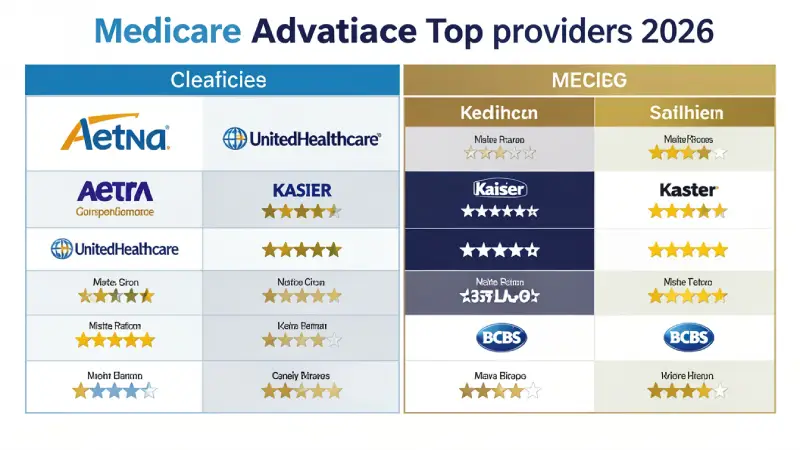
- Aetna leads for CMS star ratings and member satisfaction — highest weighted average stars among national providers, $0 premium plans available to 84% of beneficiaries
- UnitedHealthcare / AARP has the largest network (1M+ providers), $0 plans in 45 states, average premium $26/month — best for network breadth
- Kaiser Permanente highest J.D. Power satisfaction score (top-rated integrated care), but only available in 8 states
- HealthSpring (formerly Cigna) lowest average drug deductible ($292/year vs $443 national average) — best for prescription drug costs
- Blue Cross Blue Shield leads PPO plans with 4.5 CMS star average — best if you need out-of-network flexibility
- Open enrollment: Oct 15–Dec 7 annually. Existing enrollees can switch Jan 1–Mar 31
- Part B premium ($185/month in 2026) is separate from your plan premium — always factor this into total cost
- 5-star plans exist in 14 states + Puerto Rico in 2026 — you can switch to a 5-star plan any time of year
- Prior authorization rules tightened in 2026 — compare PA denial rates before choosing
Medicare Advantage vs Original Medicare — The Core Decision
Before comparing providers, you need to understand what Medicare Advantage is — and what you give up compared to Original Medicare. This decision is the most important one you will make in Medicare enrollment, because it defines your access to doctors, your out-of-pocket exposure, and your ability to receive care when traveling.
| Factor | Original Medicare (Part A + B) | Medicare Advantage (Part C) |
|---|---|---|
| Monthly Premium | $185/month (Part B only) | $185 Part B + $0–$26/month plan avg |
| Provider Access | Any provider nationwide who accepts Medicare | Network-restricted (HMO) or partially restricted (PPO) |
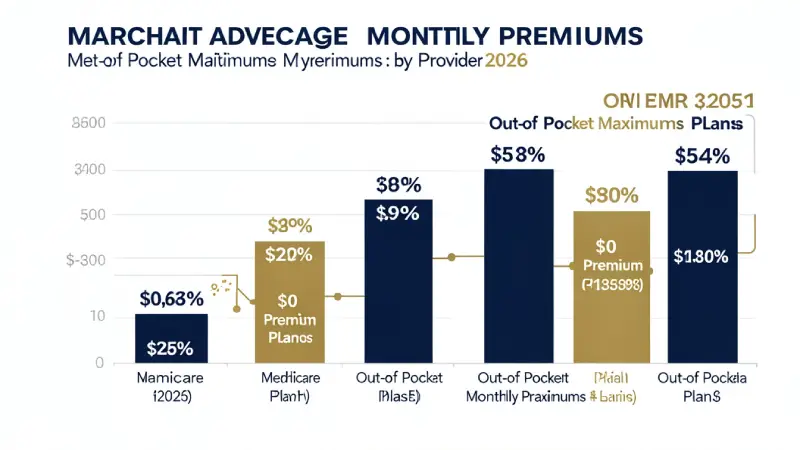
| Out-of-Pocket Maximum | No annual limit — unlimited exposure | $4,961–$8,850 annual cap (protection) |
| Drug Coverage | Requires separate Part D plan | Most plans include Part D built in |
| Extra Benefits | None — no dental, vision, hearing | Many plans include dental, vision, hearing, gym |
| Referrals Required | No | HMO plans require referrals; PPO does not |
| Travel Coverage | Nationwide — see any Medicare provider | Emergency only outside network for most plans |
| Best For | Travelers, those with many specialists, predictable costs with Medigap | Those who want extra benefits, predictable OOP cap, $0 premium |
⚠️ The hidden cost of Original Medicare: Original Medicare has no out-of-pocket maximum — meaning a serious illness or hospitalization can cost you unlimited amounts. Most Original Medicare enrollees purchase a Medigap supplement plan ($150–$400/month) to cap their exposure. Add that to your Part B premium and Original Medicare can cost $335–$585/month before any care is delivered. Medicare Advantage with a $0 premium costs only $185/month (Part B) with a built-in OOP cap — a meaningful difference for most retirees on fixed incomes.
How CMS Star Ratings Work — The Only Objective Ranking You Can Trust
The Centers for Medicare & Medicaid Services (CMS) assigns star ratings to every Medicare Advantage plan on a 1–5 scale based on dozens of measures including health outcomes, member satisfaction, chronic disease management, and customer service. These ratings are the most objective tool available for comparing plan quality — and they directly affect your care.
- 5-star plans: You can enroll at any time of year — not just during open enrollment. Available in 14 states + Puerto Rico in 2026.
- 4–4.5 star plans: Above average quality — these are the plans most experts recommend
- 3–3.5 star plans: Average — acceptable but monitor for quality decline
- Below 3 stars for 3 consecutive years: CMS can terminate the plan — avoid these
Best Medicare Advantage Providers 2026 — Ranked
Strengths
- Highest CMS star ratings among national providers
- $0 premium available to 84% of Medicare beneficiaries
- CVS MinuteClinic access included
- Strong chronic disease management programs
- Top J.D. Power member satisfaction scores
Limitations
- HMO plans require referrals for specialists
- Network may be smaller in rural areas
- PPO plans carry higher premiums than HMO
Strengths
- Largest provider network in Medicare Advantage (1M+)
- $0 premium plans in 45 states
- $0 telehealth for primary care and mental health
- Rewards programs for healthy habits
- AARP endorsement adds member perks and advocacy
Limitations
- Customer experience varies significantly by state
- Premium plans can be expensive
- Prior authorization policies drew criticism in 2025
Strengths
- #1 J.D. Power satisfaction score consistently
- Fully integrated care — no coordination gaps
- 5-star CMS ratings in most available markets
- Seamless specialist referral within the system
Limitations
- Only available in 8 states — most Americans cannot enroll
- Closed system — must use Kaiser providers exclusively
- Limited flexibility if you travel outside service area
Strengths
- Best PPO plans nationally — 4.5 CMS star average
- Out-of-network coverage with manageable cost-sharing
- 80 PPO options nationwide
- 123 of 151 plans have $0 drug deductible
Limitations
- MOOP higher than HMO alternatives ($6,750 vs $4,961)
- BCBS is a network of independent companies — quality varies by state
Strengths
- Lowest average drug deductible ($292 vs $443 national)
- Average premium of $4/month — among the lowest
- $0 premium available in all 29 states of operation
- Good perks: gym, transport, meal delivery
Limitations
- Only available in 29 states + DC
- CMS ratings below some competitors (3.5–4.0)
- Brand transition from Cigna may cause confusion
Medicare Advantage Plan Types — HMO vs PPO vs SNP
Understanding plan types is not optional — it determines whether your current doctors are covered, whether you need referrals, and how much you pay when traveling or seeking specialist care.
| Plan Type | Network Restriction | Referrals | Out-of-Network | Best For | Avg Premium |
|---|---|---|---|---|---|
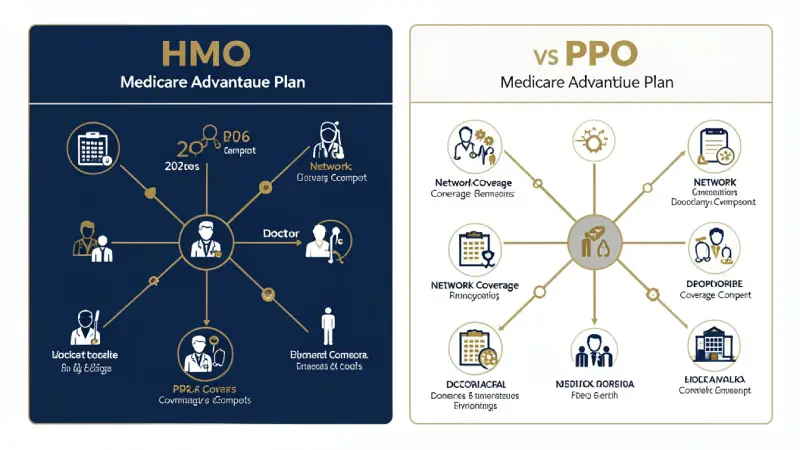
| HMO | In-network only | Required | Not covered (emergency only) | Low cost, local care, healthy seniors | $0–$20/month |
| PPO | Preferred network + out-of-network | Not required | Covered at higher cost | Specialist access, travelers, flexibility | $0–$60/month |
| HMO-POS | Primary in-network | Usually required | Some out-of-network covered | Mid-flexibility option | $5–$40/month |
| PFFS | Any Medicare-accepting provider | Not required | Fully covered if provider agrees | Rural areas, provider flexibility | $20–$100/month |
| SNP — Chronic | Specialized network | Often required | Limited | Diabetes, heart disease, ESRD | Varies |
| SNP — Dual Eligible | Specialized network | Often required | Limited | Both Medicare + Medicaid enrolled | Often $0 |

Medicare Advantage Enrollment Dates 2026 — When You Can Enroll or Switch
| Enrollment Period | Dates | Who Can Use It |
|---|---|---|
| Annual Open Enrollment | Oct 15 – Dec 7 | Anyone eligible for Medicare — new enrollment or plan change |
| Medicare Advantage OEP | Jan 1 – Mar 31 | Already enrolled in a MA plan — switch to another MA or go back to Original |
| Initial Enrollment Period | 3 months before/after 65th birthday | Turning 65 — first-time enrollment |
| Special Enrollment Period | Varies by trigger | Moving, losing employer coverage, dual-eligible changes |
| 5-Star Plan Switch | Any time of year | Anyone who wants to switch to a CMS 5-star rated plan |
How to Choose the Right Medicare Advantage Plan — 8-Step Checklist

Medicare Advantage Plan Selection Checklist — 2026
- Verify every current doctor and specialist is in-network for the specific plan (not just the insurance company) using the plan's provider directory — not the insurer's general directory
- Check all current prescriptions on the plan's formulary — confirm tier placement and cost-sharing for each medication
- Compare the out-of-pocket maximum (MOOP) — a $0 premium plan with an $8,850 MOOP exposes you to more risk than a $50/month plan with a $4,000 MOOP if you have significant healthcare needs
- Review the CMS star rating for the specific plan in your county — not the company's national average
- Check if the plan covers your preferred hospitals — specialty hospitals and academic medical centers are often excluded from HMO networks
- Confirm dental, vision, and hearing benefits (if important to you) — review exactly what is covered, not just that coverage exists
- Use Medicare.gov Plan Finder to compare total estimated annual costs based on your health profile
- If you take multiple medications, enter all prescriptions into the Medicare Plan Finder — it calculates your total estimated drug costs for the year across all plans
- Check prior authorization policies — plans with high prior auth rates for common procedures will create delays in care
- Verify the plan covers emergency care when traveling — critical if you spend time in multiple states
FAQ — Best Medicare Advantage Plans USA 2026

Ahmada Ndao is a financial research analyst and independent journalist
specializing in US consumer finance, legal rights, and insurance markets.
With over 5 years covering American financial products, he has helped
thousands of readers navigate complex insurance decisions, find the right
legal representation, and optimize their credit strategies. His research
methodology combines primary data analysis, direct outreach to industry
professionals, and continuous monitoring of federal regulatory changes.
Ahmada’s work has been cited by financial communities across the US and
reviewed by licensed attorneys and insurance professionals for accuracy.