
Best Refinance Rates USA 2026 — When & How to Refinance Your Mortgage
If you took out a mortgage in 2022 or 2023 at rates above 7%, refinancing in 2026 could save you $200–$500 per month — that's $72,000–$180,000 over the remaining life of your loan. With 30-year fixed rates now averaging 6.72% and trending downward, millions of American homeowners are in the refinance window right now. This guide tells you exactly when it makes sense, which lenders offer the best rates, and how to navigate the entire process start to finish.
Key Takeaways — Refinancing USA 2026
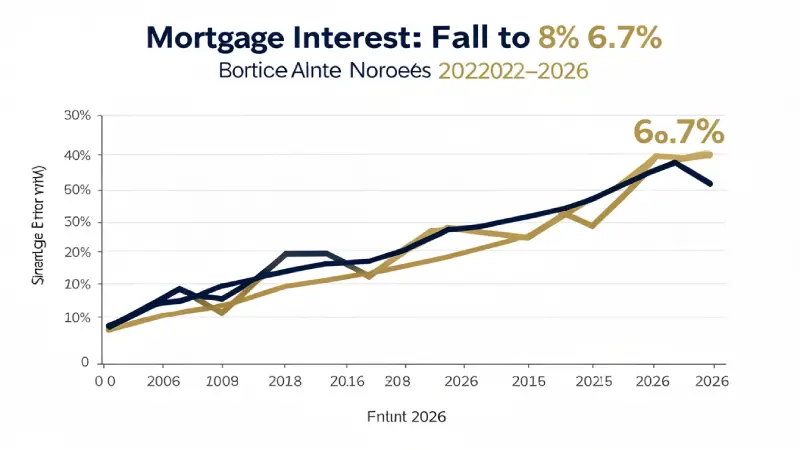
- Average 30-year refinance rate March 2026: 6.72% — down from 8.03% peak in Oct 2023
- The golden rule: Refinancing makes sense when you can lower your rate by 0.75–1%+ and recoup closing costs in under 36 months
- Best refinance lender overall: Better.com — lowest rates, no origination fees
- Best for speed: Rocket Mortgage — average closing in 21 days
- Typical closing costs on a refi: $3,000–$6,000 (can be rolled into loan)
- Cash-out refinance limit: Most lenders cap at 80% LTV (loan-to-value)
- Don't refinance if: You're planning to sell within 2–3 years or your break-even exceeds your stay horizon
National averages as of March 2026. Your rate varies by credit score, LTV, and lender. Always compare at least 3 quotes.
Should You Refinance in 2026? The Honest Answer
Refinancing is not automatically a good idea just because rates have dropped. Whether it makes financial sense depends entirely on your specific situation — your current rate, how much you owe, your credit score, closing costs, and critically, how long you plan to stay in the home. The following scenarios give you a clear framework.
✅ Scenario 1 — You Bought in 2022–2023 at 7%+
You have a $350,000 loan at 7.5%. Refinancing to 6.72% saves $177/month. Closing costs of $5,000 break even in 28 months. If you plan to stay 3+ years, refinancing is a clear financial win.
⚠️ Scenario 2 — You Bought in 2020–2021 at 3–4%
You have a $300,000 loan at 3.25%. Today's best rate is 6.72%. Refinancing would increase your payment by $600+/month. There is absolutely no financial case for a rate-and-term refinance. A cash-out refinance might make sense for specific purposes, but not for rate savings.
✗ Do Not Refinance🔄 Scenario 3 — You Have an ARM Adjusting Soon
You have a 5/1 ARM taken out in 2021 that resets this year. Your rate is about to jump from 3.5% to potentially 7%+. Refinancing into a 30-year fixed at 6.72% locks in payment stability before the adjustment hits — even if the new rate is higher than your current teaser rate.
✓ Refinance for Stability💰 Scenario 4 — You Need Cash & Have Significant Equity
You bought in 2019 at $280,000 and your home is now worth $420,000. You owe $220,000. A cash-out refinance at 80% LTV gives you $116,000 in cash for home improvements, debt consolidation, or investment — at mortgage rates far below personal loan or credit card rates.
→ Cash-Out May Make Sense🏃 Scenario 5 — You're Planning to Sell Within 2 Years
You're thinking of moving in 18 months. Refinancing costs $5,000 and saves $150/month. Break-even is 33 months — you'll sell before recouping costs. The refinance is a net negative.
✗ Don't RefinanceThe Break-Even Calculator — Your Most Important Refinance Tool
The break-even point is the number of months until your monthly savings cover your closing costs. It is the single most important calculation in the refinance decision. Here is how to calculate it — and a real example:

Break-Even Example — $350,000 Loan, 7.5% → 6.72%
Formula: Break-even (months) = Total closing costs ÷ Monthly savings. Use the CFPB rate explorer or Bankrate's refinance calculator for your exact numbers. Our guide on best mortgage lenders USA 2026 also covers lender-specific rate comparisons.
Current Refinance Rates by Loan Type — March 2026
| Loan Type | Current Rate | vs. Purchase Rate | Best For | Notes |
|---|---|---|---|---|
| 30-Year Fixed | 6.72% | +0.05% | Lower monthly payment, long-term stability | Most popular refi option |
| 15-Year Fixed | 6.18% | +0.05% | Pay off faster, save on total interest | Higher monthly payment |
| 20-Year Fixed | 6.45% | +0.05% | Balance between speed and payment | Underutilized middle ground |
| 5/1 ARM | 6.41% | +0.10% | Planning to sell within 5 years | Rate risk after fixed period |
| VA IRRRL Veterans | 6.35% | Same | Veterans streamlining VA loans | Minimal paperwork, fast |
| FHA Streamline | 6.55% | Same | Existing FHA borrowers | No appraisal needed |
| Cash-Out (Conv.) | 6.90% | +0.18% | Accessing home equity | Max 80% LTV |
| Jumbo Refi | 6.85% | +0.13% | Loans above $766,550 | Requires 700+ credit |
💡 Refinance vs. Purchase Rates: Refinance rates are typically 0.05–0.15% higher than purchase rates for the same loan product. This spread widens during periods of high refinance volume (when lenders are overwhelmed with applications) and narrows during slower periods. Shopping multiple lenders is especially important for refinances because this spread varies significantly by lender.
The 7 Best Mortgage Refinance Lenders in the USA — 2026
We evaluated refinance lenders on rate competitiveness, closing speed, fees, customer service, and loan variety. These are our top picks for 2026, drawn from our full analysis in our best mortgage lenders guide.

| Lender | Best For | Avg. Refi Rate | Closing Time | Origination Fee | Rating |
|---|---|---|---|---|---|
| Better.com Lowest Rate | Lowest rate, no fees | 6.61% | 30–45 days | $0 | ⭐ 4.7/5 |
| Rocket Mortgage Fastest | Speed & service | 6.74% | 21–30 days | 0.5–1% | ⭐ 4.8/5 |
| loanDepot | Streamlined refi | 6.69% | 28–35 days | 0.5% | ⭐ 4.4/5 |
| Veterans United VA #1 | VA IRRRL | 6.35% | 21–28 days | Low | ⭐ 4.9/5 |
| Chase Bank | Existing customers | 6.68% | 30–45 days | Varies | ⭐ 4.5/5 |
| PennyMac | FHA Streamline | 6.55% | 25–35 days | 0.5% | ⭐ 4.3/5 |
| Credible | Rate shopping marketplace | Varies | Depends | None (marketplace) | ⭐ 4.5/5 |
Better.com consistently offers the lowest refinance rates in the market by eliminating commissioned loan officers and passing savings to borrowers. Their zero origination fee policy saves most refinancers $2,000–$4,000 at closing compared to traditional lenders. Their One Day Mortgage program offers same-day Commitment Letters for well-qualified borrowers. Visit Better.com for an instant rate quote with no credit pull.
✓ Pros
- Consistently lowest rates nationally
- Zero origination fees
- Instant online quotes (no credit pull)
- Pre-approval in 3 minutes
- Best for borrowers with 680+ credit
✗ Cons
- Customer service can be slow
- No physical branches
- Not available in all states
Rocket Mortgage is the speed king of refinancing — their average closing time of 21 days is 30–40% faster than the industry average. Their fully digital platform lets you upload documents, track your application in real time, and communicate with your loan officer 24/7 via app. Rates are slightly above Better.com but their service reputation and closing speed are unmatched. See RocketMortgage.com for current refinance rates.
✓ Pros
- Fastest closing in industry (21 days)
- #1 customer satisfaction (J.D. Power)
- Excellent mobile app
- Wide range of refi products
✗ Cons
- Rates slightly above market best
- Higher origination fees
- No in-person branches
For veterans with existing VA loans, the VA Interest Rate Reduction Refinance Loan (IRRRL) through Veterans United is the fastest and lowest-cost refinance option available anywhere. The streamline process requires no appraisal, minimal income verification, and can close in under 3 weeks. At 6.35% average, it's the best rate on the market for eligible veterans. Visit VeteransUnited.com to check your IRRRL eligibility.
✓ Pros
- Lowest rate available (VA)
- No appraisal required (IRRRL)
- Minimal paperwork
- VA specialist staff
✗ Cons
- VA loans only — must be veteran
- VA funding fee applies
Types of Refinancing — Which One is Right for You?
Rate-and-Term Refinance
The most common type. You replace your existing mortgage with a new one at a lower interest rate and/or different term — with no cash taken out. The goal is to reduce your monthly payment, pay off faster, or both. This is the right choice when rates have dropped significantly from your current rate and you plan to stay in the home long enough to break even on closing costs. Most financial advisors at NerdWallet and Bankrate recommend a minimum 0.75% rate drop as the threshold.
Cash-Out Refinance
You refinance for more than you owe and pocket the difference as cash. Example: you owe $200,000 on a home worth $380,000. A cash-out refi at 80% LTV gives you a $304,000 new loan — paying off your $200,000 balance and putting $104,000 cash in your hand. Common uses: home renovations (which can increase property value), debt consolidation (paying off 20%+ credit card debt with a 6.9% mortgage rate), college tuition, or investment.

⚠️ Cash-Out Caution: A cash-out refinance converts your home equity into debt — and your home is collateral. Using cash-out proceeds for consumables, vacations, or luxury purchases is a financially dangerous move. Your home could be at risk if your income changes. Cash-out makes sense for value-adding renovations or eliminating high-interest debt; it does not make sense for lifestyle spending.
Streamline Refinance (FHA & VA)
FHA Streamline and VA IRRRL are simplified refinance programs for existing government-backed loan holders. Key advantages: no appraisal required, minimal income documentation, faster processing (often 2–3 weeks), and lower closing costs. The catch: you must already have an FHA or VA loan, the new loan must have a lower rate, and you must have a clean recent payment history.
15-Year vs. 30-Year Refinance
Many homeowners refinancing in 2026 have an important choice: stay with a 30-year term (lower payment, more flexibility) or switch to a 15-year (higher payment, but dramatically lower total interest). Here's the math on a $300,000 balance:
| Option | Rate | Monthly Payment | Total Interest | Interest Saved vs. 30yr |
|---|---|---|---|---|
| Keep current (7.5%, 30yr remaining) | 7.50% | $2,098 | $455,280 | — |
| Refi to 30-Year Fixed | 6.72% | $1,945 | $400,200 | $55,080 saved |
| Refi to 20-Year Fixed | 6.45% | $2,232 | $235,680 | $219,600 saved |
| Refi to 15-Year Fixed Best Total Value | 6.18% | $2,562 | $161,160 | $294,120 saved |
*Based on $300,000 remaining balance. For illustration only.
How to Refinance — Step-by-Step Process

Step 1 — Determine If It Makes Financial Sense
Before anything else, calculate your break-even point. Take your estimated closing costs (typically $3,000–$6,000) and divide by your projected monthly savings. If the result is fewer months than you plan to stay in the home, refinancing makes sense. Use CFPB's rate tools and our calculation above as starting points.
Step 2 — Check Your Credit Score and Equity
Pull your credit report at AnnualCreditReport.com. For the best refinance rates, you need 720+. Check your current LTV ratio: divide your remaining mortgage balance by your home's current market value. Most lenders require LTV below 80% for the best rates. If your LTV is above 80% but you want to refinance, you may need to pay PMI or choose an FHA Streamline if eligible.
Step 3 — Gather Your Documents
Unlike a purchase mortgage, refinancing is simpler — but you still need documentation. Prepare: last 2 months of pay stubs, last 2 years of W-2s and tax returns, last 2 months of bank statements, most recent mortgage statement, and your homeowner's insurance declaration page. Having these ready in advance cuts 1–2 weeks off your closing time.
Step 4 — Shop 3–5 Lenders and Compare Loan Estimates
This is non-negotiable. Freddie Mac research shows getting 5 quotes saves $1,200/year vs. one quote. Apply to at least 3 lenders within a 45-day window — multiple applications in this window count as a single credit inquiry. Request Loan Estimates from each and compare them on APR (not just interest rate) — APR includes fees and is the only apples-to-apples comparison.
Step 5 — Lock Your Rate
Once you've chosen a lender, lock your rate immediately. Refi rate locks are typically free for 30–45 days. Extended locks (60–90 days) cost 0.25–0.5 points. Do not leave your rate floating — rates can move 0.25–0.5% in a week during volatile periods, wiping out months of savings.
Step 6 — Appraisal and Underwriting
Most conventional refinances require a new appraisal ($400–$600) to confirm your home's current value. FHA Streamline and VA IRRRL waive this requirement. During underwriting (2–3 weeks), do not make large financial changes — no new credit cards, car loans, or job changes. Respond to document requests within 24 hours to avoid delays.
Step 7 — Closing
Refinance closings are simpler than purchase closings — about 30–60 minutes of signing. You have a 3-day right of rescission after closing on a primary residence refinance — you can cancel within 3 business days without penalty. Your new loan becomes active on day 4. Your first new payment is typically due 30–45 days after closing.
Refinancing Costs — What You'll Pay
Refinancing is not free, and the costs must be weighed against your savings. Total closing costs on a refinance typically run 2–5% of the loan amount, or $6,000–$17,500 on a $350,000 loan. Here's the breakdown:
| Cost Item | Typical Range | Negotiable? | Tip |
|---|---|---|---|
| Origination fee | 0–1% of loan | Yes | Better.com charges zero |
| Appraisal fee | $400–$700 | Sometimes | Waived on FHA/VA streamline |
| Title search & insurance | $700–$1,500 | Partially | Shop title companies independently |
| Credit report fee | $30–$50 | No | Fixed cost |
| Recording fees | $50–$250 | No | Government fee |
| Attorney/settlement fee | $500–$1,000 | Partially | Required in some states |
| Prepaid interest | Varies | No | Days from close to first payment |
No-Closing-Cost Refinance — Is It Worth It?
Some lenders offer "no-closing-cost" refinances where fees are either rolled into the loan balance or covered by accepting a slightly higher interest rate (typically +0.25–0.5%). This can make sense if you plan to sell or refinance again within 3–4 years — you avoid the upfront cash outlay and break even immediately. For long-term stays, paying closing costs upfront and getting the lower rate saves significantly more money over time. Compare both options using a refinance calculator like NerdWallet's tool.
Refinancing With Less-Than-Perfect Credit
You don't need perfect credit to refinance, but your credit score directly impacts the rate you'll receive. Here's what to expect:
| Credit Score | Rate Estimate (30yr refi) | Options Available | Recommended Action |
|---|---|---|---|
| 760+ | 6.55–6.72% | All loan types, best terms | Refinance now if rate saves 0.75%+ |
| 720–759 | 6.72–6.90% | Conventional, VA, FHA | Refinance if current rate is 7.5%+ |
| 680–719 | 6.90–7.10% | Conventional (LTV matters), FHA | Savings narrower — calculate carefully |
| 640–679 | 7.10–7.50% | FHA Streamline, VA IRRRL | Improve credit first if possible |
| 580–639 | 7.50–8.00% | FHA Streamline only | 6–12 months credit improvement recommended |
For borrowers with credit below 680, the FHA Streamline Refinance is often the best option — it doesn't require a new credit check or appraisal for existing FHA loan holders. If you have a VA loan, the VA IRRRL is similarly streamlined. Read our first-time homebuyer guide for detailed credit improvement strategies that work for existing homeowners too.
Common Refinancing Mistakes to Avoid
Mistake 1 — Refinancing Just Before Selling
If you're planning to sell within 12–24 months, refinancing likely makes no financial sense unless you have an unusually high current rate and very low closing costs. Always calculate your break-even first. Many homeowners have paid $5,000+ in closing costs only to sell before recouping a dollar of those costs.
Mistake 2 — Only Contacting Your Current Lender
Your existing lender has no incentive to offer you the best rate — they already have your business. Studies consistently show that borrowers who shop beyond their current lender save an average of 0.2–0.5% on their rate. Over a $350,000 loan, 0.3% = $63/month = $22,680 over 30 years. Always get at least 2 outside quotes.
Mistake 3 — Extending Your Loan Term Without Thinking
Refinancing a 22-year-old loan (8 years in on a 30-year) back into a fresh 30-year mortgage resets your amortization clock. Even at a lower rate, you could end up paying more total interest. Consider a 20-year or 22-year custom term (some lenders offer this) to maintain your payoff timeline while capturing rate savings.
Mistake 4 — Ignoring APR and Focusing Only on Rate
A lender advertising 6.50% with $5,000 in fees may be more expensive than one offering 6.65% with $1,000 in fees — depending on how long you stay. Always compare APR (Annual Percentage Rate), which incorporates fees, or compare total cost over your expected stay horizon.
Mistake 5 — Making Financial Moves During Underwriting
Between application and closing, do not: apply for new credit, make large deposits without documentation, change jobs, or co-sign for someone else's loan. Lenders re-verify your financial profile before closing — anything that changes your debt-to-income ratio or credit score can delay or kill your refinance in the final days.
FAQ — Mortgage Refinancing USA 2026
Related Mortgage Guides on Nexuora

Ahmada Ndao is a financial research analyst and independent journalist
specializing in US consumer finance, legal rights, and insurance markets.
With over 5 years covering American financial products, he has helped
thousands of readers navigate complex insurance decisions, find the right
legal representation, and optimize their credit strategies. His research
methodology combines primary data analysis, direct outreach to industry
professionals, and continuous monitoring of federal regulatory changes.
Ahmada’s work has been cited by financial communities across the US and
reviewed by licensed attorneys and insurance professionals for accuracy.