Commercial Property Insurance Guide 2026 — Best Rates for Small Businesses & How to Stop Overpaying
75% of small businesses in America are significantly underinsured — and the average uninsured commercial property loss destroys 40% of affected businesses within 12 months. Commercial property insurance protects the physical assets of your business — your building, equipment, inventory, furniture, and signage — against fire, theft, vandalism, wind damage, and other covered perils. For most small business owners, it is the single most important insurance product they purchase. Yet the commercial property insurance market is opaque, rates vary by 200–400% between carriers for identical coverage, and most business owners buy the cheapest policy without understanding what they are getting. This complete 2026 guide explains exactly what commercial property insurance covers, how much it should cost for your business type, which carriers offer the best rates, and the 6 most expensive coverage mistakes that small businesses make.

📋 What Commercial Property Insurance Covers

Commercial property insurance covers the physical assets of your business against loss or damage from covered perils. Understanding exactly what is and is not covered is the foundation of making smart coverage decisions.
Covered: Your Business Property
Buildings (if you own them): The structure itself — walls, roof, floors, fixtures, permanently installed equipment, and improvements you've made to the space. If you lease your space, your landlord's building insurance covers the structure — you need coverage for your improvements and business personal property only. Business personal property (BPP): Everything inside your business that isn't the building — furniture, computers, cash registers, display cases, shelving, office equipment, and all the physical tools of your trade. BPP is covered whether owned or leased. Inventory: Products you hold for sale, raw materials, and work in progress. Inventory coverage is particularly important for retailers, wholesalers, and manufacturers — and limits should reflect peak inventory levels (before holiday seasons, for example). Outdoor property: Fencing, signage, antennas, and outdoor furniture — typically covered with sub-limits. Business income (if added): Most commercial property policies can be endorsed to include Business Income (BI) coverage — paying for lost revenue and ongoing expenses during the period your business cannot operate due to a covered property loss. BI coverage is one of the most valuable additions to a commercial property policy.
Standard Covered Perils
| Peril | Standard Coverage? | Notes |
|---|---|---|
| Fire & smoke | ✅ Yes | Most common commercial claim |
| Theft & burglary | ✅ Yes | Sub-limits may apply for cash |
| Vandalism | ✅ Yes | Including graffiti and malicious damage |
| Wind & hail | ✅ Usually | May have separate deductible in high-risk areas |
| Water damage (burst pipes) | ✅ Yes | Sudden/accidental only — not gradual leaks |
| Lightning | ✅ Yes | Including power surge damage |
| Vehicle collision with building | ✅ Yes | Common for ground-floor retail |
| Flood | ❌ No | Requires separate NFIP or private flood policy |
| Earthquake | ❌ No | Separate earthquake endorsement required |
| Cyber damage to physical property | ❌ Usually No | Cyber insurance required |
🏆 Top 8 Commercial Property Insurance Providers USA 2026
| # | Provider | AM Best | Best For | BOP Available? | Online Quote? |
|---|---|---|---|---|---|
| 🥇 1 | Next Insurance | A- | Best digital · Fastest quote · Small business | ✅ | ✅ Yes |
| 🥈 2 | The Hartford | A+ | Best established carrier · BOP leader | ✅ | ✅ Yes |
| 🥉 3 | Chubb | A++ | Best for high-value properties · Mid-market | ✅ | Via agent |
| 4 | Travelers | A++ | Best risk management resources | ✅ | Via agent |
| 5 | Nationwide | A+ | Best for farm/agribusiness + commercial | ✅ | ✅ Yes |
| 6 | Liberty Mutual Business | A | Best bundle home + commercial | ✅ | ✅ Yes |
| 7 | Hiscox | A | Best for professional services + home-based | ✅ | ✅ Yes |
| 8 | State Farm Business | A++ | Best agent network · Local service | ✅ | Via agent |
💰 Real Costs — Commercial Property Insurance Premiums by Business Type 2026
Commercial property insurance premiums are based on: the value of the property being insured (building and/or contents), the type of business (risk profile), construction type of the building (masonry vs frame), location (ZIP code, proximity to fire station, catastrophe exposure), your claims history, and the coverage structure (replacement cost vs actual cash value, deductible level).
| Business Type | Property Value | Annual Premium Range | Key Risk Factor |
|---|---|---|---|
| Professional office | $250K BPP | $800–$2,200/yr | Low risk — no inventory, no public access hazard |
| Retail store | $300K building + contents | $2,800–$7,500/yr | Theft risk, public access, inventory exposure |
| Restaurant / food service | $400K building + equipment | $4,200–$12,000/yr | Fire risk from cooking equipment — highest risk class |
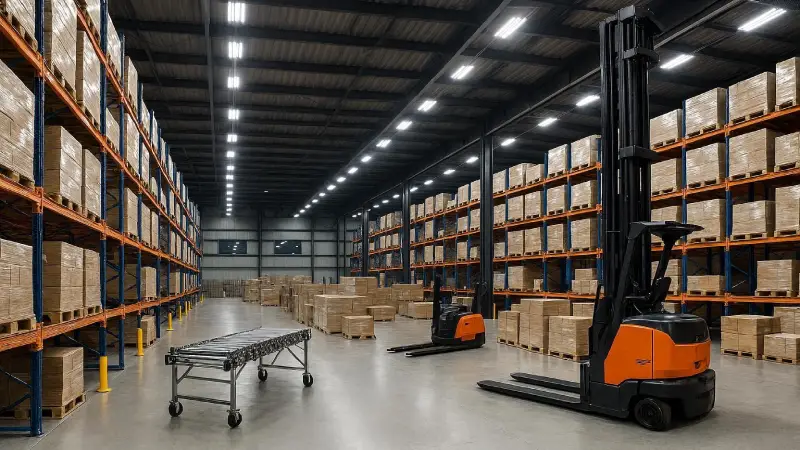
| Warehouse / storage | $1M building + contents | $5,500–$15,000/yr | Large inventory value, forklift damage risk |
| Auto repair shop | $300K equipment + garage | $3,500–$9,000/yr | Fire risk, customer vehicles on premises |
| Medical / dental office | $500K equipment | $3,000–$8,500/yr | High-value diagnostic equipment |
| Contractor / trades | $150K tools + equipment | $1,500–$4,500/yr | Equipment mobility, theft at job sites |
| Technology / software | $200K BPP | $700–$2,000/yr | Low physical risk — primarily cyber exposure |
🔍 Full Provider Reviews — Top 5 Detailed 2026
1. Next Insurance — Best for Small Business Digital Experience
Next Insurance has transformed small business insurance purchasing since their 2016 launch — offering fully digital commercial property insurance that can be quoted, purchased, and managed entirely online in minutes. For small businesses with straightforward needs (under $1M in property value, standard occupancy types), Next's online process delivers bindable quotes in 10–15 minutes without agent involvement. Their policies are underwritten by Munich Re — one of the world's strongest reinsurers — providing solid financial backing behind the digital platform. Next also offers instant certificate of insurance (COI) generation, allowing business owners to send proof of insurance to clients, landlords, or general contractors immediately.
Next's pricing is competitive for small businesses — typically 10–20% below traditional carrier pricing for equivalent coverage due to their lower distribution cost structure. Their BOP (Business Owner's Policy) bundles commercial property with general liability in a single policy, simplifying coverage management. Available in all 50 states for eligible business classes.
- ✅ Fully digital — quote to bind in 15 minutes
- ✅ Instant COI generation 24/7
- ✅ Competitive pricing — 10–20% below traditional carriers
- ✅ Munich Re underwriting — strong financial backing
- ❌ Not suitable for high-value or complex properties ($1M+)
- ❌ Limited customisation vs traditional carriers
2. The Hartford — Best Established Commercial Property Carrier
The Hartford is the dominant Business Owner's Policy (BOP) carrier in the American small business market — writing more BOP policies than any other insurer. Their Spectrum Business Owner's Policy is the benchmark against which competitor products are measured, combining commercial property, general liability, business income, and equipment breakdown in a single policy with broad coverage terms. The Hartford's A+ AM Best rating reflects 200+ years of financial stability and claims-paying strength. Their claims service receives consistently above-average ratings in J.D. Power small business surveys.
The Hartford's primary advantage for established small businesses is coverage breadth — their standard BOP includes business income coverage (lost revenue while your property is being repaired), equipment breakdown coverage (mechanical and electrical failure of business equipment), and data restoration coverage by default, without the add-on costs that competitors charge for these features. Their agent distribution model provides the advisory relationship that complex businesses need.
- ✅ Market-leading BOP — most complete standard coverage
- ✅ A+ AM Best — strongest among mid-market carriers
- ✅ Business income + equipment breakdown included standard
- ✅ 200+ year financial track record
- ❌ Not available for all business types directly — agent required for some
- ❌ Premiums slightly above Next for simple small business needs
3. Chubb — Best for High-Value Commercial Properties
Chubb is the world's largest publicly traded property-casualty insurer and the preferred carrier for high-value commercial properties — buildings and contents valued above $1M where coverage accuracy and claims quality matter most. Their Masterpiece commercial product line provides agreed value coverage (no coinsurance clause, no depreciation disputes), risk consulting services before a loss, and a claims service that competitors benchmark against. Chubb's loss control engineers review your property risk and provide recommendations that can reduce both loss frequency and your premium. For high-value restaurant groups, professional office buildings, medical practices, and technology companies with expensive equipment, Chubb provides the most comprehensive protection available.
- ✅ A++ AM Best — highest financial strength
- ✅ Agreed value coverage — no coinsurance surprise at claim
- ✅ Best-in-class claims service
- ✅ Risk consulting included
- ❌ Premium-priced — not competitive for small simple risks
- ❌ Agent-only — no direct purchase
4. Hiscox — Best for Professional Services and Home-Based Businesses
Hiscox specialises in professional services businesses — consultants, marketing agencies, architects, engineers, accountants, and technology companies — and home-based businesses that standard commercial carriers often decline or price poorly. Their online quote-and-bind platform is competitive with Next Insurance for speed and digital experience, and their coverage for professional liability (errors and omissions) bundled with commercial property makes them particularly efficient for service businesses. Hiscox is available in all 50 states and can be purchased directly without an agent.
5. Travelers — Best Risk Management Resources
Travelers is one of the few commercial insurance carriers that provides genuine pre-loss risk management services to small business policyholders — not just at the enterprise level. Their MyTravelers for Business portal provides small business owners with risk assessment tools, safety programme templates, OSHA compliance resources, and claims management guidance. For business owners who want insurance and a risk management partner, Travelers provides more resources than any comparable carrier. Their A++ AM Best rating and $100B+ in assets make them one of the financially strongest commercial carriers available.
📋 BOP vs Standalone Commercial Property — Which Is Right?
The two primary ways to purchase commercial property insurance for small businesses are a Business Owner's Policy (BOP) or a standalone commercial property policy.
Business Owner's Policy (BOP) — Recommended for Most Small Businesses
A BOP bundles commercial property insurance and commercial general liability (CGL) into a single policy — typically at a 20–30% discount versus buying each coverage separately. BOPs are designed specifically for small-to-medium businesses with physical locations and are available from most major commercial carriers. Standard BOP inclusions: commercial property (building if owned, business personal property, inventory); general liability ($1M–$2M per occurrence, $2M–$4M aggregate); and business income (lost revenue during property restoration). Common BOP add-ons: equipment breakdown, cyber liability, professional liability, hired/non-owned auto.
BOP eligibility: most carriers require the business to have under $10M in annual revenue, under $5M in property value, and to operate in standard low-to-moderate-risk occupancy classes. High-risk businesses (restaurants, auto repair, contractors, manufacturers) may not qualify for BOP and require standalone coverages.
Standalone Commercial Property — For Complex or High-Risk Businesses
Businesses that don't qualify for BOP — or that need more coverage customisation than BOP offers — purchase standalone commercial property insurance. Standalone policies allow greater customisation: higher property limits, specific endorsements for unique equipment, agreed value coverage, blanket property coverage across multiple locations, and speciality perils coverage. Standalone commercial property is typically more expensive than BOP-equivalent coverage but provides more tailored protection for complex businesses.
⚖️ Replacement Cost vs Actual Cash Value — The Most Important Coverage Decision
When insuring commercial property, you must choose between two valuation methods that fundamentally determine what you receive at claim time:
Replacement Cost (RC): The insurer pays the full cost to repair or replace the damaged property with new property of like kind and quality — with no deduction for depreciation. A 10-year-old commercial refrigerator that costs $8,000 new is replaced with a new equivalent refrigerator for $8,000 under replacement cost coverage. This is the superior option for most businesses and the standard recommendation. Actual Cash Value (ACV): The insurer pays the replacement cost minus depreciation. That same 10-year-old refrigerator — depreciated by 50% based on its useful life — generates a $4,000 ACV claim payment versus $8,000 under replacement cost. The remaining $4,000 is the business owner's problem. ACV policies are cheaper upfront (typically 15–25% lower premium) but can leave businesses severely undercompensated after a major loss. Our recommendation: Always choose Replacement Cost coverage for commercial property. The premium savings from ACV are rarely worth the exposure to massive depreciation gaps at claim time — particularly for equipment-heavy businesses like restaurants, medical practices, and manufacturers.
⚠️ 6 Most Expensive Small Business Insurance Mistakes
Mistake 1 — Choosing Actual Cash Value instead of Replacement Cost
As explained above, ACV policies generate significantly lower claim payments when older equipment, inventory, or fixtures are damaged. A restaurant with 8-year-old commercial kitchen equipment insured at ACV may receive 40–50 cents on the dollar at claim time — insufficient to replace the equipment and reopen. Always verify your policy basis and upgrade to replacement cost if you're on ACV.
Mistake 2 — Not purchasing Business Income coverage
Business Income (BI) coverage pays your lost revenue and ongoing fixed expenses (rent, payroll, utilities, loan payments) while your property is being repaired after a covered loss. A fire that destroys your retail store doesn't just cost you the rebuild — it costs you 6–18 months of revenue while you're closed. Without BI coverage, many businesses cannot survive the income gap during reconstruction. BI coverage adds 15–25% to your property premium and is one of the highest-value insurance purchases available to business owners.
Mistake 3 — Undervaluing property and triggering the coinsurance clause
Most commercial property policies contain a coinsurance clause requiring you to insure at 80–90% of the property's actual replacement cost. If you underinsure — say, insuring $300,000 of property at $200,000 (67% of value) — and experience a partial loss, the insurer pays only the proportional amount: (200,000/270,000) × claim = 74% of your loss. Update property values annually to reflect current construction costs.
Mistake 4 — Assuming flood is covered
Commercial property policies — like residential policies — exclude flood damage. Surface water flooding from rain, rivers, storm surge, and ground saturation is not covered. If your business is in a flood zone (even a moderate-risk zone), separate commercial flood insurance through the NFIP or private flood market is essential. Hurricane Helene (2024) and its record inland flooding demonstrated that flood risk extends far beyond traditional coastal zones.
Mistake 5 — Not covering equipment breakdown
Standard commercial property policies cover physical damage from fire, theft, and weather — but not mechanical or electrical breakdown of business equipment. A commercial HVAC system that fails due to mechanical breakdown is not a covered property claim. Equipment breakdown coverage (also called boiler and machinery insurance) covers exactly this scenario — and for businesses with expensive equipment (restaurants, medical practices, manufacturers), it is an essential add-on.
Mistake 6 — Forgetting off-premises property and employee property
Standard BPP coverage applies only to property at the insured location. Equipment taken to client sites, inventory in transit, or laptops used remotely by employees may not be covered without specific endorsements. Contractors, consultants, and businesses with mobile operations need off-premises property coverage or an inland marine policy to protect business property away from the primary location.
💡 How to Reduce Your Commercial Property Premium in 2026
| Strategy | Potential Saving | Applicability |
|---|---|---|
| Install monitored alarm + sprinkler system | 10–20% | All businesses with physical location |
| Increase deductible ($1,000 → $5,000) | 8–15% | Businesses with cash reserves to absorb small losses |
| Bundle property + GL in BOP | 20–30% | Small-medium businesses qualifying for BOP |
| 3+ years claims-free history | 5–15% | Businesses with clean claims record |
| Pay annually vs monthly | 4–8% | All businesses with premium financing ability |
| Compare at every renewal | Up to 40% | All businesses — market rates shift annually |
| Upgrade building construction (masonry) | 10–25% | Building owners considering renovation |
| Implement safety and risk management programme | 5–10% | Businesses with employee safety programmes |
🛒 How to Buy Commercial Property Insurance — Step by Step

Step 1 — Calculate your property value accurately
List every asset your business owns or leases: building (if owned) at current replacement cost per square foot × square footage; furniture and fixtures at current replacement cost; equipment and machinery; inventory at average annual value (or peak value if you want peak season protection); computers and electronics; and tenant improvements if you've renovated leased space. Use a commercial property appraisal service or work with your insurance agent to establish accurate values — undervaluation triggers the coinsurance penalty at claim time.
Step 2 — Determine your business class and risk profile
Insurance carriers classify businesses by Standard Industrial Classification (SIC) code or similar classification systems. Your business class heavily influences your premium — a hair salon is priced very differently from a restaurant. Be accurate and specific about your business operations — misclassification that leads to underpayment can result in claim denial.
Step 3 — Get quotes from at least 3 carriers
For simple small businesses (professional offices, consultants, retail stores under $500K in property): get online quotes from Next Insurance, Hiscox, and The Hartford. For more complex businesses or higher property values: work with an independent commercial insurance broker who has access to multiple carriers including Travelers, Chubb, Zurich, and specialty markets. An independent broker costs you nothing extra — they earn a commission from the insurer — and provides market access you cannot replicate by going direct.
Step 4 — Compare on coverage, not just premium
The cheapest quote is not automatically the best value. Compare: valuation basis (replacement cost vs ACV); coinsurance requirement; business income coverage period and limit; equipment breakdown inclusion; deductible options; and claims handling reputation. A policy that is $800 cheaper annually but pays $40,000 less on a major claim is not better value.
❓ Frequently Asked Questions — Commercial Property Insurance 2026
How much does commercial property insurance cost for a small business?
Commercial property insurance costs for small businesses range from $700–$15,000+ per year depending on business type, property value, and location. Professional service businesses (offices, consultants, tech companies) typically pay $700–$2,200/year for BPP coverage of $200,000–$300,000. Retail stores pay $2,800–$7,500/year. Restaurants are the most expensive at $4,200–$12,000+/year due to fire risk. The most affordable option for most eligible small businesses is a Business Owner's Policy (BOP) that bundles property with general liability at 20–30% below the cost of separate policies. Digital carriers like Next Insurance often provide the most competitive rates for straightforward small business risks.
What is the difference between a BOP and commercial property insurance?
A Business Owner's Policy (BOP) is a bundled insurance package that combines commercial property insurance with commercial general liability insurance in a single policy — typically at a 20–30% discount versus buying each separately. Commercial property insurance can be purchased as a standalone policy without the liability component. For most small businesses with a physical location, a BOP is the recommended approach — it provides complete core coverage (property + liability) in one policy, simplifies administration, and reduces cost. Standalone commercial property is appropriate for businesses that already have general liability through another arrangement, or for complex businesses that need more customisation than BOP structures allow.
Does commercial property insurance cover theft?
Yes — theft is a standard covered peril under commercial property insurance, covering burglary (break-in theft) and robbery (theft by force). However, several important limitations apply: employee theft is typically NOT covered by commercial property insurance — it requires a separate crime or fidelity bond policy; cash and accounts receivable may have sub-limits (often $1,000–$5,000) regardless of your total policy limit; property stolen from vehicles may be sub-limited or excluded; and theft of property at client locations may not be covered without an off-premises endorsement. Review your specific policy language for theft sub-limits and exclusions to understand your full exposure.
Is commercial property insurance required by law?
Commercial property insurance is generally not required by law in the United States. However, it is frequently required by contract: commercial landlords typically require tenants to carry property insurance (and general liability) as a lease condition; commercial mortgage lenders require building owners to maintain property insurance in amounts sufficient to cover the loan balance; and some business contracts, franchise agreements, and government contracts require specific insurance. Even where not legally required, commercial property insurance is essential financial protection — the SBA reports that 25% of businesses never reopen after a major property loss and 40% close within 2 years. Operating without commercial property insurance is a significant financial risk for any business with physical assets.
What is business income insurance and do I need it?
Business Income (BI) insurance — also called Business Interruption insurance — pays for your lost revenue and ongoing fixed expenses (rent, payroll, loan payments, utilities) during the period your business cannot operate due to a covered property loss. If a fire destroys your restaurant and it takes 9 months to rebuild, BI coverage pays your ongoing fixed costs and replaces the revenue you would have earned during those 9 months. Almost every business that depends on a physical location for revenue needs business income coverage. It's typically added to a BOP or standalone property policy at 15–25% additional premium — one of the most cost-effective insurance purchases available.
Which is the best commercial property insurance for small businesses in 2026?
The best commercial property insurance depends on your business type and needs. For small businesses wanting fast, digital coverage at competitive rates — Next Insurance is the top choice in 2026, with online quoting in 15 minutes and instant COI generation. For the most comprehensive BOP with the best standard coverage inclusions — The Hartford leads the market. For high-value commercial properties ($1M+) requiring the strongest claims service — Chubb is the premier option. For professional services businesses including home-based operations — Hiscox provides the most tailored coverage. Get quotes from at least 3 providers before purchasing, and work with an independent commercial insurance broker for properties over $500,000 or complex business types.
✅ Final Verdict — Commercial Property Insurance Guide 2026
The most important commercial property insurance decisions for small businesses in 2026 are: always choose Replacement Cost over ACV; always add Business Income coverage; compare at every renewal — rates shift significantly year to year; and buy a BOP if you qualify — bundling property and liability saves 20–30%. For most small businesses, Next Insurance is the fastest and most affordable digital option. For established businesses with complex needs, The Hartford and Chubb provide the most comprehensive protection. For comprehensive comparison of all business insurance types including workers' compensation and liability, see our guide on Best Business Insurance Companies USA 2026. For commercial property-specific comparison by insurer, see our Best Commercial Property Insurance USA 2026 guide.
Disclaimer: Premium estimates are based on May 2026 market research and vary by location, business class, and individual underwriting. Always obtain personalised quotes from licensed insurers before purchasing. Nexuora is not affiliated with any insurer listed. Updated May 4, 2026.

Ahmada Ndao is a financial research analyst and independent journalist
specializing in US consumer finance, legal rights, and insurance markets.
With over 5 years covering American financial products, he has helped
thousands of readers navigate complex insurance decisions, find the right
legal representation, and optimize their credit strategies. His research
methodology combines primary data analysis, direct outreach to industry
professionals, and continuous monitoring of federal regulatory changes.
Ahmada’s work has been cited by financial communities across the US and
reviewed by licensed attorneys and insurance professionals for accuracy.