Mortgage Rates Forecast 2026 — Should You Refinance Now or Wait? Expert Analysis & Step-by-Step Decision Guide
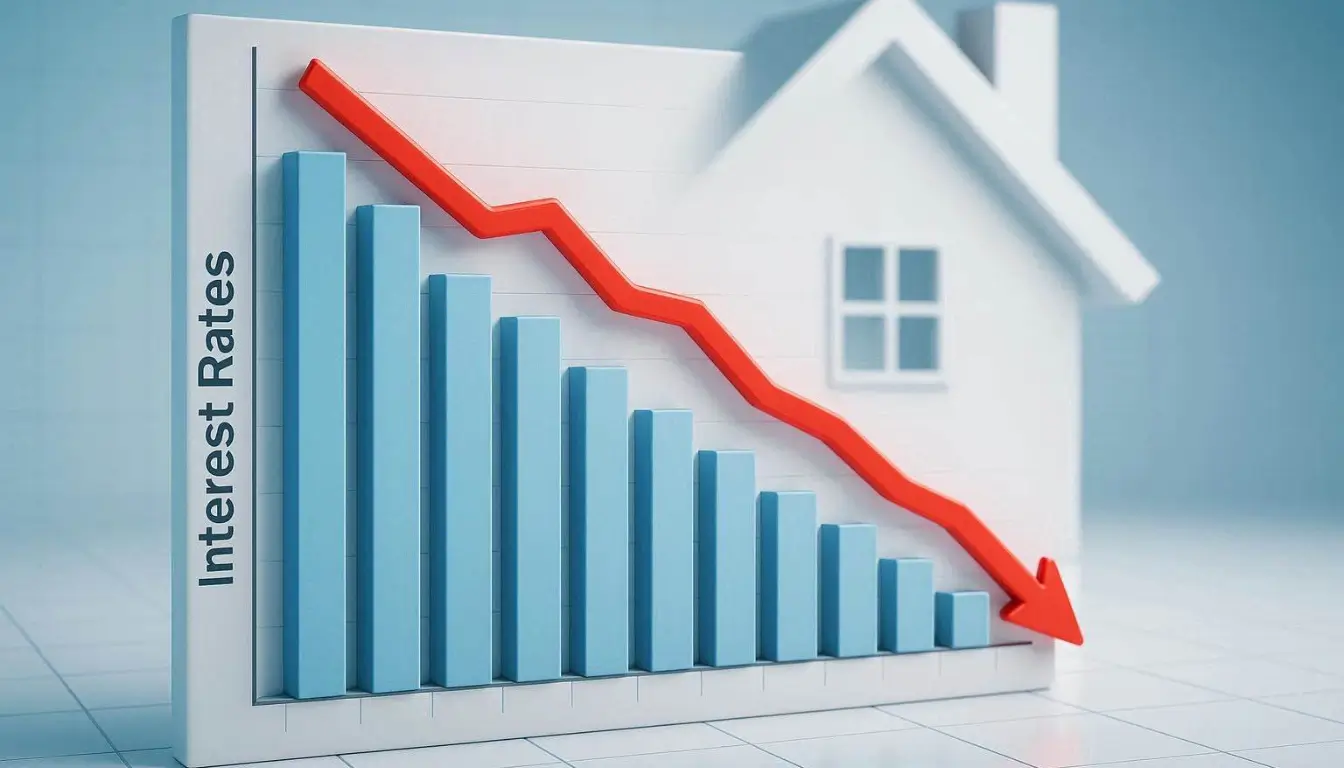
30-year fixed mortgage rates stand at 6.82% as of May 2026 — down from a peak of 8.09% in October 2023 but still more than double the historic lows of 2.65% seen in January 2021. For the 54 million American homeowners carrying mortgages, the central financial question of 2026 is whether to refinance now or wait for rates to drop further. Refinance too early and you lock in a rate that continues falling. Wait too long and you miss significant savings while paying premium interest. The average homeowner who refinances correctly saves $312–$680/month — a decision worth tens of thousands of dollars over the loan term. This complete guide gives you the data, the forecasts, and a step-by-step personal decision framework to answer definitively whether you should refinance in 2026.

📈 2026 Mortgage Rate Forecast — Where Rates Are Headed

Mortgage rate forecasting is inherently imprecise — rates respond to dozens of macroeconomic variables simultaneously. But analysing the consensus of major forecasters gives homeowners a reasonable probability-weighted picture of where rates are likely to go. Here is what the major institutions are projecting for 30-year fixed mortgage rates in 2026:
| Institution | Q2 2026 Forecast | Q3 2026 Forecast | Q4 2026 Forecast | Key Assumption |
|---|---|---|---|---|
| Fannie Mae | 6.7% | 6.5% | 6.3% | 2 Fed cuts in 2026 |
| Freddie Mac | 6.8% | 6.6% | 6.4% | 1–2 Fed cuts |
| Mortgage Bankers Association | 6.6% | 6.4% | 6.2% | 2–3 Fed cuts in 2026 |
| National Association of Realtors | 6.7% | 6.5% | 6.3% | Gradual easing cycle |
| Wells Fargo Economics | 6.9% | 6.7% | 6.5% | Inflation persistence risk |
| Goldman Sachs Research | 6.75% | 6.55% | 6.35% | Fed starts cutting June 2026 |
| Consensus Range | 6.6%–6.9% | 6.4%–6.7% | 6.2%–6.5% | — |
What the Forecast Means for Refinancers
The consensus forecast suggests 30-year mortgage rates declining gradually to 6.2%–6.5% by December 2026 — a reduction of approximately 0.3–0.6 percentage points from current levels. This modest decline produces meaningful monthly savings on large balances but does not represent the dramatic rate environment needed for mass refinancing economics to work for most 2020–2022 buyers who locked in at 2.5%–3.5%.
The critical insight: for homeowners who bought or refinanced in 2023–2024 at rates of 7.5%–8.09%, the current rate of 6.82% already represents a refinance opportunity worth calculating. For homeowners at 2020–2022 rates of 2.5%–4%, current rates do not support refinancing regardless of how far they fall in 2026 — you would be moving from a historically low rate to a historically average rate, increasing your monthly payment and lifetime interest cost.
🏦 Federal Reserve Policy — The Key Driver of Mortgage Rates in 2026
Mortgage rates do not directly follow the Federal Reserve's federal funds rate — but they are significantly influenced by it. Understanding the relationship helps you interpret rate movements and forecasts accurately.
How the Fed Influences Mortgage Rates
30-year fixed mortgage rates are most closely correlated with the yield on 10-year US Treasury bonds — not the federal funds rate. When the Fed signals rate cuts, 10-year Treasury yields typically fall in anticipation, pulling mortgage rates lower. When inflation data surprises to the upside, Treasury yields rise and mortgage rates follow. The spread between the 10-year Treasury yield and the 30-year mortgage rate — historically 1.5–1.7 percentage points — widened to 2.5–3.0 percentage points during the 2022–2024 period due to uncertainty in the mortgage-backed securities market. If this spread normalises (as many analysts expect), mortgage rates could fall to 5.8%–6.2% even without aggressive Fed rate cuts — simply from market normalisation.
The 2026 Fed Outlook
The Federal Reserve held the federal funds rate at 4.25%–4.50% through their March 2026 meeting. The CME FedWatch Tool as of May 2026 prices in approximately two 0.25% cuts by December 2026 — a total reduction of 0.50 percentage points. The key risk to this forecast: if inflation re-accelerates (particularly services inflation or energy prices), the Fed may delay or cancel expected cuts, keeping mortgage rates higher for longer. The key upside: if the labour market weakens more than expected, the Fed could cut more aggressively, driving rates lower faster than forecasts suggest.
| Scenario | Fed Cuts in 2026 | 30yr Rate End 2026 | Impact on $400K Mortgage |
|---|---|---|---|
| Bear case (inflation returns) | 0 cuts | 7.0%+ | Refinance opportunity narrows |
| Base case (consensus) | 2 cuts (0.50%) | 6.2%–6.5% | $80–$160/mo saving on recent high-rate loans |
| Bull case (recession risk) | 4+ cuts (1.0%+) | 5.5%–5.8% | $280–$420/mo saving — mass refinance wave |
🎯 Should YOU Refinance? — The Personal Decision Framework
The refinance decision is personal — it depends on your current rate, loan balance, remaining term, closing costs, and how long you plan to stay in the home. Here is the complete framework to answer the question for your specific situation.
Step 1 — Identify your current mortgage rate and origination year
| When You Got Your Mortgage | Typical Rate Range | Refinance at 6.82% Today? |
|---|---|---|
| 2020–2021 (pandemic lows) | 2.65%–3.50% | ❌ Never — you have a historic rate |
| Early 2022 | 3.50%–4.50% | ❌ No — still well below current rates |
| Mid–Late 2022 | 4.50%–7.00% | ⚠️ Maybe if you're at 7%+ — calculate break-even |
| 2023 | 6.50%–8.09% | ✅ Very likely YES if at 7.5%+ — calculate now |
| Early 2024 | 7.00%–7.50% | ✅ YES for most — significant savings available |
| Late 2024–2025 | 6.50%–7.25% | ⚠️ Depends — calculate break-even carefully |
| ARM borrowers (any year) | Variable | ✅ Evaluate — rate risk with ARMs adjusting up |
Step 2 — The Golden Rule of Refinancing
The traditional "1% rule" states that refinancing is worth considering when you can reduce your interest rate by at least 1 percentage point. While this is a useful starting rule, it is imprecise — a 0.75% reduction on a $600,000 mortgage saves more monthly than a 1.5% reduction on a $150,000 mortgage. The more precise tool is the break-even calculation described in the next section.
Step 3 — The 4 Questions to Answer Before Refinancing
Q1: How much will my monthly payment decrease? Calculate the monthly payment at your current rate versus the refinance rate for your remaining balance. Tools like Bankrate's mortgage calculator make this a 2-minute exercise. Q2: What will closing costs total? Refinance closing costs typically run 2–5% of the loan amount — $6,000–$15,000 on a $300,000 refinance. These can be paid upfront or rolled into the loan (adding to your balance and total interest cost). Q3: How long will I stay in this home? If you plan to sell in 2 years and your break-even is 4 years, refinancing costs you money. This is the question most homeowners underestimate. Q4: What is my credit score and equity position? The best refinance rates require 740+ credit score and at least 20% equity. Lower credit or equity positions increase your rate offer and may negate the savings.
🔢 The Break-Even Calculation — The Most Important Number

The break-even point tells you how many months it takes to recover your refinance closing costs through monthly payment savings. It is the single most important number in the refinance decision.
Break-Even Formula
Break-Even Months = Total Closing Costs ÷ Monthly Payment Reduction
Real Examples — Current Rate 6.82%, May 2026
| Loan Balance | Current Rate | New Rate | Monthly Saving | Closing Costs (3%) | Break-Even | Verdict |
|---|---|---|---|---|---|---|
| $400,000 | 8.09% | 6.82% | $380/mo | $12,000 | 32 months | ✅ Refinance now — 2.7 years to break even |
| $350,000 | 7.50% | 6.82% | $175/mo | $10,500 | 60 months | ⚠️ Only if staying 5+ years |
| $500,000 | 7.75% | 6.82% | $310/mo | $15,000 | 48 months | ⚠️ Worth it if staying 4+ years |
| $300,000 | 7.25% | 6.82% | $90/mo | $9,000 | 100 months | ❌ Not worth it — too long to break even |
| $600,000 | 8.09% | 6.82% | $570/mo | $18,000 | 32 months | ✅ Refinance now — strong savings |
Should You Wait for Lower Rates?
The "waiting for lower rates" strategy has a hidden cost: every month you delay, you pay interest at your higher current rate. If you are at 8.09% on a $400,000 mortgage and delay refinancing to 6.5% (projected Q4 2026) versus refinancing today to 6.82%, the savings difference is approximately $110/month — but you pay 6–8 months of additional high-rate interest while waiting. On a $400,000 balance at 8.09%, each month of delay costs approximately $1,540 in interest versus $1,370 at 6.82% — a monthly cost of $170 per month of delay. If rates drop from 6.82% to 6.5% by December, you save $80/month more on the permanent payment — but it takes 2 years to recover the $1,020–$1,360 extra interest paid waiting. The practical answer: if your break-even works now, refinance now. Don't optimise for the last 0.3% of rate reduction when you're paying 8% while waiting.
📋 Refinance Types — Rate-and-Term vs Cash-Out vs Streamline
| Refinance Type | Purpose | Best For | Key Consideration |
|---|---|---|---|
| Rate-and-Term | Lower rate and/or change loan term — no cash out | Reducing monthly payment or paying off faster | Most common refinance — straightforward break-even analysis |
| Cash-Out | Refinance for more than you owe — receive difference in cash | Home improvements, debt consolidation, major expenses | Increases loan balance — evaluate ROI of cash use carefully |
| FHA Streamline | Simplified refinance for existing FHA borrowers | FHA loan holders wanting lower rate with minimal paperwork | No appraisal required — fastest refinance available |
| VA IRRRL | Streamlined refinance for VA loan holders | Veterans and military members with existing VA loans | No appraisal, no income verification — easiest path |
| 15-year from 30-year | Shorten loan term — build equity faster | Borrowers wanting to pay off sooner and reduce lifetime interest | Higher monthly payment — ensure budget accommodates it |
Cash-Out Refinance in 2026 — Is It a Good Idea?
Cash-out refinancing — where you borrow more than your current balance and receive the difference in cash — is particularly relevant in 2026 because average home equity has increased dramatically. The average US homeowner had $298,000 in home equity as of Q1 2026 — up 71% since 2020. Homeowners with significant equity can access large amounts of cash at mortgage rates (6.82%) that are lower than personal loan rates (8–15%) or home equity line of credit rates (8.5%–10%). Cash-out makes financial sense for home improvements that increase property value (kitchens, bathrooms, additions), paying off high-rate debt (credit cards at 22%+), or other high-return uses. It does not make sense for discretionary spending, vacations, or any use that doesn't generate financial return — you are borrowing against your home's equity at a cost that compounds over 30 years.
💰 Real Savings — What Refinancing from Various Rates Saves Today
The following table shows monthly savings from refinancing to today's 6.82% 30-year fixed rate from various higher rates, at three common loan balance levels. These are before closing costs — your net savings after the break-even period are as shown.
| Current Rate | $300K Balance | $450K Balance | $600K Balance | Annual Saving ($450K) |
|---|---|---|---|---|
| 8.09% | $285/mo | $428/mo | $570/mo | $5,136/yr |
| 7.75% | $208/mo | $312/mo | $416/mo | $3,744/yr |
| 7.50% | $157/mo | $236/mo | $314/mo | $2,832/yr |
| 7.25% | $107/mo | $160/mo | $214/mo | $1,920/yr |
| 7.00% | $57/mo | $86/mo | $114/mo | $1,032/yr |
📋 How to Refinance Your Mortgage in 2026 — Step by Step

Step 1 — Check your credit score (Week 1)
Pull your free credit reports from AnnualCreditReport.com and check for errors. The best refinance rates require a FICO score of 740+ — below 700, you will receive a higher rate (adding 0.25%–0.75% above advertised rates) that significantly affects your break-even calculation. If your score is below 740, a 60–90 day credit improvement effort (paying down credit card balances, disputing errors) before applying can save thousands over the loan term.
Step 2 — Calculate your home equity (Week 1)
Lenders require at least 20% equity (80% loan-to-value) to qualify for the best rates and avoid PMI. If your equity is below 20%, you may still refinance but will pay private mortgage insurance or a higher rate. Get a current home value estimate from Zillow, Redfin, or a licensed appraiser to determine your current equity position before applying.
Step 3 — Shop at least 3 lenders simultaneously (Week 1–2)
The CFPB consistently finds that homeowners who get 3+ refinance quotes save an average of $1,500 over the loan term versus those who take the first offer. Get quotes from: your current lender (they may offer a "loyalty" rate or simplified process), at least one online lender (Better, Rocket Mortgage, LoanDepot — competitive digital rates), and at least one bank or credit union. Rate shopping within a 14–45 day window counts as a single hard inquiry for credit scoring purposes.
Step 4 — Compare Loan Estimates (Week 2)
Each lender must provide a standardised Loan Estimate within 3 business days of application. Compare these line by line — interest rate, APR (which includes fees), origination fee, points, appraisal cost, and total closing costs. The advertised rate is not the complete picture — a low rate with high origination fees may cost more than a slightly higher rate with zero origination fees depending on your payoff timeline.
Step 5 — Lock your rate (Week 2–3)
Once you select a lender and are satisfied with the rate, lock it immediately. Rate locks are typically available for 30, 45, or 60 days. In a rising-rate environment, lock as soon as you have a satisfactory offer. In a declining-rate environment (as forecast for 2026), some lenders offer "float-down" locks that allow you to capture a lower rate if rates fall before closing — ask about this option.
Step 6 — Appraisal and underwriting (Week 2–5)
The lender orders an appraisal to confirm the home's value supports the loan amount. Underwriting reviews your income, employment, assets, and credit — provide requested documents promptly to avoid delays. FHA Streamline and VA IRRRL refinances skip the appraisal step, making them significantly faster (often 2–3 weeks).
Step 7 — Closing (Week 4–6)
Review the Closing Disclosure carefully — compare it to your Loan Estimate and question any fees that differ. Sign closing documents. Your new loan is typically funded within 3 business days of closing (there is a 3-day right of rescission for primary residence refinances). Your first payment on the new loan is typically due 30–45 days after closing.
🏦 Best Mortgage Refinance Lenders 2026
| Lender | Best For | Avg Time to Close | Min Credit Score | Notable Feature |
|---|---|---|---|---|
| Better Mortgage | Fastest digital refinance | 21 days | 620 | No origination fee · 24/7 digital |
| Rocket Mortgage | Best overall experience | 26 days | 620 | Verified approval · Strong app |
| LoanDepot | Best for jumbo refinance | 28 days | 620 | No lender fees on some products |
| Ally Home | No origination fee refinance | 30 days | 620 | Fully online · No closing cost option |
| Chase Mortgage | Best for Chase bank customers | 35 days | 640 | $1,500 closing cost discount for Chase Private clients |
| Veterans United | Best VA IRRRL streamline | 20 days | 600 | VA specialists — best veteran rates |
| Navy Federal CU | Best credit union rates | 30 days | 580 | Military/federal eligible — lowest rates |
⚠️ 7 Costly Refinancing Mistakes to Avoid in 2026
Mistake 1 — Extending your loan term without accounting for total interest
Refinancing a 25-year remaining mortgage into a new 30-year mortgage reduces your monthly payment — but extends your payoff by 5 years and adds 5 years of interest payments. On a $400,000 balance at 6.82%, those 5 extra years cost approximately $136,000 in additional interest. Always compare total lifetime interest, not just monthly payment. If you can afford a 20-year or 15-year term, the interest savings are dramatic versus the lower monthly payment of a 30-year refinance.
Mistake 2 — Not shopping multiple lenders
The CFPB finds that more than 75% of homeowners accept the first refinance offer they receive. Getting 3+ quotes takes 2 hours and saves an average of $1,500 over the loan — an hourly rate of $750. No other personal finance activity produces this return on time invested.
Mistake 3 — Rolling closing costs into the loan without calculating the true cost
Rolling $12,000 in closing costs into your loan balance at 6.82% means you pay interest on those costs for 30 years — an additional $14,400 in interest over the loan term. Sometimes this is the right trade-off (you don't have the cash upfront), but many homeowners roll costs in without realising the full cost. Always calculate the no-cash refinance against the cash-at-closing option.
Mistake 4 — Refinancing with less than 20% equity
If your equity is below 20%, your lender will require private mortgage insurance (PMI) on the refinanced loan — adding $100–$300/month to your payment. This can eliminate all monthly savings from the rate reduction. If you're close to 20% equity (17–19%), consider making a lump sum payment to reach the threshold before refinancing — potentially saving more than the delayed refinance costs.
Mistake 5 — Ignoring the APR and focusing only on the interest rate
The Annual Percentage Rate (APR) includes the interest rate plus all fees — origination fee, points, broker fees — expressed as a single annual cost. A lender offering 6.50% with 2 points ($8,000 in fees on a $400,000 loan) has a higher APR than a lender offering 6.82% with no points. For your specific break-even period, the no-points lender may be cheaper. Compare APR and Loan Estimates, not just advertised rates.
Mistake 6 — Refinancing right before selling
If you plan to sell within 24–36 months, refinancing typically does not make financial sense — you will not reach the break-even point before selling. The closing costs you pay in the refinance are lost when you sell. Always verify your expected remaining ownership period before committing to a refinance.
Mistake 7 — Taking cash out without a clear financial plan
Cash-out refinancing converts home equity into debt — if you use the cash for discretionary spending rather than high-return investments or high-rate debt payoff, you are reducing your net worth at a 6.82% cost for up to 30 years. Before cash-out, ask: "What is the ROI of this cash use, and does it exceed 6.82% compounding over time?" Home improvements that increase property value, paying off 22%+ credit card debt, and building an emergency fund are all defensible uses. Vacations and consumer purchases are not.
❓ Frequently Asked Questions — Mortgage Rates & Refinancing 2026
Will mortgage rates go down in 2026?
The consensus forecast from Fannie Mae, Freddie Mac, the Mortgage Bankers Association, and major banks projects 30-year fixed mortgage rates declining gradually from 6.82% (May 2026) to approximately 6.2%–6.5% by December 2026 — assuming the Federal Reserve cuts the federal funds rate twice (0.50% total) in the second half of 2026. This modest decline reflects easing inflation, slowing economic growth, and the continuation of the Fed's rate normalisation cycle. The risks to this forecast: inflation re-acceleration could delay or cancel Fed cuts, keeping rates higher. A faster economic slowdown could produce more aggressive Fed cutting, driving rates below 6%. Most likely scenario: a gradual, moderate decline to the low-to-mid 6% range by year-end.
Is it worth refinancing to save $200 per month?
Whether a $200/month refinance saving is worth it depends entirely on your closing costs and how long you plan to stay in the home. If closing costs are $8,000, your break-even point is 40 months (8,000 ÷ 200). If you plan to stay at least 40 months, the refinance saves you money. If you plan to sell in 24 months, you lose $800 ($8,000 in closing costs minus $4,800 in savings before selling). For a $200/month saving: worth it if staying 4+ years with typical closing costs; marginal at 3 years; not worth it if selling within 2 years. Over 10 years after break-even, a $200/month saving produces $24,000 in savings — making it highly worthwhile for homeowners planning to stay long-term.
What credit score do I need to refinance my mortgage in 2026?
Minimum credit scores for mortgage refinancing in 2026: conventional loans require a minimum 620 FICO score, but the best rates (advertised rates you see online) require 740+. FHA refinances require a minimum 580 (or 500 with 10% equity). VA IRRRL streamline refinances have no minimum credit score requirement set by VA guidelines, though individual lenders typically require 580–620. Each 20-point credit score improvement in the range of 620–740 typically reduces your mortgage rate by 0.125%–0.25% — worth $25–$50/month on a $400,000 loan. If your score is 700–739, consider a 60-day credit improvement effort (paying down revolving balances) before applying — the rate improvement can be significant.
How much does it cost to refinance a mortgage?
Mortgage refinance closing costs typically run 2%–5% of the loan amount — $6,000–$15,000 on a $300,000 refinance. Main cost components: loan origination fee (0–1% of loan amount); appraisal ($400–$700); title search and insurance ($700–$1,500); recording fees ($50–$500); prepaid interest (interest from closing date to month end); and homeowners insurance prepayment. Some lenders offer "no-closing-cost" refinances where they either roll costs into the loan balance or charge a slightly higher interest rate in exchange for covering closing costs. These options can make sense for homeowners who don't have cash available — but always calculate the true long-term cost of the rate trade-off versus paying costs upfront.
How long does it take to refinance a mortgage in 2026?
The average mortgage refinance takes 30–45 days from application to closing in 2026. The fastest options: FHA Streamline and VA IRRRL refinances (which skip the appraisal step) often close in 15–25 days. Online lenders like Better Mortgage and Rocket Mortgage average 21–26 days for qualified applicants with complete documentation. Traditional bank refinances average 35–45 days. Delays most commonly occur from: slow documentation submission by the borrower; appraisal scheduling backlogs; title company delays; or underwriting requests for additional documentation. Submit all requested documents promptly and maintain communication with your loan officer to minimise delays.
Should I refinance from a 30-year to a 15-year mortgage?
Refinancing from a 30-year to a 15-year mortgage makes compelling financial sense for many borrowers in 2026 — 15-year rates (6.14%) are 0.68% lower than 30-year rates (6.82%), and you pay interest for 15 fewer years. The total interest savings over the loan life are dramatic: on a $400,000 loan, the total interest paid on a 15-year at 6.14% is approximately $200,000 versus $538,000 on a 30-year at 6.82% — a lifetime saving of $338,000. The trade-off: the 15-year monthly payment is significantly higher (approximately $3,397 versus $2,625 on a 30-year for $400,000). The 15-year refinance is the right choice if your budget comfortably accommodates the higher payment without financial stress. If the payment is a stretch, a 30-year refinance with voluntary extra principal payments provides flexibility — you can pay extra when cash flow allows and fall back to the minimum payment when needed.
✅ Final Verdict — Should You Refinance in 2026?
If your current rate is 7.5% or higher: Calculate your break-even now — for most homeowners at these rates, refinancing to 6.82% produces compelling savings within 24–36 months. Do not wait for rates to fall further — the monthly cost of delay likely exceeds the eventual savings from a lower future rate. If your current rate is 7.0%–7.49%: Run the break-even calculation — if you plan to stay 4+ years, refinancing likely makes sense. If your current rate is below 7%: Current rates likely do not support refinancing — monitor the market and consider refinancing if rates reach 5.5%–5.8%, which is the forecast for 2027 under the bull scenario. If you bought in 2020–2022 at 2.5%–4%: Do not refinance at any rate available in 2026 — your existing rate is below anything available in the market for the foreseeable future. For our complete guide on the best mortgage lenders, see Best Mortgage Lenders USA 2026.
Disclaimer: Mortgage rate forecasts are projections based on current economic data and are not guarantees of future rates. Individual refinance rates depend on credit score, equity, loan type, and lender. Always consult a licensed mortgage professional before making refinancing decisions. Nexuora is not affiliated with any lender listed. Updated May 4, 2026.

Ahmada Ndao is a financial research analyst and independent journalist
specializing in US consumer finance, legal rights, and insurance markets.
With over 5 years covering American financial products, he has helped
thousands of readers navigate complex insurance decisions, find the right
legal representation, and optimize their credit strategies. His research
methodology combines primary data analysis, direct outreach to industry
professionals, and continuous monitoring of federal regulatory changes.
Ahmada’s work has been cited by financial communities across the US and
reviewed by licensed attorneys and insurance professionals for accuracy.