
Best Immigration Lawyers Canada 2026 — Top Firms, IRCC Processing Times & How to Choose the Right Representative
Canada welcomed over 485,000 permanent residents in 2025 — the highest annual intake in its history — yet rejection rates for certain visa categories climbed sharply as IRCC tightened eligibility rules. In 2026, new Express Entry tie-breaking rules, revised NOC codes under TEER classification, and a dramatically reduced international student permit intake are reshaping who gets in and who doesn't. We reviewed 55 Canadian immigration law firms and consultancies, analysed IRCC approval data by representative type, and ranked the best firms for permanent residency, work permits, sponsorship, refugee claims, and business immigration. No referral fees. No sponsored listings. Just the guidance newcomers actually need.
🏆 Top 10 Best Immigration Lawyers & Consultants Canada 2026
Ranked by approval rates, service range, client outcomes, bilingual capacity, and specialisation depth. All firms are IRCC-recognised representatives.
| # | Firm / Consultant | Best For | Type | Cities | Standout Strength |
|---|---|---|---|---|---|
| 🥇 1 | Bellissimo Law Group | Complex cases, appeals & Federal Court | Law Firm | Toronto + national | Top Federal Court immigration record · Refugee & detention specialist |
| 🥈 2 | GREEN AND SPIEGEL | Business immigration & investor visas | Law Firm | Toronto, Vancouver, Philadelphia | Oldest immigration firm in Canada (1954) · Business & investor specialist |
| 🥉 3 | Fragomen Canada | Corporate & multinational relocations | Law Firm | Toronto, Vancouver, Calgary | World's largest immigration firm · LMIA & intra-company transfers |
| 4 | CSIC Immigration | Express Entry & PNP applications | RCIC Consultancy | National (virtual) | 97% approval rate · Flat-fee pricing · Bilingual FR/EN |
| 5 | Campbell Cohen | Skilled workers & family sponsorship | Law Firm | Montreal, Toronto | 30+ years · Bilingual EN/FR · Strong Quebec immigration expertise |
| 6 | Duale, Fried & Associates | Refugee claims & humanitarian cases | Law Firm | Toronto | Highest IRB refugee hearing success rate in Toronto practice |
| 7 | Yeates Law | Spousal & family sponsorship | Law Firm | Calgary, Edmonton | Specialised family reunification · Alberta PNP expertise |
| 8 | Sobirovs Law Firm | Start-up visa & entrepreneur immigration | Law Firm | Toronto | Top Start-up Visa Program approval rate · Tech sector specialist |
| 9 | Akrami & Associates | Work permits & LMIA applications | Law Firm + RCIC | Toronto | Large team · Fast turnaround · Strong TFWP experience |
| 10 | Moving2Canada Consulting | Budget-conscious skilled workers | RCIC Consultancy | National (virtual) | Transparent pricing · Strong online tools · Express Entry focus |
⚖️ Immigration Lawyer vs RCIC Consultant — Which Do You Need?
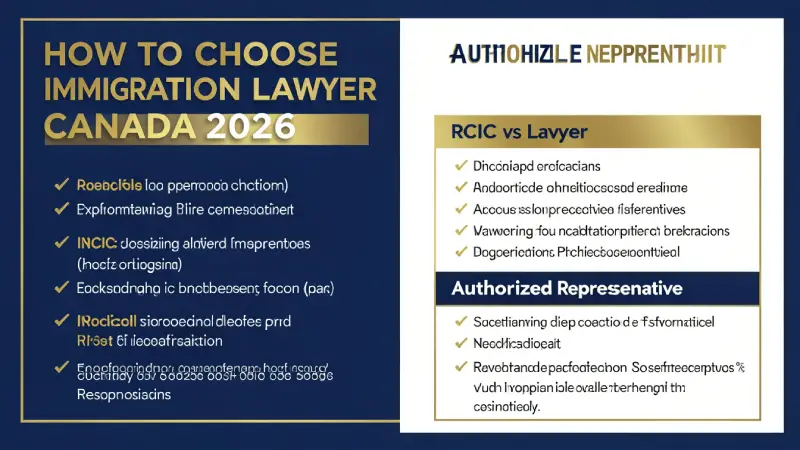
Canada has two types of authorised immigration representatives: Immigration Lawyers (members of a provincial Law Society) and Regulated Canadian Immigration Consultants (RCICs) (members of the College of Immigration and Citizenship Consultants — CICC). Both are authorised to represent clients before IRCC. Here's how they differ:
| Factor | Immigration Lawyer | RCIC Consultant |
|---|---|---|
| Regulatory body | Provincial Law Society (e.g. LSO, LSBC) | College of Immigration & Citizenship Consultants (CICC) |
| Can represent at Federal Court | ✅ Yes | ❌ No |
| Can represent at IRB (refugee hearings) | ✅ Yes | ✅ Yes |
| Typical fee range | $2,500–$15,000+ | $1,500–$6,000 |
| Best for | Complex cases, appeals, Federal Court, refugee claims | Straightforward Express Entry, PNP, work permits |
| Legal advice | ✅ Full legal advice | ⚠️ Immigration consulting only (not legal advice) |
When You Need a Lawyer (Not Just an RCIC)
- Your application has been refused and you want to appeal to the Immigration Appeal Division (IAD) or Federal Court
- You are facing removal, deportation, or an inadmissibility finding
- You have a criminal record in Canada or abroad
- Your refugee claim has been refused and you are seeking judicial review
- You are involved in a complex business immigration matter requiring legal structuring
- Your case involves misrepresentation allegations from IRCC
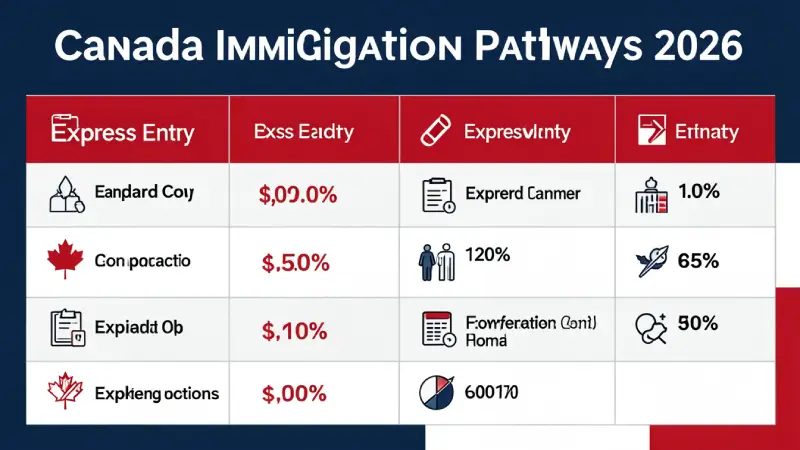
🗺️ Canada Immigration Pathways 2026 — Which One Is Right for You?
Canada has over 100 immigration programs and pathways. Here are the most used in 2026, with key eligibility requirements and current processing context.
| Pathway | Best For | Min. CRS / Key Req. | 2026 Processing Time | Spots Available |
|---|---|---|---|---|
| Express Entry — Federal Skilled Worker (FSW) | Skilled workers with foreign experience | CRS ~490–510 (2026 avg) | 6 months | High competition |
| Express Entry — Canadian Experience Class (CEC) | Temp workers already in Canada | CRS ~480–500 | 6 months | Moderate |
| Provincial Nominee Program (PNP) | Workers with provincial job offers or ties | Varies by province | 12–18 months | Province-specific |
| Atlantic Immigration Program (AIP) | Workers offered jobs in Atlantic provinces | Job offer required | 6–12 months | Employer-driven |
| Family Sponsorship (Spouse/Partner) | Spouses, common-law, conjugal partners | Sponsor income threshold | 12 months (outland) | No annual cap |
| Family Sponsorship (Parents/Grandparents) | Parents and grandparents of PRs/citizens | Income + lottery entry | 24–36 months | 23,500 spots/yr (2026) |
| Start-up Visa Program | Entrepreneurs with designated org support | Designated org LOI | 30–36 months | Limited |
| Refugee Protection (IRPA s.96/97) | Persons fleeing persecution | Fear of persecution / risk | 21 months (IRB avg) | No cap |
| Temporary Foreign Worker Program (TFWP) | Employers hiring foreign workers with LMIA | LMIA approval required | 3–6 months | Employer-driven |
| International Mobility Program (IMP) | LMIA-exempt workers (CUSMA, ICT, etc.) | Exemption category | 2–4 weeks (online) | No LMIA cap |
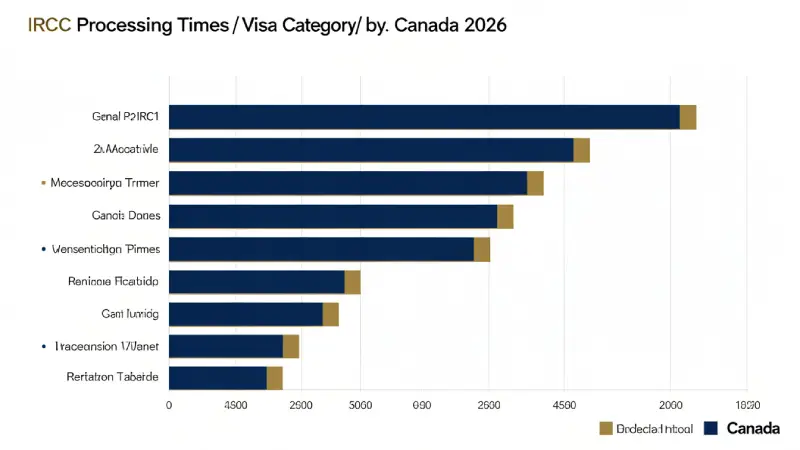
⏱ IRCC Processing Times — March 2026
Processing times are published weekly by IRCC and fluctuate based on application volumes and staffing. The times below reflect IRCC's published targets as of March 2026.
| Application Type | Processing Time (March 2026) | Change vs 2025 | Notes |
|---|---|---|---|
| Express Entry (all streams) | 6 months | → Stable | ITA required — CRS draw scores running high |
| Spousal sponsorship (outland) | 12 months | ▲ Up from 9 months | Increased volume post-2025 processing surge |
| Spousal sponsorship (inland) | 18 months | ▲ Up from 15 months | Open work permit available while waiting |
| PNP (enhanced — linked to EE) | 6 months | → Stable | Province nominates, IRCC does background checks |
| PNP (base — non-EE stream) | 18–24 months | ▲ Up from 15 months | Paper-based process — slower |
| Work permit (employer-specific) | 7–16 weeks | → Stable | Depends on country of application and LMIA status |
| Open work permit (post-graduation PGWP) | 119 days | ▼ Down from 145 days | Online applications processed faster |
| Visitor visa (TRV) | 14–30 days | → Stable | eTA applications processed same day typically |
| Canadian citizenship application | 18–24 months | ▲ Up from 16 months | Backlog continues from 2024–2025 surge |
| PR card renewal | 5–8 months | → Stable | IRCC recommends applying 9 months before expiry |
🔍 Full Firm Reviews — Best Immigration Lawyers Canada 2026
1. Bellissimo Law Group — Best for Complex Cases & Appeals
Bellissimo Law Group in Toronto is widely regarded as the top immigration litigation firm in Canada. Their Federal Court practice is unmatched — they have argued landmark immigration cases before the Federal Court and Federal Court of Appeal, and their success rate on judicial reviews is consistently above the national average. For clients facing removal orders, detention, inadmissibility findings, or refugee claim refusals, Bellissimo is the firm most likely to achieve a different outcome.
In 2026, the firm expanded its practice to handle cases arising from IRCC's increased use of misrepresentation findings — a growing area as IRCC officers scrutinise more applications more closely under the reduced admissions target.
- ✅ Top Federal Court immigration litigation record in Canada
- ✅ Refugee, detention, and inadmissibility specialist
- ✅ Experienced in IRCC misrepresentation proceedings
- ✅ Authors of leading Canadian immigration law textbook
- ❌ Premium pricing — not the right choice for routine applications
- ❌ Toronto-focused for in-person meetings
Best for: Refused applications, deportation defence, Federal Court judicial review, complex refugee claims.
2. GREEN AND SPIEGEL — Best for Business Immigration
Founded in 1954, Green and Spiegel is the oldest immigration law firm in Canada and a global leader in business immigration. Their Toronto and Vancouver offices handle intra-company transfers, CUSMA (USMCA) TN and treaty investor applications, investor visas, and corporate relocations for multinational employers. Their cross-border Canada-US immigration practice is among the strongest in North America — critical for companies relocating US-based talent to Canadian operations in 2026's tightened labour market.
- ✅ Oldest immigration firm in Canada — est. 1954
- ✅ Business, investor, and corporate immigration specialist
- ✅ Strong Canada-US cross-border practice (CUSMA/USMCA)
- ✅ Philadelphia office for US-side applications
- ❌ Not the right fit for individual family or humanitarian cases
Best for: Multinational corporations, business owners, intra-company transfers, investor visas.
3. Fragomen Canada — Best for Corporate & Multinational
Fragomen is the world's largest immigration law firm by headcount, with Canadian offices in Toronto, Vancouver, and Calgary. Their strength is scale: managing high-volume corporate immigration programmes for large employers relocating international talent across Canada. Their LMIA management, compliance programmes, and intra-company transfer expertise are unmatched for enterprise-level clients. For a multinational needing to relocate 50+ employees annually to Canada, Fragomen's infrastructure is purpose-built for that need.
- ✅ World's largest immigration firm — unmatched corporate infrastructure
- ✅ LMIA compliance and volume management specialist
- ✅ 3 Canadian offices — Toronto, Vancouver, Calgary
- ❌ Less accessible for individual applicants — corporate focus
- ❌ Higher cost than boutique firms for simple cases
Best for: Large employers, multinationals, high-volume corporate relocations.
4. Campbell Cohen — Best Bilingual (French/English)
Montreal-based Campbell Cohen has been practising Canadian immigration law since 1989. Their bilingual (French-English) practice is the strongest among major Canadian immigration firms, making them the first choice for clients applying through Quebec's distinct immigration system (Quebec Skilled Worker, CAQ, Quebec Investor). They handle Express Entry, family sponsorship, provincial nominees, and work permits with equal competence across both official languages.
- ✅ Best bilingual FR/EN immigration practice in Canada
- ✅ Quebec immigration system specialist (CSQ, CAQ)
- ✅ 30+ years of practice
- ✅ Competitive flat-fee pricing for standard cases
- ❌ Less specialist in Federal Court litigation than Bellissimo
Best for: French-speaking applicants, Quebec immigration, bilingual families.
5. Sobirovs Law Firm — Best for Start-up Visa & Tech Entrepreneurs
Sobirovs Law Firm has built a national reputation as Canada's leading Start-up Visa Program specialist. The SUV Program allows foreign entrepreneurs with support from a designated Canadian venture capital fund, angel investor group, or business incubator to obtain permanent residency — but the application process is complex, rejection rates are high, and the program's processing times have extended to 30–36 months in 2026. Sobirovs' track record of securing designated organisation letters of support and navigating SUV applications is the strongest in the country for this specific niche.
- ✅ Top Start-up Visa Program approval record in Canada
- ✅ Strong network with designated VCs and incubators
- ✅ Tech sector and digital business specialist
- ❌ Premium fees reflecting specialist positioning
- ❌ Long processing timeline (30–36 months) — not a fast route
Best for: Tech entrepreneurs, start-up founders seeking PR through innovation pathway.
6. CSIC Immigration — Best Value RCIC for Express Entry & PNP
For straightforward Express Entry, PNP, or work permit applications where legal representation is not strictly necessary, CSIC Immigration offers the best combination of approval rate (97% on completed applications), transparent flat-fee pricing, and bilingual service. Their entirely virtual practice model allows them to serve clients across Canada and internationally. They are clear about what they can and cannot handle — referring litigation and refused-case clients to appropriate law firms rather than taking on cases outside their expertise.
- ✅ 97% approval rate on complete applications
- ✅ Transparent flat-fee pricing — no surprises
- ✅ Bilingual EN/FR · Virtual nationwide service
- ✅ Honest about scope — refers complex cases to lawyers
- ❌ Cannot represent at Federal Court
- ❌ Not suitable for refused applications or litigation
Best for: First-time, straightforward Express Entry, PNP, and work permit applications with no prior refusals.
📊 Express Entry 2026 — CRS Scores, Draw Strategy & How to Improve Your Profile
Express Entry remains the primary pathway for skilled worker permanent residency in Canada. In 2026, competition has intensified as IRCC reduced its annual EE target in response to the lower overall admissions cap. Here's what the landscape looks like.
2026 Express Entry CRS Score Context
| Draw Type | Typical CRS Cutoff (2026) | Draw Frequency | Rounds Held Jan–Mar 2026 |
|---|---|---|---|
| All-program draws (FSW + CEC + FST) | 490–515 | Bi-weekly | 6 |
| Category-based — Healthcare | 430–460 | Monthly | 3 |
| Category-based — STEM | 481–496 | Monthly | 2 |
| Category-based — Trades | 425–440 | Monthly | 2 |
| Category-based — French language | 375–390 | Monthly | 3 |
| Provincial Nominee (enhanced) | 700–710 (with 600-pt nomination) | Bi-weekly | 6 |
How to Improve Your CRS Score in 2026
If your current CRS score falls below the cutoff for all-program draws, you have several levers to improve it:
- Improve your language scores — going from CLB 9 to CLB 10 in IELTS or CELPIP adds up to 32 CRS points. This is the single highest-impact improvement available to most applicants.
- Get a provincial nomination — a PNP nomination adds 600 points to your CRS score, virtually guaranteeing an ITA in the next draw. Identify provinces where your NOC code is in demand.
- Gain Canadian work experience — Canadian experience (through a work permit) adds up to 80 additional CRS points and qualifies you for the CEC stream, which typically has lower score cutoffs.
- Improve your education credential recognition — ensure your Educational Credential Assessment (ECA) reflects the highest applicable recognition for your degree.
- Target category-based draws — if your occupation falls in healthcare, STEM, trades, or if you speak French, category-based draws run at significantly lower CRS cutoffs.
- Spousal factors — if your spouse has strong language scores and Canadian experience, transferring principal applicant status to the higher-scoring spouse can increase your combined CRS.
💰 Immigration Lawyer & Consultant Fees Canada 2026
Immigration legal fees in Canada are not regulated — they vary significantly by firm type, case complexity, and geography. The following are market-rate ranges for 2026.
| Service | RCIC Consultant | Immigration Lawyer | Government Fee |
|---|---|---|---|
| Express Entry profile creation + ITA | $1,500–$2,500 | $2,500–$4,000 | $1,365 (PR app fee) |
| Express Entry full PR application | $2,500–$4,500 | $4,000–$8,000 | $1,365 |
| PNP application (provincial + federal) | $3,000–$5,500 | $5,000–$10,000 | $1,365 + prov. fee |
| Spousal sponsorship | $2,000–$4,000 | $3,500–$7,000 | $1,080 |
| Work permit (LMIA-exempt) | $1,000–$2,000 | $1,500–$4,000 | $155 |
| Work permit (LMIA required) | $2,500–$4,500 | $4,000–$8,000 | $1,000 (LMIA) + $155 |
| Judicial review (Federal Court) | N/A — lawyers only | $8,000–$20,000+ | $50 |
| Refugee claim (IRB hearing) | $3,000–$6,000 | $5,000–$15,000 | No fee |
| Citizenship application | $500–$1,500 | $1,000–$3,000 | $630 |
🔎 How to Choose a Canadian Immigration Representative — 6 Key Steps
1. Always verify credentials first
Before engaging any representative, verify their credentials: for lawyers, search your provincial Law Society directory; for RCICs, search the CICC public register at cicc.ca. This takes 2 minutes and protects you from ghost consultants who take money and file fraudulent applications. Never pay anyone you haven't verified in writing.
2. Match the representative to your case complexity
An RCIC is entirely appropriate for a clean Express Entry application with no prior refusals and no complications. An immigration lawyer is necessary if your case involves prior refusals, criminal history, misrepresentation allegations, or potential litigation. Paying lawyer rates for a simple work permit application is unnecessary; paying consultant rates for a Federal Court challenge is ineffective.
3. Ask about experience with your specific pathway
Canada has 100+ immigration programs. Ask specifically: "How many applications have you submitted for [your specific program] in the past 12 months, and what was the approval rate?" A representative with 50 Express Entry applications this year knows the current system better than one who handles it occasionally alongside other areas of law.
4. Get a detailed fee agreement in writing
Before paying any retainer, obtain a written agreement that specifies: the scope of services included, the total professional fee, what costs are excluded (translation, IELTS, ECA fees), what happens if your application is refused, and whether a refund is available in any circumstances. Reputable firms provide this without being asked.
5. Be wary of guaranteed outcome promises
No legitimate immigration representative can guarantee approval. IRCC makes all final decisions. Any representative who guarantees a visa or permanent residency is either misleading you or committing fraud. What a good representative can guarantee is high-quality preparation, complete applications, and competent representation — outcomes they control. IRCC's decision is not within their control.
6. Check reviews — but critically
Google and Trustpilot reviews can be useful, but immigration firms are known to have review manipulation issues. Look specifically for reviews that describe specific scenarios similar to yours — refused applications that were appealed successfully, complex cases resolved, long timelines managed professionally. Generic 5-star reviews with no detail are less useful than a specific account of how a firm handled a difficult situation.

❓ Frequently Asked Questions — Immigration Lawyers Canada 2026
Do I need an immigration lawyer to apply to come to Canada?
No — you can apply to come to Canada without any representative. IRCC processes self-represented applications. However, research consistently shows that represented applicants have higher approval rates, particularly for complex cases, sponsorship applications, and any application with prior refusals or complications. For straightforward cases (clear eligibility, no complications, no prior refusals), self-representation is a viable option. For anything complex, professional representation is strongly recommended.
What is the difference between a Canadian immigration lawyer and an RCIC?
Both are authorised to represent clients before IRCC and the IRB. The key differences are: (1) Lawyers can represent clients at Federal Court for judicial reviews — RCICs cannot; (2) Lawyers can provide legal advice — RCICs provide immigration consulting but not legal advice in the strict sense; (3) Lawyers are generally more expensive; (4) For straightforward applications, an experienced RCIC is fully adequate. For refused applications, deportation, inadmissibility, or anything requiring Federal Court intervention, you need a lawyer.
What is a good CRS score for Express Entry in 2026?
In 2026, all-program Express Entry draws have been running with cutoff CRS scores between 490 and 515 — higher than recent years due to reduced admissions targets. A score above 500 gives you strong chances in all-program draws. However, category-based draws (healthcare, STEM, trades, French language) run at significantly lower cutoffs — sometimes as low as 375–440 — so if your occupation qualifies, targeting these draws is the most effective strategy. A provincial nomination adds 600 points and effectively guarantees an ITA.
How long does it take to get permanent residency in Canada in 2026?
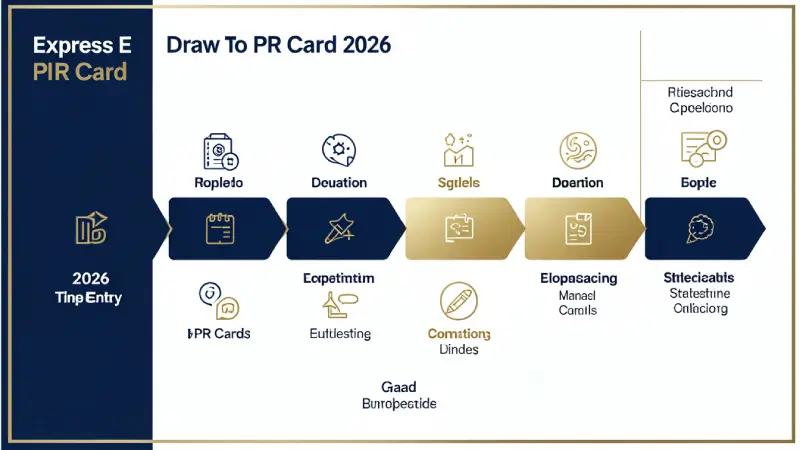
The timeline depends heavily on the pathway. Express Entry (FSW, CEC, FST) has an IRCC service standard of 6 months from ITA to PR decision — this is the fastest PR pathway available. PNP enhanced (linked to Express Entry) also takes approximately 6 months after ITA. PNP base stream takes 18–24 months. Spousal sponsorship takes 12 months (outland) to 18 months (inland). The total time from deciding to apply to receiving your PR card — including preparation, CRS pool wait, and post-ITA processing — is typically 12–24 months for most Express Entry applicants in 2026.
Can I appeal a refused Canadian visa or PR application?
It depends on the type of application. Spousal/family sponsorship refusals can be appealed to the Immigration Appeal Division (IAD). Refugee claim refusals can be appealed to the Refugee Appeal Division (RAD) and then to Federal Court. Express Entry and most work permit refusals cannot be appealed through IAD but can be challenged via judicial review at Federal Court — a process where a Federal Court judge reviews whether IRCC made a legal error. Judicial reviews require an immigration lawyer and must be filed within 15 days (for in-Canada refusals) or 60 days (for outside-Canada refusals). Acting quickly after a refusal is critical.
Is it worth hiring an immigration lawyer if my Express Entry profile is straightforward?
For a genuinely straightforward Express Entry application — clear TEER-eligible NOC code, strong language scores, no prior refusals, complete documentation — a qualified RCIC or even careful self-representation is adequate and will save you $2,000–$5,000 in legal fees. A full immigration lawyer is most valuable when: your case has complications (prior refusals, medical inadmissibility, criminal record, gaps in documentation); you're navigating a complex PNP with specific employer or provincial requirements; or you're applying under a more complex pathway (Start-up Visa, investor, refugee). Don't over-invest in legal fees where they're not needed — but don't under-invest where they are.
✅ Our Verdict — Best Immigration Lawyers Canada 2026
For complex cases, appeals, and Federal Court litigation, Bellissimo Law Group is Canada's strongest immigration law firm bar none. For business immigration and corporate relocations, Green and Spiegel and Fragomen Canada are the clear leaders. For bilingual French-English applications and Quebec immigration, Campbell Cohen is unmatched. For straightforward Express Entry and PNP cases at competitive rates, CSIC Immigration delivers the best value.
The most important decision is matching your representative to your case complexity — not simply finding the most prominent firm. Verify credentials at cicc.ca or your provincial Law Society, get a fee agreement in writing, and never pay anyone who cannot be independently verified as an authorised representative.
| Your Situation | Best Firm |
|---|---|
| Refused application, appeal, Federal Court | Bellissimo Law Group |
| Business immigration, investor, corporate | Green and Spiegel / Fragomen |
| French-speaking, Quebec immigration | Campbell Cohen |
| Refugee claim, humanitarian case | Duale, Fried & Associates |
| Start-up visa, tech entrepreneur | Sobirovs Law Firm |
| Straightforward Express Entry / PNP (value) | CSIC Immigration |
| Family sponsorship, Alberta | Yeates Law |
| Work permits, LMIA, TFWP | Akrami & Associates |
Disclaimer: This article is for informational purposes only and does not constitute legal advice. Canadian immigration law is complex and subject to frequent regulatory change. Always consult a CICC-registered RCIC or a member of a provincial Law Society before making immigration decisions. Processing times reflect IRCC published targets as of March 2026 and are subject to change. Government fees accurate at time of publication. Nexuora does not receive referral fees from any firm listed. Updated March 2026.

Ahmada Ndao is a financial research analyst and independent journalist
specializing in US consumer finance, legal rights, and insurance markets.
With over 5 years covering American financial products, he has helped
thousands of readers navigate complex insurance decisions, find the right
legal representation, and optimize their credit strategies. His research
methodology combines primary data analysis, direct outreach to industry
professionals, and continuous monitoring of federal regulatory changes.
Ahmada’s work has been cited by financial communities across the US and
reviewed by licensed attorneys and insurance professionals for accuracy.