
Editorial Disclaimer
This article is provided for general educational and informational purposes only. It is not financial, legal, tax or credit advice, and it does not guarantee approval for any loan.
Loan availability, annual percentage rates (APRs), fees, minimum credit requirements, loan amounts and funding times vary by lender, applicant and state. A lender’s advertised funding speed is not a guarantee that every approved borrower will receive funds on the same day.
Before accepting an emergency loan, review the lender’s complete loan agreement, including the APR, origination fees, late fees, repayment schedule, total repayment amount and any other applicable costs.
Best Emergency Loans for Fast Funding USA 2026 — Top Options Compared
A financial emergency can happen with very little warning.
A car may suddenly need an expensive repair. A household appliance may stop working. An unexpected medical or dental bill may arrive. A necessary home repair may become impossible to postpone.
When savings are not enough to cover the expense, some consumers consider an emergency personal loan.
The challenge is that speed and affordability do not always go together.
A loan that can potentially fund quickly may have a higher APR, origination fee or more restrictive repayment terms than a slower alternative.
That is why choosing an emergency loan should involve more than searching for the phrase “same-day loan.”
For 2026, major personal-finance publishers continue to evaluate emergency loans according to factors such as cost, loan terms, accessibility, credit requirements, customer experience and funding speed. Forbes Advisor says its current emergency-loan methodology reviews 35 lenders and 19 data points, while LendingTree separately evaluates lenders offering same-day funding based on speed, accessibility and cost.
This Nexuora guide takes a different approach from a general personal-loan ranking.
The focus here is specifically:
How quickly can a legitimate emergency financing option potentially provide funds, what might it cost, who may qualify, and what alternatives should you consider before borrowing?

Best Emergency Loans for Fast Funding at a Glance
There is no single emergency loan that is best for every borrower.
The right option depends on:
- How quickly the money is needed
- Amount required
- Credit profile
- Income
- Existing debt
- APR offered
- Fees
- Repayment period
- State availability
Current emergency-loan comparisons include lenders such as Upstart, LightStream, SoFi, Happen Bank, Avant, Rocket Loans, Achieve, PenFed and PNC, although eligibility and terms differ substantially.
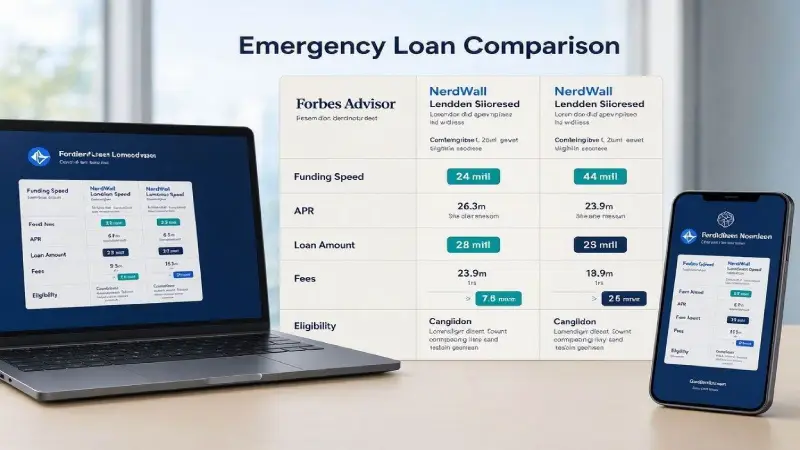
| Lender/Option | Potential Funding Speed | Typical Positioning | Important Consideration |
|---|---|---|---|
| Upstart | As soon as 1 business day in qualifying situations | Limited/thin credit | Actual APR depends on applicant |
| LightStream | Same-day possible | Strong credit | Higher minimum loan amount |
| SoFi | Same-day possible for qualifying borrowers | Strong credit | Eligibility requirements apply |
| Happen Bank | As little as 24 hours after approval | Flexible eligibility | Origination fees may apply |
| Avant | Fast online process | Fair-credit borrowers | APR can be relatively high |
| Rocket Loans | Same-day possible | Fast online applications | Origination fees can apply |
| Achieve | Same-day possible | Joint applicants | Availability varies by state |
| Credit Union | Varies | Existing members | Membership may be required |
Important: These are not guaranteed funding times or universal offers. Your actual experience can differ based on application timing, verification, underwriting, bank processing and lender requirements.
What Is an Emergency Loan?
An emergency loan is generally a personal loan used to cover an unexpected expense when the borrower does not have enough readily available cash.
There is usually no special federal definition of an “emergency loan.”
The term is primarily used to describe how the borrower intends to use the funds.
Depending on the lender, a personal loan may potentially be used for expenses such as:
- Emergency home repairs
- Vehicle repairs
- Unexpected household expenses
- Medical or dental expenses
- Necessary travel
- Other eligible personal expenses
Loan restrictions vary, so borrowers should always confirm permitted uses before applying.

How Emergency Loans Work
Step 1: Application
You provide information such as:
- Name
- Address
- Income
- Employment
- Housing information
- Loan amount requested
Step 2: Credit and Eligibility Review
The lender evaluates your financial information and credit profile.
Depending on the lender, other factors may also influence the decision.
Step 3: Loan Offer
If approved, you receive loan terms.
These can include:
- APR
- Loan amount
- Monthly payment
- Repayment period
- Origination fee
- Total cost
Step 4: Agreement
You review and accept the final loan agreement.
Step 5: Funding
The lender sends the funds according to its procedures.
Even when a lender advertises same-day funding, timing may depend on when the loan is approved and documents are completed.
What Makes an Emergency Loan "Fast"?
The term “fast funding” can mean different things.
Some lenders advertise:
- Same-day funding
- Next-business-day funding
- Funding within 24 hours
- Funding within one to several business days
But the advertised timeframe usually assumes that the application can be approved and all required verification steps are completed.
For example, Forbes Advisor currently notes that LightStream may offer same-day funding when certain conditions are met, including completing verification and signing documents before a specified afternoon cutoff.
Rocket Loans similarly advertises the possibility of same-day funding in qualifying circumstances, but approval and timing remain dependent on the application.
This distinction matters.
“Same-day funding available” does not mean “guaranteed money today.”

Fastest Emergency Loan Options
1. LightStream
LightStream is positioned toward borrowers with strong credit.
Forbes Advisor currently lists LightStream among its emergency-loan recommendations and reports loan amounts of $5,000 to $100,000, with a current APR range shown there of 7.24% to 24.89% with autopay.
Potential advantages
- Competitive rates for qualified borrowers
- High potential loan amounts
- No origination fee
- Same-day funding may be available
- No prepayment penalty
Potential disadvantages
- Strong credit generally required
- $5,000 minimum may be too high for a small emergency
- No traditional soft-pull prequalification according to Forbes Advisor’s current review
Best suited for
A borrower with strong credit who needs a relatively large amount for an unexpected expense and can qualify for competitive terms.
2. Upstart
Upstart uses a broader underwriting approach than a traditional credit-score-only model.
Forbes Advisor currently lists Upstart as its emergency-loan pick for limited credit and reports loan amounts from $1,000 to $75,000 with APRs from 6.60% to 35.99%.
Potential advantages
- Lower minimum loan amount than some competitors
- Broader underwriting approach
- Potentially useful for borrowers with limited credit histories
- Online application process
Potential disadvantages
- APR can reach a high level
- Approval is not guaranteed
- Final terms depend on the individual applicant
Best suited for
Consumers who may have limited traditional credit history and need to explore a personal-loan option for an eligible emergency expense.
3. SoFi
SoFi is another major online personal-loan provider.
It can be attractive for borrowers with stronger credit who want a relatively large loan and potentially fast funding.
The key issue is that emergency borrowers should not assume that a lender’s maximum advertised speed applies automatically to every application.
The actual timeline depends on:
- Approval
- Verification
- Documentation
- Bank account information
- Application timing
4. Happen Bank
Happen Bank is included in current emergency-loan comparisons for borrowers looking for more flexible eligibility.
Forbes Advisor reports that funding within one business day may be possible after approval and notes that co-borrowers may be accepted. It also reports origination fees ranging from 0% to 8%, depending on the loan.
Potential advantages
- Flexible eligibility
- Co-borrower option
- Potentially fast funding
Potential disadvantages
- Origination fees
- High maximum APR
- Terms depend on the borrower
Best suited for
Applicants who may benefit from applying with a co-borrower and who need to compare multiple offers.
5. Avant
Avant focuses on borrowers who may not qualify for the most competitive rates offered to consumers with excellent credit.
Its online process can make it relevant when speed matters.
However, borrowers should carefully compare the total cost.
A fast loan with a high APR can become expensive over several years.
6. Rocket Loans
Rocket Loans is another online lender frequently included in emergency-loan comparisons.
Forbes Advisor reports that same-day funding may be available when a loan is approved and signed before the lender’s stated cutoff time. It also notes that origination fees can reach 9%.
That illustrates an important point:
Funding speed should always be evaluated alongside fees.
Suppose two lenders offer the same loan amount.
One has a slightly slower funding process but no origination fee.
The other funds faster but charges a substantial fee.
The second option is not automatically better.
7. Achieve
Achieve is another lender included in current emergency-loan comparisons.
Forbes Advisor currently reports:
- $5,000 to $50,000 loan amounts
- APRs of 6.25% to 35.99%
- Minimum credit score of 600
- Same-day funding potentially available
- Co-borrower option
However, Forbes Advisor notes that Achieve is currently available in only 26 states.
This is a good example of why state availability should be checked before relying on a lender’s advertised terms.
Emergency Loans vs. Your Existing Bank or Credit Union
Before applying with an unfamiliar online lender, consider checking whether your existing bank or credit union offers:
- Personal loans
- Small-dollar loans
- Emergency loans
- Overdraft alternatives
- Lines of credit
An existing financial relationship may make the process easier.
Credit unions can also offer alternatives to expensive short-term borrowing, although membership and eligibility requirements vary.
For a relatively small emergency, a bank or credit union may provide a more appropriate solution than taking out a large multi-year personal loan.
How Much Do Emergency Loans Cost?
The cost depends primarily on:
- APR
- Loan amount
- Loan term
- Origination fee
- Other applicable fees
Current lender comparisons show APR ranges extending from single digits for highly qualified borrowers to the mid-30% range for some products and applicants. Forbes Advisor’s current emergency-loan page, for example, lists several lenders with maximum APRs around 35.99%.
That is why comparing the APR is essential.
A lender offering fast funding is not necessarily offering inexpensive financing.
APR vs. Interest Rate
These terms are related but not identical.
The interest rate represents the cost of borrowing before certain fees.
The APR generally incorporates the interest rate and certain fees into a broader measure of borrowing cost.
When comparing loan offers, APR can therefore be more useful than simply comparing the advertised interest rate.
For example:
Loan A
- Interest rate: 15%
- Origination fee: 5%
Loan B
- Interest rate: 16%
- No origination fee
Loan B might ultimately be less expensive depending on the exact terms.
Always compare the full disclosures rather than relying on a headline rate.
Example: How an Emergency Loan Can Become Expensive
Consider a hypothetical $5,000 emergency loan.
Suppose the borrower receives:
- 25% APR
- 36-month term
- No additional fees
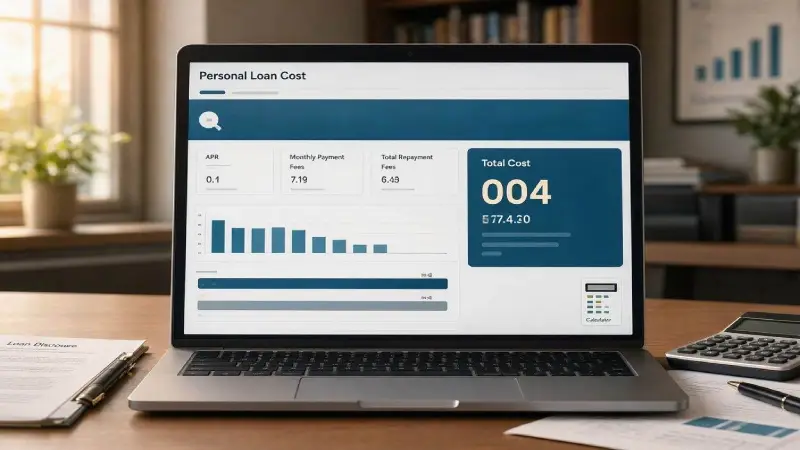
The monthly payment could be several hundred dollars, and the total amount repaid would be substantially higher than the original $5,000.
Now imagine adding a 5% origination fee.
The borrower could pay another $250 in fees.
This illustrates why emergency borrowers should look beyond:
“How quickly can I get the money?”
and ask:
“How much will I repay in total?”
Same-Day Funding vs. Same-Day Approval
These phrases are often confused.
Same-Day Approval
Means the lender may make a lending decision on the same day.
Same-Day Funding
Means the money may be sent on the same day after approval and completion of required steps.
They are not necessarily the same thing.
A lender may approve your application quickly but send the money later because of:
- Identity verification
- Bank verification
- Documentation
- Cutoff times
- Fraud checks
- ACH processing
Therefore, always read the lender’s exact funding conditions.
What Credit Score Do You Need?
There is no universal credit-score requirement for emergency loans.
Each lender establishes its own eligibility standards.
Some lenders may accept applicants with limited or lower credit scores, while others target borrowers with good or excellent credit.
However, a lower credit score generally does not mean borrowing becomes equally affordable.
A borrower may receive:
- Higher APR
- Lower loan amount
- Higher fees
- Shorter repayment options
This is why our article does not treat “easy approval” as the same thing as “good loan.”
Can You Get an Emergency Loan With Bad Credit?
Some lenders serve borrowers with less-than-perfect credit.
However, this article deliberately does not duplicate Nexuora’s separate Best Personal Loans for Bad Credit content.
The distinction is important.
That article focuses on:
credit profile → lender eligibility → options for lower credit scores
This article focuses on:
emergency → speed → funding → cost → alternatives
If credit quality is your primary concern, readers should consult Nexuora’s dedicated bad-credit personal-loan guide rather than treating this page as a replacement.
How to Compare Emergency Loans
Before accepting an offer, compare at least these eight factors.
1. APR
Lower is generally better if all other terms are comparable.
2. Funding Speed
Confirm whether the advertised speed applies to your situation.
3. Loan Amount
Do not borrow substantially more than necessary.
4. Origination Fee
Check whether the lender deducts the fee from your loan proceeds.
5. Monthly Payment
Make sure the payment fits comfortably into your budget.
6. Total Repayment
This may be more important than the monthly payment.
7. Repayment Period
A longer term can reduce monthly payments but increase total interest.
8. Prepayment Policy
Check whether you can repay early without a penalty.
What Documents May Be Required?
Depending on the lender, you may need:
- Government-issued identification
- Proof of income
- Employment information
- Bank account information
- Social Security number
- Address information
- Tax documents in some situations
Having accurate information available can make the application process smoother.
However, never send sensitive financial information to an unverified website.
How to Spot an Emergency Loan Scam
Financial emergencies create ideal conditions for fraud.
Be especially cautious if a website or individual:
- Guarantees approval
- Guarantees a specific APR before reviewing your application
- Demands an upfront payment before providing a legitimate loan offer
- Requests unusual payment methods
- Uses pressure tactics
- Refuses to provide written loan terms
- Does not clearly disclose APR
- Claims that your credit score does not matter at all
- Asks for passwords or unnecessary account credentials
A legitimate lender should provide clear information about the loan’s cost and conditions.
Avoid Payday Loans When Possible
Payday loans can provide extremely fast access to money, but they can also carry very high costs and short repayment periods.
That combination can create a cycle in which a borrower repeatedly needs new borrowing to cover previous obligations.
A personal installment loan is not automatically cheap, but comparing legitimate lenders can provide a clearer picture of the total cost.
Before using any expensive short-term financing, consider whether a less costly alternative is available.
Alternatives to Emergency Loans
An emergency loan is only one possible solution.
Depending on the situation, alternatives may include:
Emergency Savings
If you have an emergency fund, using part of it may be less expensive than borrowing at a high APR.
Payment Plan
Ask the service provider whether the bill can be paid over time.
This may apply to:
- Medical providers
- Repair shops
- Contractors
- Educational institutions
Existing Credit Card
A purchase already planned may sometimes be cheaper on an existing credit card than through a high-cost emergency loan.
However, compare APRs carefully.
Credit Union
Your credit union may offer lower-cost alternatives.
Employer Assistance
Some employers provide emergency assistance or paycheck-advance programs.
Terms vary considerably.
Family Support
For some people, temporary assistance from a trusted family member may avoid interest charges altogether.
Any arrangement should be clear and realistic for everyone involved.
Add Your Heading Text Here
Emergency Loan vs. Credit Card
A credit card may provide immediate purchasing power without a separate loan application.
But the cost depends heavily on the card’s APR.
A personal loan may offer:
- Fixed monthly payments
- Defined repayment period
- Fixed APR in many cases
A credit card may offer:
- Revolving credit
- Minimum payments
- Variable APR
- More flexibility
The cheaper option depends on the specific terms available to you.
Emergency Loan vs. Home Equity Loan
Home equity products may offer lower interest rates than unsecured personal loans because they are secured by your home.
But that security comes with substantial risk.
If you cannot repay a home-secured loan, your home could be at risk.
For a relatively small emergency, taking on secured debt against your home may therefore be disproportionate to the problem.
Emergency Loan vs. Personal Loan
An emergency loan is usually not a separate category of loan product.
In many cases, it is simply a personal loan used for an urgent expense.
The distinction in this article is therefore about use case and speed, rather than a fundamentally different financial product.
This is also why Nexuora keeps this page separate from its general personal-loan content.
How Much Should You Borrow?
Borrow only what you need and what you can realistically repay.
If the emergency costs $2,000, borrowing $10,000 simply because the lender approves you for that amount can increase your financial burden unnecessarily.
Consider:
- Actual emergency cost
- Existing savings
- Monthly income
- Existing debt payments
- New monthly payment
- Total repayment amount
A larger loan is not automatically a better solution.
What Is a Good Emergency Loan?
A good emergency loan should have a combination of:
- Transparent APR
- Reasonable fees
- Manageable monthly payments
- Appropriate loan amount
- Clear repayment terms
- No unnecessary penalties
- Legitimate lender
- Realistic funding timeline
Speed is valuable only if the overall financing remains manageable.
How We Evaluated Emergency Loan Options
Our evaluation framework focuses specifically on the emergency-loan search intent rather than general personal-loan rankings.
We considered:
Funding Speed
How quickly funds may become available after approval.
Cost
APR and applicable fees.
Accessibility
Credit and eligibility considerations.
Loan Amount
Whether the product can accommodate relatively small emergency expenses as well as larger unexpected costs.
Repayment Terms
Whether borrowers have reasonable repayment flexibility.
Transparency
Whether the lender clearly communicates rates, fees and conditions.
Consumer Risk
Whether the product could expose a borrower to unusually high costs or restrictive terms.
For context, Forbes Advisor currently states that its emergency-loan methodology reviews 35 lenders using 19 data points, while LendingTree says its same-day emergency-loan research considers funding speed, accessibility and cost.
Nexuora’s approach is intentionally focused on the fast-funding emergency use case.
Why We Do Not Rank Loans Solely by Speed
Imagine two hypothetical offers:
Offer A
- Same-day potential funding
- 32% APR
- 8% origination fee
Offer B
- One-business-day funding
- 15% APR
- No origination fee
For a genuine emergency, Offer A may appear attractive because it is faster.
But if the expense can wait one business day, Offer B could be substantially less expensive.
This is why our methodology treats cost and speed as separate factors.
The fastest loan is not automatically the best loan.
Emergency Loan Checklist
Before accepting an offer, ask:
Cost
- What is the APR?
- Is the APR fixed?
- Is there an origination fee?
- Are there late fees?
- Is there a prepayment penalty?
Funding
- When can the money realistically arrive?
- Is same-day funding guaranteed or conditional?
- Is there a cutoff time?
Repayment
- What is the monthly payment?
- How long is the repayment period?
- How much will I repay in total?
Eligibility
- What credit requirements apply?
- Is income verification required?
- Is the lender available in my state?
Security
- Is the lender legitimate?
- Are the loan terms clearly disclosed?
- Is the website secure?
- Am I being asked for an unusual upfront payment?
Internal Nexuora Resources
Readers researching emergency financing may also find these Nexuora guides useful:
- Best Personal Loans for Bad Credit in 2026 — focused specifically on borrowers with lower credit profiles.
- Best Debt Consolidation Loans USA 2026 — for borrowers whose primary goal is consolidating existing debt.
- Best Business Credit Cards USA 2026 — relevant when an expense is genuinely business-related and the business qualifies for commercial credit.
- Best High-Yield Savings Accounts June 2026 — useful for readers building an emergency fund rather than borrowing for the next unexpected expense.
These pages address different search intents and should not be treated as interchangeable.
Frequently Asked Questions
What are the best emergency loans in 2026?
The best option depends on your credit profile, loan amount, funding needs and ability to repay. Current emergency-loan comparisons include lenders such as Upstart, LightStream, SoFi, Happen Bank, Avant, Rocket Loans and Achieve.
What is the fastest way to get an emergency loan?
Some online lenders advertise same-day or next-business-day funding for qualifying borrowers. However, funding depends on approval, verification, document signing, banking information and cutoff times.
Can emergency loans be funded the same day?
Yes, some lenders advertise potential same-day funding. It is not guaranteed for every applicant.
Do emergency loans require good credit?
Not always. Some lenders accept applicants with limited or less-than-perfect credit, although weaker credit can result in higher borrowing costs.
How much can I borrow with an emergency loan?
Loan amounts vary considerably. Some lenders offer relatively small loans while others provide tens of thousands of dollars.
How quickly can an emergency personal loan be funded?
Depending on the lender and application, funding may occur the same day, the next business day or several business days later.
Are emergency loans expensive?
They can be. APRs vary widely, and some lenders have maximum APRs in the mid-30% range. Fees can also increase the total borrowing cost.
What credit score do I need?
There is no universal minimum. Each lender establishes its own underwriting criteria.
Can I use an emergency loan for a car repair?
Some personal loans permit vehicle repairs, but permitted uses vary by lender. Confirm the lender’s rules before applying.
Can I use an emergency loan for medical expenses?
Some personal loans allow medical expenses, but borrowers should compare the loan with any payment-plan options offered by the healthcare provider.
What is the difference between emergency loans and payday loans?
Emergency personal loans are often installment loans repaid over a predetermined period. Payday loans generally involve much shorter repayment periods and can carry substantially higher costs.
Is same-day loan funding guaranteed?
No. Even lenders advertising same-day funding may require approval and completion of verification before funds are released.
Should I choose the lender with the fastest funding?
Not automatically. Compare APR, fees, repayment period and total repayment amount before prioritizing speed.
Can I get an emergency loan without a credit check?
Be cautious with claims of guaranteed loans without meaningful underwriting. Legitimate lenders generally evaluate some combination of creditworthiness, income or other eligibility factors.
Are online emergency loans legitimate?
Some are legitimate, but consumers should verify the lender and carefully review loan disclosures before providing personal information.
What should I do if I cannot afford the monthly payment?
Do not accept the loan simply because you are approved. Consider a smaller amount, a payment arrangement with the creditor, a credit union option or another lower-cost alternative.
Can I pay an emergency loan off early?
Many personal loans allow early repayment without a penalty, but policies vary. Check the agreement before signing.
Do emergency loans affect credit scores?
Applying for credit can result in a hard inquiry depending on the lender and application process. Once a loan is opened, repayment activity may also affect credit history.
What is more important: APR or funding speed?
Both matter, but APR and total cost are especially important because they determine how expensive the borrowing will be. If the emergency can wait, a cheaper loan may be preferable to the fastest loan.
Should I use my emergency fund instead of borrowing?
If you already have an emergency fund, using available savings may avoid interest and fees. However, maintaining some cash reserve may also be important, depending on the circumstances.
Pros and Cons of Emergency Personal Loans
Pros
- Potentially fast access to funds
- Predictable installment payments
- Fixed repayment period
- Can cover certain unexpected expenses
- Some lenders offer online applications
- Some lenders offer same-day funding for qualifying borrowers
Cons
- Interest charges
- Potential origination fees
- Monthly payment obligation
- Higher APR for some borrowers
- Funding speed is not guaranteed
- Hard credit inquiries may occur
- Can increase existing debt
When an Emergency Loan May Make Sense
An emergency loan may be reasonable when:
- The expense is genuinely urgent
- You have no adequate cash reserve
- The lender offers a manageable APR
- The monthly payment fits your budget
- You understand the total repayment cost
- You have compared alternatives
- The expense cannot reasonably be delayed
The key is not simply whether you can qualify.
The key question is:
Can you repay the loan without creating another financial emergency?
When You Should Consider an Alternative
Consider another solution when:
- The APR is extremely high
- Fees consume a significant portion of the proceeds
- The monthly payment is unaffordable
- You can negotiate the bill
- You have accessible savings
- A lower-cost credit option is available
- You would need another loan to repay this one
Borrowing should solve a problem rather than move it into the future at a higher cost.
Final Verdict
Emergency loans can provide a useful source of financing when an unexpected expense cannot wait and other resources are unavailable.
But the defining feature of an emergency loan should not simply be speed.
A fast loan with a high APR and expensive fees can create a second financial problem.
The strongest approach is to compare:
funding speed + APR + fees + monthly payment + total repayment + eligibility.
Current 2026 comparisons show that some established lenders can potentially fund qualifying loans the same day or within one business day, but the exact timing depends on the borrower and lender process.
For borrowers with strong credit, lenders offering competitive APRs may provide better long-term value.
For borrowers with limited credit, broader-underwriting lenders may provide additional possibilities, but the final APR and fees must be examined carefully.
And for anyone facing an emergency, an emergency loan should not be the automatic first choice.
Before borrowing, check whether you can:
- Use emergency savings
- Negotiate the bill
- Request a payment plan
- Contact your bank or credit union
- Reduce the amount needed
- Delay the expense if it is not truly urgent
If borrowing is unavoidable, choose the smallest reasonable amount and compare the complete loan terms.
The best emergency loan is not necessarily the fastest one. It is the financing option that solves the immediate problem without creating an even larger financial burden later.
Editorial Update
Last reviewed: August 10, 2026
Loan terms, APRs, lender availability and funding policies can change. Readers should verify current terms directly with the lender before applying or accepting an offer.
Nexuora does not guarantee approval, funding speed, rates or savings from any lender mentioned in this article.

Ahmada Ndao is a financial research analyst and independent journalist
specializing in US consumer finance, legal rights, and insurance markets.
With over 5 years covering American financial products, he has helped
thousands of readers navigate complex insurance decisions, find the right
legal representation, and optimize their credit strategies. His research
methodology combines primary data analysis, direct outreach to industry
professionals, and continuous monitoring of federal regulatory changes.
Ahmada’s work has been cited by financial communities across the US and
reviewed by licensed attorneys and insurance professionals for accuracy.