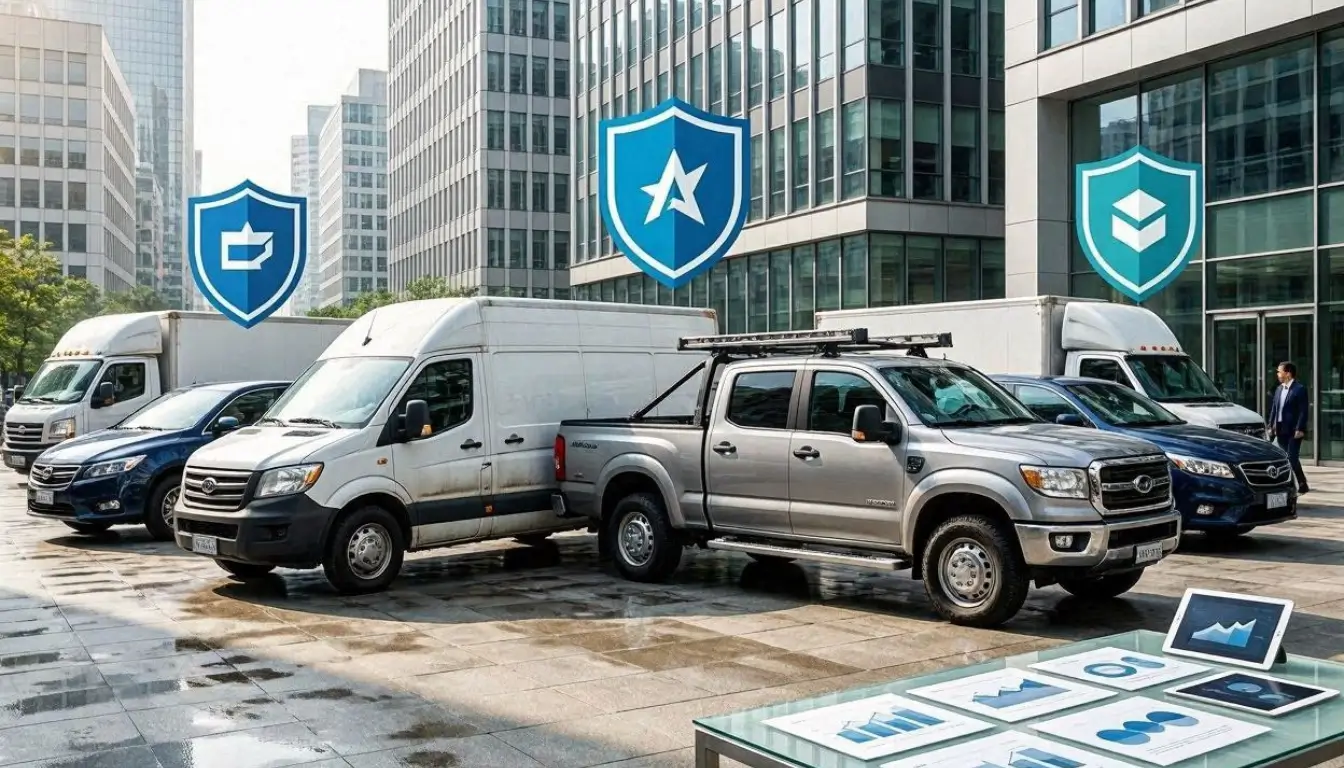
A surprising number of small business owners discover the gap between personal and commercial auto insurance only after it's too late — typically in the aftermath of an accident, when a claims adjuster informs them that their personal policy doesn't cover business use of the vehicle. A bakery's delivery driver causes a rear-end collision while transporting an order, and without commercial coverage in place, the business owner is left personally responsible for the other driver's medical bills and vehicle repairs, potentially totaling tens of thousands of dollars. That single gap in coverage represents the entire reason commercial auto insurance exists, and why understanding it properly matters far more than simply finding the lowest quote.
This guide breaks down the commercial auto insurance providers offering the strongest value across different industries and vehicle types in 2026, what genuinely separates commercial coverage from a personal policy, and the pricing factors that explain why your neighbor's florist business pays a fraction of what a trucking company pays for seemingly similar coverage.
Quick Summary
- Best Overall: Progressive Commercial — most affordable across the widest range of industries, strong digital experience
- Best for Customer Experience: Progressive Commercial — leads all providers in buying, policy management, and claims satisfaction
- Best for Military-Affiliated Businesses: USAA — consistently among the lowest rates, restricted eligibility
- Best for Multi-Policy Discounts: Nationwide — strong bundling savings for businesses carrying multiple policy types
- Best for White-Collar Service Businesses: GEICO — competitive pricing for lower-risk commercial use
- Best for Northeast Operations: The Hartford — more competitive regional pricing despite higher national average cost
Why This Matters in 2026
Commercial auto insurance pricing has become increasingly segmented by industry and vehicle use heading into 2026, making generic comparison shopping less reliable than it used to be. The average commercial auto policy now costs $1,764 per year, or $147 per month, according to data from Insureon — but that average masks enormous variation. A professional services business like a consulting firm pays around $1,614 annually, while a trucking company faces average premiums of $9,794 annually, more than six times higher, reflecting the dramatically different risk profiles between an occasional client-visit vehicle and a fleet of long-haul trucks.
Geography compounds this variation further. The same commercial auto policy that costs roughly $1,216 per year in Idaho can run as high as $3,290 per year in Louisiana, driven by differences in local litigation trends, accident rates, and state-specific regulatory requirements. For any small business owner comparing quotes in 2026, understanding where your specific industry, vehicle type, and state fall within this range is essential before judging whether a quote is actually competitive.
Top Providers Overview
The commercial auto insurance market in the US includes both insurers writing both personal and commercial lines — Progressive, GEICO, State Farm, Nationwide, Allstate — and specialists with a heavier commercial focus, like The Hartford and Travelers. Recent industry analysis covering more than 700,000 business profiles across 385 industries and 51 states found that Progressive Commercial leads in affordability for 20 of 25 major industry categories, with GEICO taking the lead specifically for beauty, marketing, consulting, financial, and fitness-related businesses — a useful signal that the "best" provider genuinely depends on what your business does, not just its overall market reputation.
Comparison Table — Top Commercial Auto Insurance Providers 2026
| Provider | Avg. Monthly Premium | vs. National Average | Best For | Availability |
|---|---|---|---|---|
| Progressive Commercial | $143/month | 13% below average | Most industries overall | All 50 states |
| GEICO | $149/month | 9% below average | White-collar, lower-risk businesses | All 50 states + DC |
| Nationwide | ~$150–160/month | Near average | Multi-policy bundling discounts | Not available in AK, HI, LA, MA |
| USAA | Lowest overall (restricted) | Below average | Military-affiliated business owners | Restricted eligibility |
| State Farm | ~$150–165/month | Near average | Local agent relationships, customer satisfaction | Most states |
| The Hartford | Above average nationally | Higher than average | Northeast/central region operations | Most states |
Premiums reflect average commercial auto rates for small businesses across multiple vehicle types and are based on recent industry rate analyses. Your actual quote will vary significantly based on industry, vehicle type, state, coverage limits, and driving history.
Detailed Reviews
1. Progressive Commercial — Best Overall
Progressive Commercial has built the strongest overall affordability position in the 2026 commercial auto market, pricing roughly 13% below the national average at $143 per month and ranking as the most cost-effective option across 20 of 25 major industry categories analyzed. Beyond pricing, Progressive Commercial earned the top customer experience score among major providers, at 4.50 out of 5, leading specifically in the buying process, policy management, and claims handling — a rare combination of being both the cheapest and the highest-rated for service quality simultaneously.
Progressive's coverage, while solid for core commercial needs including liability, collision, physical damage, and uninsured motorist protection, ranked fourth out of five major providers analyzed for coverage breadth specifically — meaning businesses with more specialized or extensive coverage needs may want to review the policy details carefully before assuming Progressive automatically covers every endorsement they need.
| Pros | Cons |
|---|---|
|
|
2. GEICO — Best for White-Collar Service Businesses
GEICO holds the top affordability position specifically for beauty, marketing, consulting, financial, and fitness-related industries — a useful signal for any business owner running a professional services operation with lower vehicle-related risk exposure. At an average of $149 per month, GEICO prices roughly 9% below the national benchmark, and the company's broad personal-lines reputation for digital convenience generally extends to its commercial offerings as well.
GEICO's primary limitation in the commercial space is less about pricing and more about specialization: businesses operating heavier commercial vehicles, larger fleets, or higher-risk industries like trucking or delivery services may find more tailored coverage and pricing elsewhere.
3. Nationwide — Best for Multi-Policy Discounts
Nationwide has built a reputation specifically around multi-policy bundling savings, making it a strong option for business owners who are also purchasing general liability, property, or workers' compensation coverage and want to consolidate policies with a single insurer for meaningful combined discounts. The company carries a lower-than-average customer complaint rate according to NAIC data, a reassuring signal for claims reliability.
Nationwide does not sell commercial auto coverage in Alaska, Hawaii, Louisiana, or Massachusetts, which is worth confirming early if your business operates in one of those states.
4. USAA — Best for Military-Affiliated Businesses
USAA consistently ranks among the very cheapest commercial auto providers in independent rate analyses, with starting rates as low as $58 per month in some studies. The catch is eligibility: USAA restricts membership to military members, veterans, and their immediate families, making it unavailable to the general small business market regardless of how competitive its pricing is. For business owners who do qualify, however, USAA is consistently worth quoting first given its strong combination of low pricing and high customer satisfaction.
5. State Farm — Best for Local Agent Relationships
State Farm continues to be recommended for business owners who specifically value working with a local agent rather than navigating a fully digital purchasing process, and the company has a long track record of strong customer satisfaction in personal and commercial lines alike. While not consistently the cheapest option in rate comparisons, State Farm's blend of affordability and service quality keeps it among the most frequently recommended providers across independent analyses. For businesses also comparing personal auto options for owners or employees, our detailed breakdown of Geico vs. State Farm covers how these two insurers compare directly on pricing and service.
6. The Hartford — Best for Northeast and Central Region Operations
The Hartford ranks as the most expensive provider on a national average basis among major commercial auto insurers, yet its regional performance tells a more nuanced story: it offers more competitive pricing specifically in the northeast and central regions of the country compared to its national positioning, and even holds the single lowest rate among major providers for one specific niche industry, dietary supplement manufacturing, with savings up to 19% possible. Businesses operating primarily in these regions should specifically request a Hartford quote rather than dismissing it based on national averages alone.
Coverage — What Commercial Auto Insurance Actually Includes
| Coverage Type | What It Protects | Typically Included? |
|---|---|---|
| Liability Coverage | Bodily injury and property damage to others if you're at fault | Yes, core coverage, higher limits than personal policies |
| Collision Coverage | Damage to your vehicle from an accident, regardless of fault | Yes, standard option |
| Comprehensive Coverage | Non-collision damage: theft, vandalism, weather, fire | Yes, standard option |
| Uninsured/Underinsured Motorist | Protection if an at-fault driver lacks adequate insurance | Yes, standard in most states |
| Hired and Non-Owned Auto | Coverage for rented or employee-owned vehicles used for business | Often an add-on, critical for businesses without a dedicated fleet |
| Medical Payments/PIP | Medical costs for you and passengers regardless of fault | Varies by state requirements |
| Cargo Coverage | Goods being transported in commercial vehicles | Often an add-on, essential for delivery and freight businesses |
The single most important distinction between personal and commercial auto insurance is liability protection scope. As Erika Tortorici, owner of Optimum Insurance Solutions, an agency based in Boston, has noted, commercial policies provide flexibility that extends coverage to employees while driving for work — a protection personal policies simply don't offer. A personal auto policy can, and frequently does, deny claims outright if the vehicle was being used for business purposes at the time of an accident, regardless of how minor the business use seems to the policyholder.
Pricing — What Determines Your Premium
| Industry Type | Average Annual Premium | Risk Level |
|---|---|---|
| Professional Services (consulting, accounting) | $1,614 | Low |
| General Small Business Average | $1,764 | Moderate |
| Delivery and Local Transport | $2,500 – $4,000 | Moderate-High |
| Trucking and Long-Haul Freight | $9,794 | High |
| State | Average Annual Premium | Relative Cost |
|---|---|---|
| Idaho | $1,216 | Among the lowest nationally |
| National Average | $1,764 | Baseline |
| Louisiana | $3,290 | Among the highest nationally |
Who Should Choose Commercial Auto Insurance
- Any business owning vehicles exclusively for business use — delivery vans, service trucks, company cars
- Businesses where employees occasionally drive personal vehicles for work, which require hired and non-owned auto coverage even without a dedicated fleet
- Freelancers and contractors using a personal vehicle regularly for client visits or deliveries, who risk denied claims under a personal-only policy
- Any business legally required to carry specific liability limits for licensing, permits, or client contracts
Expert Opinion
Tortorici emphasizes working with an agency that has access to multiple carriers and can compare rates on your business's behalf, rather than requesting a single quote and assuming it reflects market value: "A good agent will help you balance affordability with the coverage you truly need." This guidance is particularly relevant given how dramatically commercial auto pricing varies by industry and vehicle type — the cheapest provider for a consulting firm is frequently not the cheapest for a delivery business, even within the same city.
It's also worth noting that commercial auto insurance interacts meaningfully with how vehicles are used day to day. Businesses exploring usage-based insurance options for cost savings may find it useful to review how programs like Snapshot vs. Drivewise apply telematics data to pricing, since several commercial insurers now offer comparable usage-based discount programs for fleets with consistently safe driving records.
Cost Factors
- Industry type: The single largest pricing factor, with trucking businesses paying more than six times what professional services businesses pay on average
- Vehicle type: Sedans and standard vans price differently than heavier trucks or specialty vehicles
- State of operation: Local litigation trends, accident rates, and regulatory requirements create wide variation, from roughly $1,216 in Idaho to $3,290 in Louisiana
- Driving history of employees: Clean driving records across all drivers using company vehicles reduce premiums
- Coverage limits and deductibles: Higher liability limits and lower deductibles increase premiums but provide stronger protection
- Fleet size: Larger fleets may qualify for per-vehicle discounts but carry higher aggregate risk exposure
Money Saving Tips
- Get quotes from at least three providers given how much rates vary by industry: Since the cheapest insurer differs significantly by business type, a single quote tells you very little about whether you're getting a competitive rate.
- Bundle with other business policies: Carriers like Nationwide offer meaningful multi-policy discounts when commercial auto is combined with general liability or property coverage.
- Enroll in usage-based insurance programs if your drivers have clean records: Telematics-based discount programs can meaningfully reduce premiums for businesses with consistently safe driving behavior, though high-risk driving could increase rates under some programs.
- Improve and monitor driver credit where state law allows it: In states permitting credit-based insurance scoring, stronger credit can translate into lower premiums.
- Compare regional specialists, not just national brands: A provider like The Hartford that prices above average nationally can still be the most competitive option in specific regions.
Common Mistakes
- Assuming a personal auto policy covers occasional business use: Many personal insurers explicitly deny claims if the vehicle was being used for business purposes at the time of an accident.
- Skipping hired and non-owned auto coverage: Businesses without a dedicated fleet often assume they don't need commercial coverage at all, overlooking the real exposure created when employees use personal or rented vehicles for work tasks.
- Choosing the cheapest quote without checking liability limit adequacy: A policy with low liability limits can leave a business significantly exposed to lawsuits beyond the policy maximum, particularly in higher-risk industries.
- Not re-shopping rates as the business grows: A provider competitive for a small, single-vehicle operation may not remain the best value as fleet size or industry risk profile changes.
Eligibility Requirements
| Factor | Typical Requirement |
|---|---|
| Business Registration | Most insurers require formal business registration documentation |
| Driver Records | Clean driving history generally required or factored into pricing for all drivers on the policy |
| Vehicle Ownership/Use | Documentation of business use percentage and vehicle ownership or lease status |
| State Minimum Liability | Varies by state; commercial minimums are generally higher than personal auto minimums |
| USAA Specifically | Restricted to military members, veterans, and immediate family |
Claim Process
Filing a commercial auto claim generally follows a similar structure to personal auto claims — reporting the incident promptly, documenting the scene and damage, and cooperating with the insurer's claims adjuster — but with additional documentation requirements specific to business use, such as confirming the vehicle was operating within its declared commercial purpose at the time of the incident. Providers like Progressive Commercial have built reputations specifically around faster digital claims processing, while others like State Farm emphasize personal agent involvement throughout the claims experience. Confirming your provider's average claims resolution timeline and digital claims submission options before purchasing is a reasonable step, particularly for businesses that depend heavily on vehicle uptime for daily operations.
Frequently Asked Questions
What's the difference between personal and commercial auto insurance?
Commercial auto insurance is specifically designed to cover vehicles used for business purposes, offering higher liability limits and coverage that extends to employees driving for work. Personal auto policies typically exclude business use entirely, and insurers can deny claims if a personal policy holder was conducting business activities at the time of an accident, leaving the business owner personally liable for damages and medical costs.
How much does commercial auto insurance cost on average in 2026?
The average commercial auto insurance policy costs approximately $1,764 per year, or $147 per month, according to recent industry data. However, actual costs vary significantly based on industry type, with professional services businesses averaging around $1,614 annually while trucking companies average $9,794 annually, reflecting vastly different risk profiles.
Do I need commercial auto insurance if I only use my car occasionally for work?
Yes, in most cases. Even occasional business use — client visits, deliveries, transporting work materials — can void coverage under a personal auto policy if an accident occurs during that use. Hired and non-owned auto insurance is specifically designed for businesses without a dedicated fleet but whose employees use personal vehicles for work tasks.
Which company offers the cheapest commercial auto insurance?
Progressive Commercial and GEICO consistently rank among the cheapest options across most industries, with Progressive leading in 20 of 25 major industry categories analyzed and GEICO leading specifically for white-collar service businesses like consulting, marketing, and financial services. USAA offers the lowest rates overall but is restricted to military-affiliated business owners.
Why does commercial auto insurance cost so much more for trucking companies?
Trucking is considered among the highest-risk commercial auto categories due to factors including vehicle size and weight, higher potential for catastrophic accidents, longer driving hours, and the value of cargo being transported. These combined risk factors result in average annual premiums of $9,794, more than six times higher than lower-risk industries like professional consulting services.
What is hired and non-owned auto insurance?
This coverage protects businesses when employees use rented vehicles or their own personal vehicles for business purposes. It's particularly important for businesses that don't own a dedicated fleet but still have employees driving for work tasks, since neither a standard commercial policy covering owned vehicles nor a personal auto policy will reliably cover these situations.
How much does location affect commercial auto insurance pricing?
Significantly. The same commercial auto policy that costs around $1,216 annually in Idaho can cost approximately $3,290 annually in Louisiana, reflecting differences in local litigation trends, accident frequency, and state-specific regulatory and insurance market conditions.
Can I bundle commercial auto insurance with other business policies?
Yes, and doing so often produces meaningful savings. Providers like Nationwide specifically emphasize multi-policy discounts for businesses that combine commercial auto with general liability, property, or workers' compensation coverage under a single insurer.
What liability limits should a small business carry on commercial auto insurance?
This depends on your specific risk exposure, industry, and state requirements, but commercial policies generally require and offer higher liability limits than personal auto policies by default, given the increased exposure businesses face. Consulting with a licensed commercial insurance agent to assess adequate limits for your specific operations is strongly recommended rather than defaulting to state minimums.
Does usage-based insurance work for commercial auto policies?
Yes, many commercial insurers now offer telematics-based usage insurance programs similar to personal auto offerings, tracking driving behavior to offer discounts for safe driving patterns. However, as with personal usage-based programs, high-risk driving behavior detected through these programs could increase rates for some businesses rather than only offering discounts.
Is USAA available to all small business owners?
No. USAA restricts eligibility to military members, veterans, and their immediate families. While USAA consistently ranks among the cheapest commercial auto providers in independent analyses, this restricted eligibility means it's not an option for the general small business market.
How often should I compare commercial auto insurance quotes?
Re-shopping rates every renewal period, or at minimum every one to two years, is generally recommended given how much pricing can shift based on changes to your business's risk profile, fleet size, claims history, and the broader insurance market. A provider that was competitive when you first purchased coverage may no longer be the best value as your business evolves.
Final Verdict
There's no single best commercial auto insurance provider for every business — the right choice depends heavily on your specific industry, vehicle types, and operating region. That said, Progressive Commercial stands out as the strongest overall choice for most small businesses in 2026, combining the broadest industry-leading affordability with the highest customer experience rating among major providers. White-collar service businesses should specifically compare GEICO's competitive positioning, while businesses operating primarily in the northeast or central regions should request a quote from The Hartford despite its higher national average pricing.
Conclusion
Commercial auto insurance is one of the rare business expenses where the cheapest available quote and the right quote for your specific situation can diverge significantly, given how dramatically pricing shifts based on industry, vehicle type, and state. Taking the time to compare at least three providers, confirm liability limits adequately match your actual risk exposure, and verify whether hired and non-owned auto coverage applies to your operations will protect your business far more reliably than optimizing for the lowest monthly premium alone. If your business also manages a fleet of electric vehicles, our guide to EV insurance considerations covers the additional coverage factors specific to battery and charging equipment that traditional commercial auto policies may not fully address.

Ahmada Ndao is a financial research analyst and independent journalist
specializing in US consumer finance, legal rights, and insurance markets.
With over 5 years covering American financial products, he has helped
thousands of readers navigate complex insurance decisions, find the right
legal representation, and optimize their credit strategies. His research
methodology combines primary data analysis, direct outreach to industry
professionals, and continuous monitoring of federal regulatory changes.
Ahmada’s work has been cited by financial communities across the US and
reviewed by licensed attorneys and insurance professionals for accuracy.