
Motorcycle Accident Lawyer California Cost 2026 — Fees, Settlements & How to Choose the Best Attorney
California has more registered motorcycles than any other state — and more motorcycle fatalities. The California Highway Patrol recorded 18,146 motorcycle injury collisions and 539 fatalities in 2025. When a motorcycle crash occurs, the consequences are almost always severe: riders are 28 times more likely to die in a traffic accident per mile traveled than car occupants, and the average motorcycle accident injury hospitalization costs $73,700. Yet many injured California riders hesitate to contact an attorney — often because they don't understand how motorcycle accident lawyer costs work. The answer will surprise you: you almost certainly pay nothing upfront. Everything you need to know about motorcycle accident lawyer costs in California, what your case is worth, and how to choose the right attorney is covered in this complete 2026 guide.
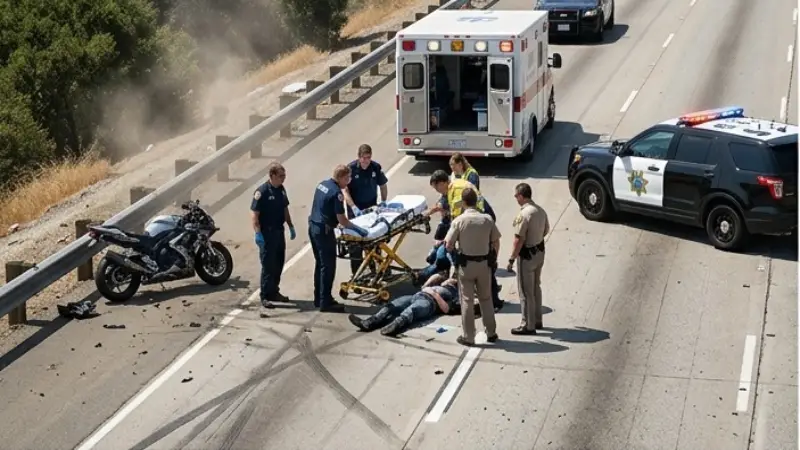
💰 How Much Does a Motorcycle Accident Lawyer in California Cost?
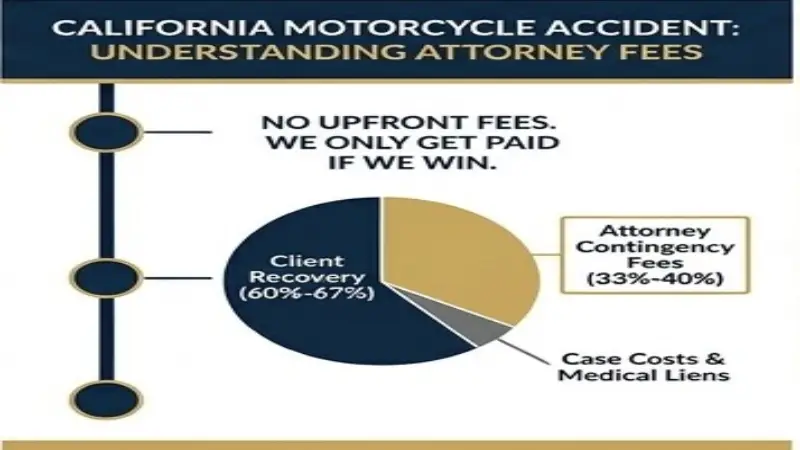
The most important thing to understand about California motorcycle accident lawyer costs is that the contingency fee model makes elite legal representation financially accessible to every injured rider — regardless of their financial situation. You do not pay an attorney by the hour. You do not pay a retainer upfront. You pay a percentage of your final recovery — and only if your attorney wins your case.
If your attorney recovers nothing, you owe nothing in attorney fees. The risk of the litigation is transferred entirely to your attorney under the contingency arrangement — which is precisely why California personal injury attorneys evaluate cases carefully before accepting them, and why accepted cases are pursued aggressively.
Standard California Motorcycle Accident Contingency Fee Rates
| Case Stage at Resolution | Typical Fee % | $500,000 Settlement Example | Your Net Recovery* |
|---|---|---|---|
| Pre-litigation settlement | 33.33% | Attorney: $166,650 | ~$310,000–$320,000 |
| Post-lawsuit settlement | 40% | Attorney: $200,000 | ~$275,000–$285,000 |
| After trial verdict | 40–45% | Attorney: $200,000–$225,000 | ~$250,000–$275,000 |
| If no recovery | 0% | No fee owed | — |
*After attorney fee and estimated case expenses of $15,000–$80,000 depending on complexity.
Case Expenses — What Gets Deducted Beyond the Attorney Fee
Separate from attorney fees, case expenses are the direct costs of building your case — expert witnesses, investigation, depositions, and court costs. These are typically advanced by your attorney and reimbursed from your settlement. For California motorcycle accident cases, typical expense ranges are:
| Expense Type | Typical Range | Why Needed |
|---|---|---|
| Accident reconstruction | $8,000–$25,000 | Engineering analysis of speed, impact, fault |
| Medical expert witness | $5,000–$20,000 | Injury causation and permanence testimony |
| Life care planner | $6,000–$18,000 | Future medical costs for serious injuries |
| Motorcycle safety expert | $5,000–$15,000 | Road defects, vehicle defects, visibility analysis |
| Depositions and court reporters | $3,000–$12,000 | Formal recorded testimony all parties |
| Investigation and evidence | $2,000–$8,000 | Scene documentation, surveillance footage |
📋 Contingency Fees Explained — California Motorcycle Accident Cases

California's contingency fee model is governed by California Rules of Professional Conduct Rule 1.5, which requires fee agreements to be in writing and clearly specify how fees are calculated. Unlike some states, California does not have a statutory cap on personal injury contingency fees — the market standard of 33% (pre-litigation) and 40% (post-litigation) prevails.
Why the Contingency Model Strongly Favors Motorcycle Accident Victims
The contingency fee creates a complete and powerful alignment of financial interest between you and your California motorcycle accident attorney. When your attorney works harder, gathers more evidence, retains better experts, and pushes back more aggressively against inadequate settlement offers — their income increases proportionally. When they accept a quick low settlement to close the file — they earn less. Every dollar of additional settlement value they create through their expertise and effort translates directly to higher income for them. This alignment incentivizes exactly the behavior you want: relentless, aggressive, expert pursuit of your maximum recovery.
The Statistical Value of Legal Representation in California
The Insurance Research Council's most recent study found that motorcycle accident claimants represented by personal injury attorneys received average settlements 3.5 times higher than unrepresented claimants — even after deducting attorney fees. In California, where jury verdicts in personal injury cases regularly exceed $1 million for serious motorcycle injuries, this differential can represent hundreds of thousands of dollars. The California Department of Insurance reports that the average represented motorcycle injury settlement in the state is $285,000, compared to approximately $82,000 for unrepresented claimants.
When Would You Potentially Not Need an Attorney?
For truly minor motorcycle accidents — a tip-over in a parking lot with no injury, or a very minor scrape with no medical treatment required — the overhead of an attorney may not be justified. But any accident involving injury, medical treatment, lost wages, property damage beyond minor cosmetic scratches, or any dispute about fault or insurance coverage warrants at minimum a free consultation with a California motorcycle accident attorney. The consultation costs nothing, and even in relatively minor cases, attorneys frequently identify coverage and damage categories that unrepresented riders miss entirely.
💵 Average Motorcycle Accident Settlement Amounts in California 2026
California motorcycle accident settlements are among the highest in the United States — reflecting the state's higher cost of living, larger jury awards, and the typically severe nature of motorcycle injuries. Settlement value is determined by the specific damages your attorney can document and present.
Economic Damages — The Calculable Foundation
Medical expenses include all past costs of accident-related treatment — emergency response, trauma surgery, hospitalization, intensive care, orthopedic surgery, neurological care, physical therapy, occupational therapy, prescription medications, medical equipment, and home health services. Critically, this extends to all projected future medical costs — which for catastrophic motorcycle injuries can far exceed the initial acute care costs. A spinal cord injury requiring lifetime care and attendant services in California can generate $4M–$8M in lifetime medical costs alone.
Lost earnings and earning capacity covers all income lost during recovery — wages, salary, commissions, freelance income, and business revenue. For permanent injuries, the projected lifetime earnings differential — the difference between what you would have earned if uninjured versus what you can now earn given your limitations — is one of the largest components of serious injury settlements. California's higher average wages make this calculation substantially more valuable than in lower-wage states.
Property damage includes the repair or replacement value of your motorcycle, riding gear (helmet, jacket, boots, gloves — often totalled in serious accidents), and any personal property damaged in the crash. California law allows recovery of the actual cash value for replacement of damaged property at current market prices.
Non-Economic Damages — Pain, Suffering, and Quality of Life
California does not cap non-economic damages in personal injury cases (unlike medical malpractice, which is capped at $350,000 under MICRA as amended in 2023). For motorcycle accidents, non-economic damages include pain and suffering (the physical discomfort of the injury and its ongoing effects), mental anguish (anxiety, PTSD, depression caused by the accident), loss of enjoyment of life (inability to engage in activities the rider previously enjoyed — critical for motorcyclists who ride as a primary hobby or lifestyle), disfigurement (scarring from road rash, surgical scars, limb loss), and loss of consortium (the impact on the victim's relationship with their spouse).
| Injury Category | California Settlement Range 2026 | Key Factors |
|---|---|---|
| Road rash / soft tissue (minor) | $15,000–$60,000 | Treatment extent, scarring, recovery time |
| Fractures / moderate injuries | $80,000–$350,000 | Surgery, lost wages, rehabilitation duration |
| Spinal / disc injuries | $150,000–$800,000 | Surgical intervention, chronic pain, impairment |
| Traumatic brain injury (TBI) | $300,000–$5M+ | Cognitive impairment, personality change, care needs |
| Limb loss / amputation | $500,000–$4M+ | Prosthetics, rehab, permanent disability |
| Spinal cord / paralysis | $2M–$15M+ | Lifetime care costs, California high cost of living |
| Wrongful death — motorcycle | $1M–$10M+ | Survivor damages, victim's earnings, liability clarity |
For a detailed comparison of personal injury settlement values across different case types and states, see our guide on the best personal injury lawyers and what cases are worth. For understanding how car insurance compares to motorcycle insurance in coverage and claims, our motorcycle insurance guide provides essential context.
🏆 Top 8 California Motorcycle Accident Law Firms 2026
| # | Firm | Google Rating | Location | Best For | Notable Result |
|---|---|---|---|---|---|
| 🥇 1 | McNicholas & McNicholas | 4.9 ⭐ (380+) | Los Angeles | Catastrophic motorcycle injuries | $25M+ — multiple 8-figure motorcycle verdicts |
| 🥈 2 | Panish Shea Ravipudi | 4.9 ⭐ (290+) | Los Angeles | Catastrophic · Wrongful death | $18M — motorcycle vs commercial truck |
| 🥉 3 | Wilshire Law Firm | 4.8 ⭐ (1,400+) | Los Angeles | All motorcycle accidents statewide | $14.5M — lane splitting TBI case |
| 4 | Gibbs & Crivelli | 4.8 ⭐ (540+) | San Jose / SF Bay | Northern California motorcycle cases | $12M — Bay Area freeway accident |
| 5 | Jacoby & Meyers | 4.7 ⭐ (2,100+) | Statewide | Volume · All injury types | $9.8M — Southern California motorcycle |
| 6 | The Simmrin Law Group | 4.9 ⭐ (620+) | Los Angeles | Motorcycle + auto accidents | $8.2M — motorcycle vs ride-share vehicle |
| 7 | Moseley Collins Law | 4.8 ⭐ (340+) | Sacramento | Central Valley motorcycle accidents | $7.4M — Sacramento freeway crash |
| 8 | Bisnar Chase | 4.9 ⭐ (480+) | Newport Beach / OC | Orange County · San Diego motorcycle | $6.8M — defective road design motorcycle case |
🏍️ Lane Splitting and California Law — How It Affects Your Motorcycle Accident Case
California is the only US state where lane splitting — riding between lanes of slow or stopped traffic — is explicitly legal. California Vehicle Code Section 21658.1, enacted in 2016 and upheld through subsequent court challenges, permits lane splitting when it is done in a safe and prudent manner. The California Highway Patrol provides non-binding safety guidelines suggesting lane splitting is safest when traffic is moving at 30 mph or slower and the motorcyclist is traveling no more than 10 mph faster than surrounding traffic.
How Lane Splitting Affects Your Liability
Because lane splitting is legal in California, the mere fact that you were lane splitting when the accident occurred does not automatically make you at fault or reduce your recovery. However, California's comparative fault system means the manner in which you were lane splitting — your speed, the speed differential from surrounding traffic, road conditions, visibility — will be evaluated as part of the overall fault determination. If you were lane splitting at 80 mph in fast-moving traffic, a finder of fact may assign you significant comparative fault. If you were lane splitting at 35 mph in stopped freeway traffic — the most common and safest lane splitting scenario — the other driver who opened their door or merged without checking their mirrors will typically bear the majority or entirety of fault.
The Anti-Motorcycle Bias Problem in California Claims
Despite lane splitting's legal status, many California insurance adjusters and jurors carry residual bias against motorcycle riders — an assumption that riding a motorcycle is inherently reckless and that any resulting accident is at least partially the rider's fault. Experienced California motorcycle accident attorneys are acutely aware of this bias and structure their case presentation specifically to overcome it: emphasizing the rider's safety gear, licensing, experience, and compliant riding behavior in the moments before the accident. This bias management is one of the most important aspects of California motorcycle accident representation that general personal injury attorneys without motorcycle-specific experience frequently handle inadequately.
Road Defect and Caltrans Liability
California's expansive freeway network — maintained primarily by Caltrans — contains road defects that are disproportionately dangerous for motorcycles compared to four-wheeled vehicles: pavement edge drops, expansion joint gaps, utility cover depressions, uneven pavement patches, and lane markings with insufficient friction. These defects, which a car driver would barely notice, can be catastrophic for a motorcycle. California Government Code Section 835 allows injury claims against government entities — including Caltrans, city public works departments, and county road agencies — for dangerous road conditions they knew about or should have known about. The critical limitation: claims against government entities require a formal Government Tort Claim filed within 6 months of the accident — not the standard 2-year personal injury deadline. Missing this 6-month window permanently bars your claim against the government defendant.
⚖️ Who Is Liable in a California Motorcycle Accident?
California's comparative fault system allows multiple parties to be assigned fault — and your recovery can come from multiple defendants and multiple insurance policies. Identifying every liable party is one of the highest-value contributions an experienced California motorcycle accident attorney makes.
The At-Fault Driver
The driver who caused the collision — through distracted driving, failure to yield, illegal lane change, running a red light, or DUI — is the primary defendant. California's comparative fault system allows you to recover from any defendant whose negligence contributed to your injuries, reduced proportionally by your own percentage of fault (if any). For drivers who cause serious motorcycle injuries, their personal auto insurance is the primary recovery source — but California's minimum liability limits of $15,000 per person/$30,000 per accident are dangerously inadequate for serious motorcycle injuries. Your attorney will identify all available coverage beyond the minimum policy limits.
The Driver's Employer
If the driver who hit you was operating a vehicle during the course of their employment — a delivery driver, a rideshare driver, a sales representative, a contractor — their employer is vicariously liable under respondeat superior. Commercial employer liability coverage is vastly larger than personal auto limits — delivery companies, rideshare companies, and commercial fleets carry $1M–$5M+ in liability coverage. Your attorney's investigation should determine the driver's employment status at the time of the accident — a detail that can increase available insurance coverage by 10–100× compared to the driver's personal policy.
Vehicle or Product Manufacturers
If a defective vehicle component contributed to your accident — whether a defect in the motorcycle itself (throttle, brakes, tires, frame) or in the car that hit you (defective brakes, steering, tire blowout due to manufacturing defect) — the manufacturer is strictly liable under California product liability law. These cases involve national and international corporate defendants with significant insurance programs and open the potential for both compensatory and punitive damages.
Government Entities — Caltrans and Municipalities
As detailed in the lane splitting section above, dangerous road conditions maintained by Caltrans, California cities, or counties create government liability for motorcycle accidents caused by those conditions. These claims require the 6-month Government Tort Claim — making rapid attorney engagement after any motorcycle accident involving a road defect absolutely critical.
Your Own Insurance — Uninsured/Underinsured Motorist Coverage
California has one of the highest uninsured motorist rates in the nation — approximately 17% of California drivers carry no insurance. California law requires that auto and motorcycle insurers offer uninsured/underinsured motorist (UM/UIM) coverage, which pays your damages when the at-fault driver has no insurance or insufficient insurance. If you carry UM/UIM coverage on your motorcycle policy, your own insurer becomes a source of recovery — though they will defend their payment obligation aggressively, requiring attorney involvement to maximize recovery from your own policy.
🧠 Why Motorcycle Accident Cases Need Specialized Legal Representation
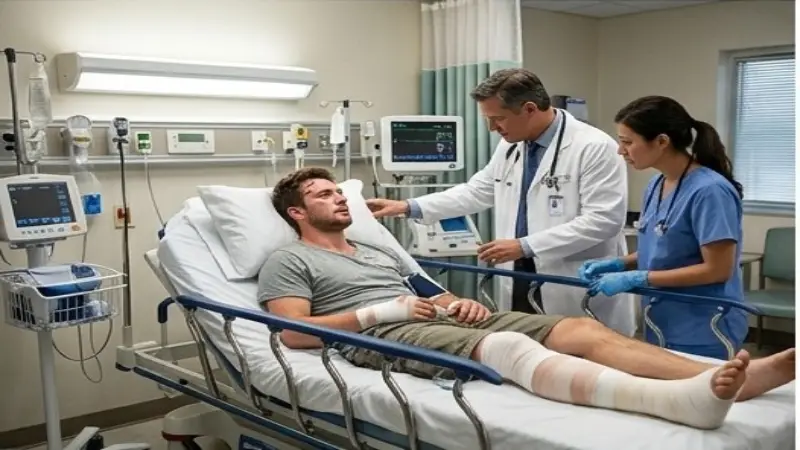
Motorcycle accident cases differ from standard car accident cases in several ways that make specialized representation more important, not less. A general personal injury attorney who handles motorcycle cases as a small fraction of their practice will miss California-specific legal strategies that an experienced motorcycle accident attorney applies routinely.
The Anti-Motorcycle Bias Must Be Actively Managed
Insurance adjusters, defense attorneys, and even jurors carry residual bias against motorcycle riders — an assumption that choosing to ride is inherently reckless. An attorney without motorcycle accident expertise may not recognize the depth of this bias or have the case-building strategies to effectively counter it. Experienced California motorcycle attorneys know how to: select and educate jurors about motorcycle safety culture, present the rider's safety record and gear usage, neutralize the defense's "they were on a motorcycle, they accepted the risk" narrative, and use accident reconstruction to visually demonstrate that the rider's behavior was entirely safe and the other driver's behavior was the sole cause of the crash.
Lane Splitting Legal Nuances
California is unique in the country in having legal lane splitting — and the legal, factual, and expert witness requirements for handling lane splitting accident cases require specific knowledge that general personal injury attorneys often lack. Whether the lane splitting was within CHP safety guidelines, the speed differential involved, road geometry, traffic speed, and visibility all affect the comparative fault analysis in ways that require both legal expertise and qualified expert testimony.
Helmet Law Complexities
California requires all motorcycle riders to wear DOT-compliant helmets — California Vehicle Code Section 27803. If a rider was not wearing a helmet at the time of the accident, the defense will argue that the rider's head and brain injuries were caused or worsened by the helmet law violation under California's comparative fault rules. This requires your attorney to retain a biomechanical expert who can analyze whether the specific injuries sustained would have been different or the same even with a helmet — eliminating or limiting the defense's comparative fault argument for helmet non-use.
Injury Documentation for High-Severity Cases
Motorcycle accidents produce disproportionately severe injuries — road rash requiring multiple debridement surgeries, orthopaedic injuries requiring multiple hardware implantations and removals, traumatic brain injuries with subtle but profound cognitive and personality changes, and PTSD from the dramatic nature of high-speed motorcycle crashes. Documenting these injuries for maximum legal value requires coordination with multiple medical specialists, neuropsychological testing for TBI cases, and vocational experts who can quantify the impact of cognitive changes on earning capacity. Attorneys without motorcycle case experience undervalue and underdocument these specific injury patterns.
📈 How to Maximize Your California Motorcycle Accident Settlement
The actions you take in the first hours, days, and weeks after your motorcycle accident directly determine the value of your settlement. These strategies separate maximum recoveries from mediocre ones.
1. Preserve your helmet and gear — do not discard anything
Your helmet, jacket, boots, gloves, and riding pants are physical evidence. The damage to your gear corroborates the severity of the impact and the forces your body absorbed. Helmets with crush damage, cracked chin bars, or contact marks provide physical evidence that directly supports traumatic brain injury claims. Gear should be photographed thoroughly, stored carefully, and never discarded. Defense attorneys regularly argue that TBI claims are exaggerated when there is no helmet damage evidence — preserving your helmet eliminates this argument.
2. Return to the scene and document everything
If you are physically able in the days after your accident, return to the scene or have someone go on your behalf. Document: road surface condition (cracks, depressions, uneven pavement), lane markings and their condition, sight lines and visibility issues, nearby traffic control devices, and any road defects that may have contributed to the accident. Google Street View can establish historical road condition — screenshot the pre-accident view immediately, as Street View images are updated periodically and the historical record may be lost. Road defect evidence that supports a Caltrans or municipality claim must be documented before repairs are made.
3. Seek all relevant medical treatment — including TBI screening
Many motorcycle accident TBI victims are discharged from emergency rooms as "cleared" — their CT scans show no acute bleeding, and they appear functional. However, diffuse axonal injury and post-concussion syndrome can produce significant cognitive, emotional, and neurological symptoms that only emerge over days and weeks. If you experienced any head contact, loss of consciousness, or altered mental status at the scene — or if you notice cognitive changes, sleep disruption, mood changes, headaches, or sensory abnormalities in the weeks following — seek neuropsychological evaluation. Undiagnosed TBI is the most commonly undervalued damage category in California motorcycle accident cases.
4. Photograph all injuries throughout the healing process
Document your injuries visually on day 1, day 3, day 7, day 14, one month, and monthly thereafter until fully healed or stable. Road rash, bruising, swelling, surgical scars, and mobility limitations all change significantly over time. Photographic progression shows the severity and duration of your injuries in a way that medical records alone cannot. Daily pain diary entries from the date of the accident — rating pain levels, describing specific limitations, and documenting emotional impact — provide the personal narrative that makes non-economic damages vivid and credible to insurance adjusters and juries.
5. Calculate the full value of motorcycle-specific losses
Motorcyclists often suffer losses that non-riders don't think to claim: the value of custom modifications to the motorcycle (not just the base market value), the replacement cost of premium riding gear at current retail prices (not depreciated values), the cost of lost riding seasons and race entries if the rider participates in organized events, and the psychological loss of a lifestyle that was built around riding. An attorney who rides or has deep motorcycle case experience knows to identify and document these motorcycle-specific losses that general practitioners miss.
🚨 What to Do Immediately After a Motorcycle Accident in California
- Get to safety and assess injuries. Move yourself and the motorcycle out of active traffic if possible. Do not remove your helmet if you suspect a neck or spinal injury — wait for emergency medical services to do this safely. Activate hazard gear and use your phone's location services if you are in an unfamiliar area.
- Call 911 immediately. All motorcycle accidents involving injury require a police report in California. A CHP or police report establishes the official record of the accident, identifies the at-fault driver, and documents the initial scene conditions. Never leave the scene without a report being filed, regardless of what the other driver suggests.
- Photograph and video document everything. Before anything is moved: all vehicle positions, all damage to the motorcycle and the other vehicle(s), all road conditions and markings, all skid marks and debris, your injuries (even if they appear minor initially — bruising and swelling dramatically worsen over 24–48 hours), the other driver's license plate, insurance card, and driver's license.
- Get witness names and numbers. Bystanders who witnessed the accident are invaluable evidence. Collect full names and phone numbers from every person who saw what happened — including passengers of other vehicles, pedestrians, and people in nearby businesses who may have seen or heard the impact.
- Do not discuss fault at the scene. Do not apologize, do not say "I should have seen you," do not discuss your speed or lane position beyond what you provide to the responding police officer. Anything said at the scene can be introduced in subsequent litigation as an admission against interest.
- Seek emergency medical evaluation. Go to an emergency room regardless of how you feel. Adrenaline masks pain — riders who feel "okay" at the scene regularly discover serious injuries in the hours that follow. Your ER visit creates the foundational medical record that connects your injuries to the accident. Without this record, the insurance company will argue that your injuries occurred elsewhere or were pre-existing.
- Contact a California motorcycle accident attorney within 48 hours. Evidence is most available and most legally protectable in the first 48–72 hours. Your attorney can issue evidence preservation letters, identify government entity claims requiring the 6-month tort claim deadline, and instruct you on all communications with insurers before you inadvertently damage your claim.
- Do not give recorded statements to insurance companies. Neither the other driver's insurance company nor your own insurer should receive recorded statements before you have retained an attorney. Insurance adjusters are trained to ask questions that establish lower damages and higher comparative fault on your part. Politely decline and tell them your attorney will be in contact.
🎯 How to Choose the Right California Motorcycle Accident Attorney
With thousands of personal injury attorneys in California, choosing the right one for a motorcycle accident case requires evaluating specific criteria that go beyond general reputation and advertising presence.
Motorcycle-Specific Experience is Non-Negotiable
Ask every attorney you consult: "What percentage of your personal injury caseload involves motorcycle accidents?" and "How many motorcycle accident cases have you taken to trial in California?" An attorney who handles one motorcycle case per year lacks the specialized knowledge of lane splitting laws, anti-motorcycle bias management, helmet evidence strategies, and CHP report analysis that a motorcycle case specialist applies automatically. The best California motorcycle attorneys often ride themselves — giving them an insider's knowledge of rider behavior, road conditions, and the culture that insurance adjusters caricature.
Trial Record in the Relevant California Court
California has 58 counties with their own superior courts — and jury dynamics vary dramatically by county. A Los Angeles attorney who has tried motorcycle cases before multiple LA county judges and against specific insurance defense firms has knowledge of local jury tendencies, judicial preferences, and opposing counsel strategies that dramatically affects their negotiating leverage. An attorney admitted to California courts but who has never tried a case in the county where your accident occurred lacks this tactical advantage.
Resources for High-Value Cases
Catastrophic motorcycle injury cases — paralysis, severe TBI, limb loss — require extensive expert investment that only well-resourced firms can fund on contingency. A life care plan for a paraplegic motorcycle accident victim requires $8,000–$18,000 in expert fees. An accident reconstruction specialist for a complex freeway accident costs $15,000–$25,000. A neuropsychological evaluation for a TBI case costs $5,000–$12,000. Smaller firms without the financial depth to fund these expert investments will either take inadequate early settlements or farm out your case to a larger firm — costing you time and potentially a percentage of your recovery. Ask directly: "Can your firm fund a complex, expensive case entirely on contingency?"
Questions to Ask in Your Free Consultation
- "Have you handled lane splitting accident cases specifically, and what were the outcomes?"
- "Are you familiar with the Caltrans government tort claim requirements for road defect cases?"
- "Do you work with motorcycle safety experts for accident reconstruction?"
- "What is your approach to managing anti-motorcycle bias with insurance adjusters and jurors?"
- "How do you handle cases where the rider wasn't wearing a helmet or was cited at the scene?"
- "Who will personally be handling my case, and will I have direct access to the attorney?"
❓ Frequently Asked Questions — Motorcycle Accident Lawyer California Cost 2026
How much does a motorcycle accident lawyer cost in California?
California motorcycle accident attorneys work on a contingency fee basis — you pay nothing upfront and nothing unless they win your case. The standard fee is 33.33% of the settlement if the case resolves before litigation is filed, and 40% if a lawsuit is filed and pursued. Case expenses (expert witnesses, investigation, depositions) are typically advanced by the attorney and reimbursed from your settlement. If your case is unsuccessful, you owe no attorney fee. The contingency model means that legal representation is financially accessible to every injured California motorcycle rider regardless of their financial situation — and statistically, represented riders receive settlements 3.5 times higher than unrepresented riders even after paying the attorney fee.
Is lane splitting legal in California, and does it affect my claim?
Yes — lane splitting is legal in California under Vehicle Code Section 21658.1. The mere fact of lane splitting does not make you at fault for an accident that occurs while you are doing it. However, under California's comparative fault system, the manner of the lane splitting — your speed, the speed differential from surrounding traffic, road conditions, and visibility — will be evaluated as part of the overall fault determination. A rider lane splitting safely at 35 mph in stopped traffic who is hit by a driver who changes lanes without checking mirrors will typically bear zero fault. A rider lane splitting at 80 mph in fast-moving traffic bears higher comparative fault. An experienced California motorcycle accident attorney manages this analysis aggressively to minimize your comparative fault percentage and maximize your recovery.
What is the average motorcycle accident settlement in California?
California motorcycle accident settlements range from approximately $15,000–$60,000 for minor injuries with full recovery, to $80,000–$350,000 for fractures and moderate injuries requiring surgery, to $300,000–$5M+ for traumatic brain injuries and catastrophic injuries. The California Department of Insurance reports an average represented motorcycle injury settlement of approximately $285,000 statewide — though this average conceals enormous variation based on injury severity, liability clarity, available insurance coverage, and representation quality. California's higher cost of living, higher average wages, and lack of a cap on personal injury non-economic damages make California motorcycle settlements among the highest in the nation for equivalent injury severity.
Can I sue Caltrans for a road defect that caused my motorcycle accident?
Yes — California Government Code Section 835 allows personal injury claims against government entities for dangerous road conditions. However, the procedural requirements are strict: you must file a Government Tort Claim with the relevant agency (Caltrans, city, county) within 6 months of the accident — not the standard 2-year personal injury deadline. Failure to file this claim within 6 months permanently bars your government entity lawsuit, regardless of how strong your case is. If your motorcycle accident involved a road defect — pavement edge drop, expansion joint gap, pothole, uneven utility cover, inadequate friction surface — contact a California motorcycle accident attorney immediately to determine whether a government entity claim exists and to meet the 6-month filing deadline.
What is the statute of limitations for motorcycle accidents in California?
The statute of limitations for motorcycle accident personal injury claims in California is 2 years from the date of the accident under California Code of Civil Procedure Section 335.1. Property damage claims (your motorcycle) have a 3-year limitation period. Wrongful death claims must be filed within 2 years of the date of death. Claims against government entities require a Government Tort Claim filed within 6 months — see above. Claims involving minor children run from the child's 18th birthday. The "discovery rule" may extend the deadline in limited circumstances when an injury was not reasonably discoverable. Do not wait to contact an attorney — the longer you delay, the more evidence degrades and the closer your deadline becomes.
Does not wearing a helmet affect my California motorcycle accident claim?
Potentially yes. California law requires all motorcycle riders to wear DOT-compliant helmets. If you were not wearing a helmet at the time of your accident, the defense will argue under California's comparative fault system that your head and brain injuries were caused or worsened by your helmet law violation — potentially reducing your recovery proportionally. An experienced California motorcycle accident attorney will retain a biomechanical expert to analyze whether the specific injuries you sustained would have been different if you had been wearing a helmet. For many injuries — orthopedic injuries, road rash, internal injuries, spinal injuries — helmet use is irrelevant and the defense's comparative fault argument fails. For head and brain injuries, the analysis is more nuanced. This is a critical reason to have an attorney who regularly handles California motorcycle accident cases and has experience countering this specific defense strategy.
✅ Final Thoughts — Motorcycle Accident Lawyer California Cost 2026
The cost of a California motorcycle accident lawyer — paid entirely on contingency from your settlement — is the best financial decision most injured riders can make. California's complex legal environment — lane splitting rules, government entity tort claim deadlines, anti-motorcycle bias, and the severity of motorcycle injuries — demands attorneys with specialized motorcycle case expertise, not general practice attorneys who handle the occasional bike case.
The firms on our 2026 ranking — led by McNicholas & McNicholas and Panish Shea Ravipudi for catastrophic injury cases, and Wilshire Law Firm for statewide volume and accessibility — represent the top tier of California motorcycle accident representation. Call within 48 hours of your accident. The Government Tort Claim deadline (6 months for government entity claims) begins immediately. For related guides, see our articles on the best motorcycle insurance in the USA, free consultation car accident lawyers, and the best personal injury lawyers in major US cities.
Disclaimer: This article is for informational purposes only and does not constitute legal advice. California personal injury law is complex and subject to case-specific application. Settlement figures are averages and ranges — individual outcomes vary significantly. Always consult a licensed California attorney for advice specific to your situation. Nexuora does not receive referral fees from any law firm listed. Updated April 18, 2026.
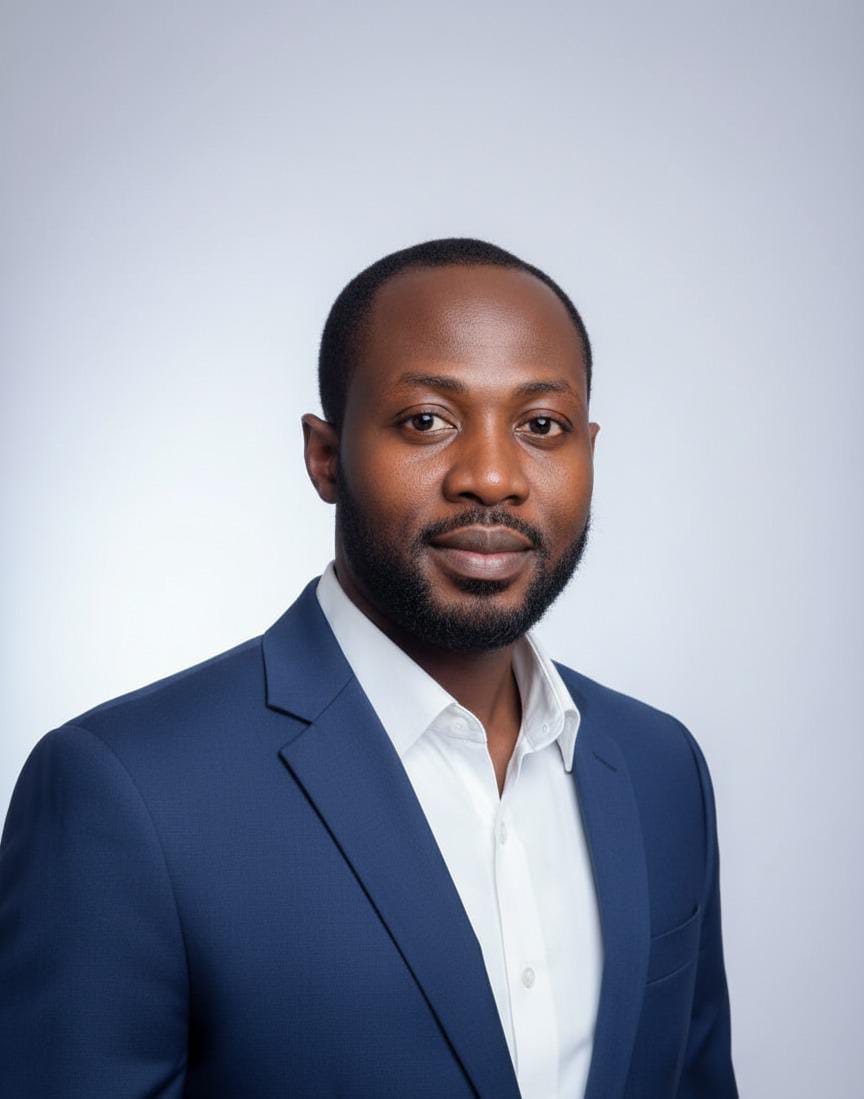
Ahmada Ndao is a financial research analyst and independent journalist
specializing in US consumer finance, legal rights, and insurance markets.
With over 5 years covering American financial products, he has helped
thousands of readers navigate complex insurance decisions, find the right
legal representation, and optimize their credit strategies. His research
methodology combines primary data analysis, direct outreach to industry
professionals, and continuous monitoring of federal regulatory changes.
Ahmada’s work has been cited by financial communities across the US and
reviewed by licensed attorneys and insurance professionals for accuracy.