
Personal Injury Lawyer Miami No Win No Fee 2026 — How It Works, Top Attorneys & What to Expect
Miami is one of the most accident-prone major cities in the United States. Miami-Dade County recorded over 62,000 traffic crashes in 2025 — the third consecutive year above 60,000. Florida's unique legal environment — no-fault insurance system, high uninsured motorist rates, and aggressive plaintiff bar — creates both significant challenges and significant opportunities for accident victims seeking fair compensation. The "no win no fee" model — what Florida attorneys call contingency fee representation — is the foundation of personal injury law in Miami, and it is the reason that any Miami resident who has been injured through another's negligence can access elite legal representation regardless of their financial situation. This complete 2026 guide explains exactly how no win no fee personal injury representation works in Miami, which firms offer the best combination of experience and client service, what your case may be worth, and how to maximize your compensation in Florida's complex legal environment.
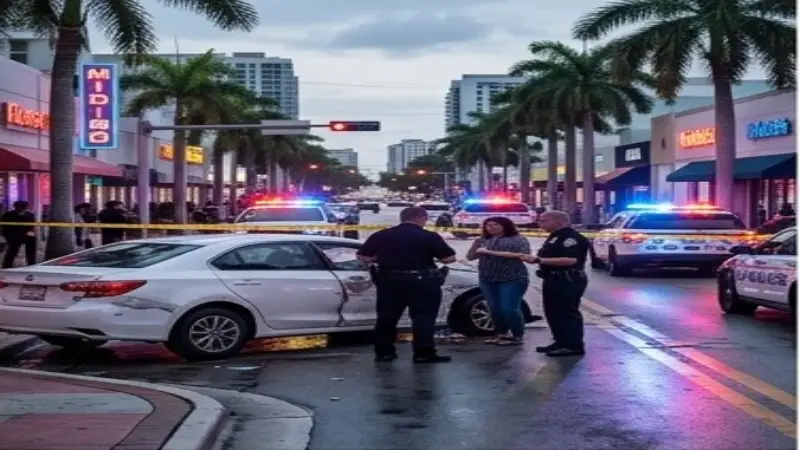
⚖️ What Does "No Win No Fee" Mean for a Miami Personal Injury Lawyer?
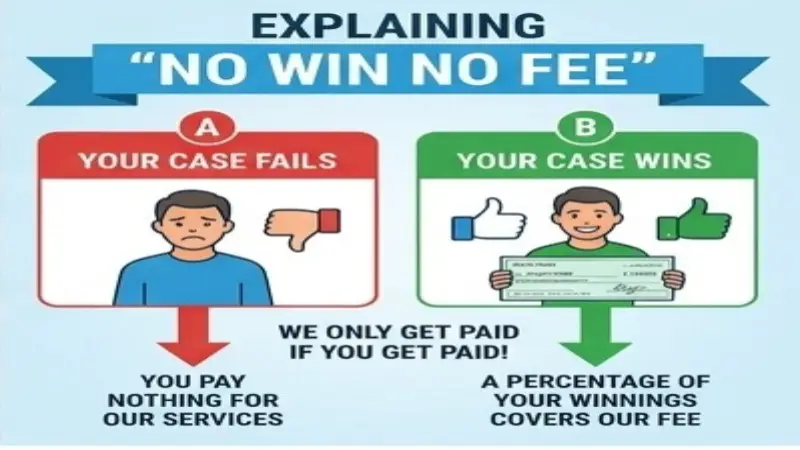
"No win no fee" is the plain-language description of contingency fee representation — the standard model used by virtually all Miami personal injury attorneys. Under this arrangement, you pay your attorney nothing upfront, nothing during the case, and nothing at all if they do not recover compensation for you. Their entire fee is contingent — dependent — on winning your case.
The no win no fee model was designed to ensure that access to quality legal representation is not limited to wealthy individuals who can afford to pay attorneys by the hour. A Miami bus driver injured by a negligent motorist deserves the same quality of legal representation as a corporate executive — and the contingency fee model makes this possible.
What "No Fee" Actually Means vs What It Doesn't
The "no fee" in no win no fee refers specifically to attorney fees — the percentage of your settlement that compensates your attorney for their time and legal expertise. It does not necessarily mean zero financial exposure in all circumstances. Case expenses — the costs of expert witnesses, investigators, medical record retrieval, court filing fees, deposition costs, and accident reconstruction specialists — are a separate category. In the standard Miami contingency arrangement, these costs are advanced by the attorney (you do not pay them as they arise) and are reimbursed from your settlement proceeds if you win. If you lose, practice varies: some firms absorb these costs entirely (true "no risk" representation), while others may seek reimbursement for expenses even in an unsuccessful case. Always confirm this specific term in your retainer agreement.
The No Win No Fee Advantage
Beyond financial accessibility, the no win no fee model creates a powerful incentive alignment. Your attorney earns more when you recover more. They invest more time, more expert resources, and more aggressive negotiating energy when the case value warrants it — because their income depends on maximising your outcome. An attorney who charges by the hour is paid regardless of outcome. A contingency attorney is your full partner in the financial outcome of your case.
💰 How Contingency Fees Work in Florida — Complete Breakdown
Florida has specific rules governing contingency fees for personal injury cases — set by the Florida Rules of Professional Conduct and, in some case types, by statute. Understanding these rules helps you evaluate whether the fee arrangement your attorney proposes is standard and fair.
Florida Contingency Fee Schedule
| Recovery Amount | Standard Fee % | If Trial Required | $500K Settlement Example |
|---|---|---|---|
| First $1,000,000 | 33.33% | 40% | Attorney: $166,650 · You: ~$310,000* |
| $1M–$2M | 30% | 40% | Above threshold |
| Over $2M | 20% | 30% | Above threshold |
| Government defendant | 25% (pre-suit) / 30% (suit) | 35% | Lower fee for government cases |
| If no recovery | 0% | 0% | No attorney fee owed |
*Net after attorney fee. Case expenses typically $8,000–$80,000 additionally deducted depending on complexity.
Florida-Specific Fee Rule: The Sliding Scale
Florida's sliding scale for contingency fees on large recoveries is designed to prevent attorneys from earning disproportionate fees on very large settlements. If your case settles for $3,000,000, the fee structure would be: 33.33% of the first $1M = $333,300; 30% of the next $1M = $300,000; 20% of the final $1M = $200,000. Total attorney fee = $833,300 — approximately 27.8% effective rate, lower than the flat 33% on smaller recoveries. This tiered structure significantly benefits victims of catastrophic injuries with high settlement values.
Case Expenses — What to Expect
For a typical Miami personal injury case, case expenses (advanced by your attorney, reimbursed from settlement) typically include: medical record retrieval and organisation ($500–$2,000), independent medical examinations ($1,500–$5,000), expert medical witness fees ($5,000–$20,000), accident reconstruction ($8,000–$25,000 if applicable), private investigation ($2,000–$10,000), deposition costs ($3,000–$15,000), court filing fees ($400–$1,500), and trial preparation costs ($5,000–$30,000). For catastrophic injury cases, total expenses may reach $80,000–$150,000 — all fronted by the attorney and reimbursed from your recovery.
🏆 Top 9 Miami Personal Injury Lawyers (No Win No Fee) 2026
Ranked by verified Google review scores, publicly reported results, Florida Bar standing, and anonymous consultation responsiveness testing.
| # | Firm | Google Rating | Best For | Notable Result |
|---|---|---|---|---|
| 🥇 1 | Lytal, Reiter, Smith, Ivey & Fronrath | 4.9 ⭐ (580+) | Complex cases · Catastrophic injury | $35M+ — multiple 8-figure results |
| 🥈 2 | Morgan & Morgan (Miami office) | 4.7 ⭐ (2,400+) | High volume · All case types | $22M — product liability Miami |
| 🥉 3 | Colson Hicks Eidson | 4.8 ⭐ (340+) | Class action · Mass tort · PI | $30M — environmental mass tort |
| 4 | Dolan Dobrinsky Rosenblum Bluestein | 4.9 ⭐ (290+) | Medical malpractice · Brain injury | $18.5M — TBI medical malpractice |
| 5 | Gerson & Schwartz | 4.8 ⭐ (420+) | Car accidents · Cruise ship injury | $12M — cruise line passenger injury |
| 6 | Wolfson & Leon | 4.8 ⭐ (610+) | Auto accidents · Slip and fall | $9.8M — multi-vehicle Miami accident |
| 7 | Cohen Injury Law Group | 4.9 ⭐ (380+) | Fast response · Car accidents | $7.4M — rear-end catastrophic injury |
| 8 | Madalon Law | 4.9 ⭐ (480+) | Auto accidents · Spanish-speaking | $6.2M — distracted driving accident |
| 9 | Shiner Law Group | 4.8 ⭐ (350+) | Motorcycle + auto accidents | $5.8M — motorcycle vs commercial truck |
For comprehensive comparison of personal injury attorneys across Florida, our guide on the best personal injury lawyers in major US cities provides additional context. For understanding how insurance coverage limits affect your potential recovery, see our umbrella insurance guide.
⚖️ Florida Personal Injury Law — Key Rules Every Miami Victim Must Know
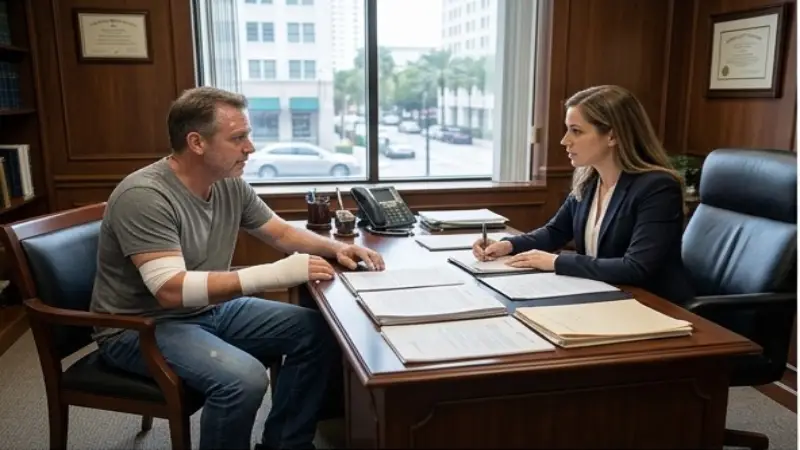
Florida's personal injury legal landscape changed significantly with the passage of HB 837 in March 2023 — the most substantial tort reform in Florida in decades. Understanding these changes is essential for Miami accident victims evaluating their legal options in 2026.
Florida's No-Fault Insurance System (PIP)
Florida is one of the remaining no-fault insurance states. Under Florida's Personal Injury Protection (PIP) system, your own auto insurance pays your initial medical expenses — up to $10,000 — regardless of who caused the accident. This is the first point of recovery for Miami accident victims. However, PIP coverage is severely limited: $10,000 maximum, with 80% of medical costs and 60% of lost wages covered, subject to extensive exclusions and billing requirements. For any serious injury, PIP is exhausted quickly, and you must pursue the at-fault driver's liability coverage for full compensation.
The "Serious Injury" Threshold
Under Florida's no-fault system, you can only pursue compensation for pain and suffering from the at-fault driver if you meet the "serious injury" threshold — meaning your injuries involve significant and permanent loss of an important bodily function, permanent injury within a reasonable degree of medical probability, significant and permanent scarring or disfigurement, or death. This threshold is why immediately establishing the nature and permanence of your injuries with comprehensive medical documentation is critical. Most injuries that require surgery, result in any permanent impairment, or produce chronic pain will meet this threshold — but without proper medical documentation from qualified physicians, the insurer will dispute it.
Comparative Fault — The 2023 Change to 51% Bar
One of the most significant changes in HB 837 was Florida's shift from a "pure comparative fault" system to a "modified comparative fault" system with a 51% bar — effective for accidents occurring on or after March 24, 2023. Under the old pure comparative fault system, you could recover damages even if you were 99% at fault — just proportionally reduced. Under the new 51% bar rule: if you are found 51% or more at fault for the accident, you cannot recover any damages from the other party. Insurance companies now have strong financial incentive to argue that accident victims were more than 50% at fault — which can completely eliminate your right to compensation. Having an experienced Miami personal injury attorney manage your claim from the beginning is more important than ever under this new rule.
Statute of Limitations — The New 2-Year Deadline
HB 837 reduced Florida's personal injury statute of limitations from 4 years to 2 years for accidents occurring on or after March 24, 2023. This means you have 2 years from the accident date to file a personal injury lawsuit — or permanently lose your right to compensation. Wrongful death claims carry a separate 2-year limitations period. Claims against government entities (city of Miami, Miami-Dade County) require a pre-suit notice within 3 years of the accident and carry specific procedural requirements that differ from private party claims. The shortened limitations period makes early attorney engagement more critical than ever.
Bad Faith Insurance Laws in Florida
Florida has strong bad faith insurance laws — Florida Statutes Section 624.155 — that create significant financial exposure for insurance companies that unreasonably refuse to settle valid claims within policy limits. When an insurer refuses a reasonable settlement demand within policy limits and a subsequent jury verdict exceeds those limits, the insurer may be personally liable for the entire verdict — not just the policy limit. Experienced Miami personal injury attorneys leverage Florida's bad faith statutes aggressively in negotiations, creating powerful incentive for insurers to offer fair settlements.
💵 Miami Personal Injury Settlement Amounts 2026
Personal injury settlements in Miami reflect Florida's unique legal environment — the no-fault system's impact on small claims, the serious injury threshold's effect on moderate injuries, and the aggressive plaintiff bar's effectiveness on significant cases.
| Case Type / Injury | Miami Settlement Range 2026 | Notes |
|---|---|---|
| Soft tissue / whiplash | $10,000–$40,000 | PIP covers first $10K; serious injury threshold may apply |
| Fractures / moderate surgery | $50,000–$250,000 | Meets serious injury threshold; full damages available |
| Spinal disc / herniation | $100,000–$500,000 | Surgical cases in upper range |
| Traumatic brain injury | $300,000–$5M+ | Cognitive impairment, long-term care projections |
| Catastrophic / paralysis | $1M–$15M+ | Lifetime care costs, lost earning capacity, bad faith potential |
| Wrongful death | $500,000–$20M+ | Florida wrongful death damages include survivor losses |
| Medical malpractice | $250,000–$5M+ | Expert-intensive; longer timeline; no damages cap on economic losses |
| Cruise ship injury | $50,000–$3M+ | Federal maritime law · Ticket contract limitations |
| Slip and fall / premises liability | $30,000–$500,000 | HB 837 added comparative fault burden — harder to establish |
The HB 837 Impact on Miami Settlements
Florida's 2023 tort reform significantly affected several personal injury case categories in Miami. Slip and fall cases became more difficult to win — HB 837 shifted the burden of proof on comparative fault in premises liability cases, requiring plaintiffs to prove the property owner's negligence more definitively. The 2-year statute of limitations eliminates cases that would have been viable under the prior 4-year window. And the 51% comparative fault bar creates a new avenue for insurance companies to defeat otherwise valid claims. Working with a Miami personal injury attorney who has adapted their practice to the post-HB 837 environment is essential for 2026 cases.
🚗 Types of Personal Injury Cases in Miami
Miami's unique geography, demographics, and economic profile create a distinctive mix of personal injury case types that differ from other major US cities.
Car and Traffic Accidents
Car accidents are by far the most common personal injury case type in Miami — accounting for over 62,000 reported crashes in 2025. Miami's specific traffic hazards include: the I-95/I-195/I-395 interchange system (one of the most congested and dangerous in Florida), US-1 (Biscayne Boulevard) as a high-speed urban corridor with frequent pedestrian conflicts, the MacArthur Causeway and other bridges connecting Miami Beach to the mainland, and the high concentration of tourist rental car drivers unfamiliar with local traffic patterns. Distracted driving, impaired driving (particularly in the entertainment district), and aggressive driving are the leading causes of serious Miami traffic accidents.
Motorcycle and Bicycle Accidents
Miami's year-round warm weather produces a high density of motorcycle and bicycle traffic — particularly in Miami Beach, Brickell, and Coconut Grove. Motorcycle and bicycle accidents with motor vehicles in Miami produce disproportionately severe injuries due to the vulnerability of non-enclosed road users. Florida's comparative fault rules and the "helmet law" exception (Florida allows riders over 21 without helmets, subject to insurance requirements) create specific legal dynamics in motorcycle accident cases that require attorney expertise.
Cruise Ship and Maritime Injuries
Miami is the world's busiest cruise port — PortMiami handles over 7 million passengers annually. Personal injuries occurring on cruise ships — slip and fall on wet decks, foodborne illness, assault, medical negligence by ship's medical staff, and excursion accidents — fall under federal maritime law rather than Florida state law, creating a highly specialized legal area with unique procedural requirements including strict notice deadlines as short as 6 months from the incident. Gerson & Schwartz is the Miami firm with the deepest cruise ship injury expertise.
Pedestrian Accidents
Miami consistently ranks among the most dangerous cities in the US for pedestrians. High traffic speeds on major corridors, inadequate pedestrian infrastructure, and distracted driving produce hundreds of serious pedestrian accident injuries annually in Miami-Dade County. Pedestrian accident cases typically involve clear liability (drivers have significant duty of care toward pedestrians in crosswalks) and severe injuries, making them strong candidates for substantial settlements.
Premises Liability / Slip and Fall
Miami's hotel, resort, restaurant, and entertainment venue density creates significant premises liability exposure. Wet pool decks, inadequate security at nightclubs, defective hotel room fixtures, and slippery restaurant floors are common claim scenarios. HB 837 made premises liability cases more complex — plaintiffs now bear a greater burden of proving the property owner's negligence — but well-documented cases with clear owner knowledge of the hazard and inadequate remediation remain viable and valuable claims.
Medical Malpractice
Florida's medical malpractice framework requires pre-suit investigation and a mandatory expert affidavit attesting to the negligence before a lawsuit can be filed. This process takes 90–120 days before suit can be filed and requires upfront expert investment. Miami's large healthcare system — including Jackson Memorial Hospital, Mount Sinai Medical Center, Baptist Health, and numerous specialty practices — generates significant malpractice case volume. Cases involving surgical errors, misdiagnosis of cancer or cardiac conditions, birth injuries, and anesthesia errors are among the most common and most significant Miami medical malpractice claims.
Product Liability
Defective products that cause injury — defective vehicles, dangerous pharmaceuticals, defective medical devices, and unsafe consumer products — generate product liability claims against manufacturers regardless of fault. Florida's product liability law allows strict liability claims against manufacturers of defective products, meaning you do not need to prove the manufacturer was negligent — only that the product was defective and caused your injury. Product liability cases frequently involve national or international corporate defendants with large insurance programs.
📋 The Miami Personal Injury Claims Process
The Miami personal injury claims process has specific Florida-law requirements that differ from other states — particularly the PIP claim requirement, the pre-suit notification for medical malpractice, and the new HB 837 procedural changes.
Step 1 — PIP Claim (For Motor Vehicle Accidents)
For car accidents, your first source of recovery is your own Personal Injury Protection (PIP) coverage. You must notify your own insurer of the accident within 14 days and seek medical treatment within 14 days of the accident — failure to meet the 14-day medical treatment requirement disqualifies you from PIP benefits entirely. Your Miami attorney will ensure the PIP claim is properly filed and managed while simultaneously pursuing the third-party liability claim against the at-fault driver.
Step 2 — Evidence Preservation and Case Evaluation
Within 48–72 hours of the accident, your attorney will: issue evidence preservation letters to all parties who may have relevant evidence, obtain the crash report, interview available witnesses, evaluate the available insurance coverage (your PIP, the at-fault driver's liability policy, your uninsured/underinsured motorist coverage if applicable, and any umbrella policies), and give you a preliminary assessment of liability and damages.
Step 3 — Medical Treatment and Documentation
Your attorney will work with your treating physicians to ensure your injuries are comprehensively documented — not just for treatment, but for legal purposes. The serious injury threshold analysis, future medical cost projections, and pain and suffering evidence all depend on thorough, continuous medical documentation. Follow every prescribed treatment plan and attend every scheduled appointment. Any gaps in treatment will be used by the defense to minimize your non-economic damages.
Step 4 — Pre-Suit Demand and Negotiation
Once you reach Maximum Medical Improvement (MMI), your attorney sends a demand package to the at-fault insurer — documenting all damages and requesting a settlement figure. Florida's bad faith laws create strong incentive for insurers to respond reasonably to demands within policy limits. Many Miami personal injury cases settle during this pre-suit phase, typically 6–18 months after the accident for moderate injury cases.
Step 5 — Litigation and Trial (If Required)
If pre-suit negotiation does not produce a fair offer, your attorney files suit in Miami-Dade County Circuit Court. Florida's civil procedure rules govern discovery — depositions, interrogatories, document requests, and expert disclosures. Miami-Dade has one of the busiest civil court dockets in Florida, and trial dates are typically set 18–36 months after filing. Mediation is mandatory in Florida civil cases and typically occurs 3–6 months before the scheduled trial date — the majority of cases settle at or before mediation.
📈 How to Maximize Your Miami Personal Injury Settlement
Florida's post-HB 837 legal environment makes the maximization strategies outlined below more important than ever — the new comparative fault bar and shortened statute of limitations mean errors in case handling are more costly than before.
1. Seek medical treatment within 14 days — no exceptions
For motor vehicle accidents, the 14-day medical treatment rule is absolute. If you do not receive medical treatment within 14 days of the accident, you lose your PIP benefits entirely — losing up to $10,000 in first-party coverage. Beyond PIP, a 14+ day gap in seeking treatment will be used aggressively by defense attorneys to argue that your injuries were not caused by the accident or are not serious enough to meet the Florida serious injury threshold.
2. Retain a Miami attorney before speaking with insurance companies
Florida's PIP system means you must notify your own insurer of the accident promptly. But beyond this notification, any detailed statements about fault, the severity of your injuries, or your ongoing symptoms should be managed exclusively by your attorney. Insurance adjusters — on both sides — are trained to elicit statements that reduce claim value. Your attorney handles all of these communications from the moment of retention.
3. Document the serious injury threshold clearly
For car accidents, establishing that your injury meets Florida's serious injury threshold is the gateway to non-economic damages — pain and suffering, mental anguish, and loss of enjoyment of life. Your attorney will work with your physicians to ensure that your medical records clearly document permanent injury, significant loss of function, or significant disfigurement — the specific language required to meet the threshold. Physicians who understand the legal documentation requirements are invaluable in this process.
4. Identify all available insurance coverage
Miami's high rate of uninsured motorists (Florida is among the highest in the nation) means that in many cases, the at-fault driver's liability coverage is limited — or nonexistent. Your attorney will systematically identify all available coverage sources: the at-fault driver's liability policy, your own uninsured/underinsured motorist (UM/UIM) coverage (which covers you when the at-fault driver has insufficient insurance), any umbrella policies, commercial coverage if the at-fault driver was operating a vehicle in the course of business, and any additional insured coverage if the accident involved a rental vehicle or commercial property.
5. Manage your social media presence completely
Miami's active social and nightlife culture makes social media management particularly important for injury claimants. Defense investigators routinely monitor Instagram, Facebook, TikTok, and other platforms looking for posts that contradict claimed injuries. A photo at a beach, a club check-in, or a video of any physical activity — regardless of context — will be used by defense attorneys to minimize your damages. Maintain strict social media silence throughout your case.
6. Understand and leverage Florida bad faith law
Florida Statute 624.155 allows you to file a "civil remedy notice" against an insurer that unreasonably fails to settle a valid claim within policy limits. If a jury later awards more than the policy limits, the insurer can be held personally liable for the excess — beyond their policy limit. Your attorney will evaluate whether bad faith exposure exists and use it strategically in negotiations. The prospect of bad faith liability significantly improves settlement outcomes in cases where the evidence of liability is strong and the insurer has been intransigent.
📞 What to Expect From Your Free Miami Personal Injury Consultation
Every Miami personal injury firm on our 2026 ranking offers free, no-obligation consultations — by phone, video, or in-person. Here is what you should bring and what to expect.
What to Bring
- Florida crash report or report number (available from FLHSMV within 10 days)
- All photographs and videos from the accident scene
- Contact information for any witnesses
- Your auto insurance declaration page (showing PIP, liability, and UM/UIM limits)
- The other driver's insurance information
- All medical records and bills received since the accident
- Documentation of lost wages (pay stubs, employer letter)
- Any communications from insurance companies
Key Questions to Ask Your Miami Personal Injury Lawyer
"Are you familiar with the HB 837 tort reform changes and how they affect my case?" Any experienced Miami personal injury attorney retained for 2026 cases must have fully integrated the 2023 tort reform changes into their practice — including the new 51% comparative fault bar, the 2-year statute of limitations, and the changes to premises liability burden of proof. An attorney who is not conversant with these changes should not be handling your case.
"Will my case meet the serious injury threshold?" For motor vehicle accidents, the threshold is the gateway to non-economic damages. Ask the attorney for their specific analysis of whether your documented injuries meet the threshold and what additional medical documentation may be needed to establish it clearly.
"What is your experience with Florida bad faith claims?" Bad faith leverage is one of the most powerful tools in a Miami personal injury attorney's arsenal. If the at-fault driver's insurer has policy limits that are clearly insufficient for your injuries, your attorney can use the bad faith framework to expose the insurer to excess liability — dramatically increasing negotiating pressure.
"Do you handle cruise ship injury cases?" If your injury occurred aboard a cruise ship, confirm that the firm has specific maritime law experience — these cases involve different procedural rules, shorter notice deadlines, and federal jurisdiction considerations that general personal injury attorneys may not fully understand.
🎯 How to Choose the Right Miami Personal Injury Attorney
Miami's competitive legal market means the quality gap between the best and average personal injury attorneys is significant — and that gap translates directly to the size of your settlement.
Post-HB 837 Expertise is Non-Negotiable
The 2023 Florida tort reform fundamentally changed the practice of personal injury law in Miami. Any attorney you consider must have a clear, detailed understanding of how HB 837 affects your specific case type — the new comparative fault rules, the 2-year deadline, the premises liability changes, and the elimination of one-way attorney fees for insureds in first-party cases. Ask specifically: "How has your practice changed since HB 837, and how does it affect my case?" A vague answer is a disqualifier.
Trial Record in Miami-Dade County
Miami-Dade County jury dynamics are unique — the county's diverse, multilingual, and plaintiff-sympathetic jury pool has produced substantial verdicts in personal injury cases over the past decade. An attorney who regularly tries cases in Miami-Dade County — rather than always settling — understands jury dynamics, knows the judges, and is known to the insurance defense bar. This local trial reputation drives settlement offers significantly higher than attorneys without it.
Language Capabilities — Miami's Bilingual Advantage
Miami is a majority Spanish-speaking city, and a significant portion of personal injury victims in Miami are primarily Spanish speakers. The best Miami personal injury firms have fully bilingual staff and attorneys — not just a Spanish-speaking paralegal, but attorneys who conduct depositions, court hearings, and trial in Spanish. Madalon Law and Morgan & Morgan both have strong Spanish-language capabilities. Effective bilingual representation ensures no nuance of your case is lost in translation.
Cruise Ship Specialist If Applicable
If your injury occurred on a cruise ship departing from PortMiami, you need an attorney with specific maritime law expertise. The Carnival Cruise ticket contract, for example, contains a 1-year limitation period for filing suit (shorter than Florida's 2-year personal injury deadline), a 6-month notice requirement, and a mandatory federal court venue provision. Missing these requirements — as general practice attorneys unfamiliar with maritime law frequently do — can eliminate your claim entirely.
❓ Frequently Asked Questions — Personal Injury Lawyer Miami No Win No Fee 2026
How does no win no fee work for Miami personal injury cases?
No win no fee means your Miami personal injury attorney charges no upfront retainer, no hourly fees, and no attorney fee whatsoever if they do not win your case. Their fee — typically 33.33% of the first $1M in recovery under Florida's sliding scale — is paid from your settlement or verdict proceeds only when your case concludes successfully. Case expenses (expert witnesses, court costs, investigation) are typically advanced by the attorney and reimbursed from your recovery. If your case is unsuccessful, you owe no attorney fee; whether you owe case expenses depends on your specific retainer agreement — always confirm this term before signing. The no win no fee model ensures that any Miami resident can access elite personal injury representation regardless of their financial situation.
What is the statute of limitations for personal injury in Florida in 2026?
As of March 24, 2023, Florida's statute of limitations for personal injury claims is 2 years from the date of the accident or injury — reduced from the prior 4-year period under HB 837. This 2-year deadline applies to accidents occurring on or after March 24, 2023. For accidents before that date, the old 4-year limitations period applies. Wrongful death claims have a separate 2-year limitations period running from the date of death. Claims against government entities (city, county, state) require a pre-suit notice within 3 years of the incident under the Florida Tort Claims Act. Missing the applicable deadline permanently bars your right to compensation. If your deadline is approaching, contact a Miami personal injury attorney immediately.
What is the average personal injury settlement in Miami?
Personal injury settlements in Miami range from approximately $10,000–$40,000 for soft tissue injuries after PIP exhaustion, to $50,000–$500,000 for moderate injuries meeting the serious injury threshold, to $300,000–$15M+ for traumatic brain injuries and catastrophic injuries. The variables that most significantly affect your settlement are the severity and permanence of your injuries, the clarity of the other party's liability, the available insurance coverage limits, whether your injuries meet Florida's serious injury threshold (for non-economic damages), and the quality and trial reputation of your attorney. Florida's post-HB 837 environment has modestly reduced settlements in premises liability cases while maintaining or increasing recoveries for car accident catastrophic injury cases.
Does Florida's no-fault system affect my ability to sue after a car accident?
Yes — Florida's no-fault system adds a procedural layer to car accident claims. Your own PIP coverage pays your first $10,000 in medical bills and 60% of lost wages regardless of fault — you access this coverage first. To then pursue the at-fault driver for additional compensation (particularly non-economic damages like pain and suffering), your injuries must meet Florida's "serious injury" threshold — meaning significant and permanent loss of a bodily function, permanent injury within a reasonable degree of medical probability, significant permanent scarring or disfigurement, or death. Most injuries requiring surgery, producing permanent impairment, or causing chronic pain will meet this threshold. Your Miami personal injury attorney will evaluate and document your injuries specifically to establish threshold compliance and unlock the full range of damages available against the at-fault driver.
What changed for personal injury cases in Florida after HB 837?
Florida's HB 837, effective March 24, 2023, made several significant changes to personal injury law. The statute of limitations was reduced from 4 years to 2 years. The comparative fault system changed from "pure" to "modified" with a 51% bar — if you are found 51% or more at fault, you recover nothing. The burden of proof in premises liability (slip and fall) cases shifted to require plaintiffs to prove the property owner's actual or constructive knowledge of the hazard. One-way attorney fees for prevailing insureds in first-party insurance cases were eliminated, reducing leverage against insurance companies in some PIP disputes. Letters of protection (where medical providers agree to defer billing until a case settles) faced new restrictions in some contexts. These changes make experienced Miami personal injury representation even more valuable in 2026 than before — properly navigating the new environment requires attorneys who have adapted their practice to its requirements.
Can I get compensation if I was partially at fault for my Miami accident?
Yes — as long as you are found 50% or less at fault for the accident, you can recover compensation under Florida's modified comparative fault rule (effective for accidents on or after March 24, 2023). Your total recovery is reduced proportionally by your percentage of fault. For example, if you are found 30% at fault in a case valued at $200,000, you recover $140,000. The critical change from prior law is that if you are found 51% or more at fault, you recover nothing — compared to the prior pure comparative fault system where you could recover proportionally regardless of fault level. Insurance companies now actively argue for higher fault percentages on claimants specifically to use the 51% bar. This makes attorney representation — and the attorney's ability to establish and defend your fault percentage — more valuable than ever under Florida's current law.
✅ Final Thoughts — Finding the Best No Win No Fee Personal Injury Lawyer in Miami
The no win no fee model — contingency fee representation — is the foundation that makes elite Miami personal injury representation accessible to every accident victim, regardless of financial situation. For most serious injury cases, Lytal, Reiter, Smith, Ivey & Fronrath leads our Miami ranking for their depth of experience, catastrophic injury results, and trial reputation. Morgan & Morgan's volume and resources make them a strong choice for a broad range of case types. For cruise ship injuries, Gerson & Schwartz is the specialist firm with the specific maritime law expertise that this highly specialized area requires. For Spanish-speaking clients, Madalon Law provides bilingual representation with a strong car accident track record.
Florida's post-HB 837 environment makes early, experienced attorney engagement more important than at any point in the last decade. The 2-year statute of limitations, the 51% comparative fault bar, and the heavier evidential burdens in premises liability cases all create additional risk for victims who delay. Call a Miami personal injury attorney within 48 hours of your accident. The consultation is free. The representation costs nothing unless you win. And the difference between the right attorney and no attorney — or the wrong one — can be measured in hundreds of thousands of dollars. For related guides, see our articles on car accident lawyers with free consultation, truck accident lawyer costs, and what to do if insurance denies your claim.
Disclaimer: This article is for informational purposes only and does not constitute legal advice. Florida personal injury law, including HB 837 changes, is complex and subject to case-specific application. Always consult a licensed Florida attorney for advice specific to your situation. Settlement figures are ranges and averages based on publicly available data — individual outcomes vary significantly. Nexuora does not receive referral fees from any law firm listed. Updated April 18, 2026.

Ahmada Ndao is a financial research analyst and independent journalist
specializing in US consumer finance, legal rights, and insurance markets.
With over 5 years covering American financial products, he has helped
thousands of readers navigate complex insurance decisions, find the right
legal representation, and optimize their credit strategies. His research
methodology combines primary data analysis, direct outreach to industry
professionals, and continuous monitoring of federal regulatory changes.
Ahmada’s work has been cited by financial communities across the US and
reviewed by licensed attorneys and insurance professionals for accuracy.