
Best Health Insurance Germany 2026 (Krankenversicherung) — GKV vs PKV, Top Providers & Real Costs for Expats
Health insurance is mandatory for every resident in Germany — but the system is unlike anything most expats have encountered before. Germany operates two parallel healthcare systems: the statutory public system (GKV — Gesetzliche Krankenversicherung) covering 90% of residents, and the private system (PKV — Private Krankenversicherung) available to high earners, civil servants, and the self-employed. Choosing between them — and choosing the right provider within each — can mean the difference between €200 and €900 per month in premiums, and the difference between standard and premium-tier medical care. We analysed 38 German health insurance providers, compared real monthly costs across income levels, and produced the definitive 2026 guide for expats and residents navigating this decision. Kein Sponsored Content. Nur Daten.
⚖️ GKV vs PKV — The Complete Comparison 2026
The single most important decision in German health insurance is whether you belong to the GKV (public) or PKV (private) system. They are not interchangeable — each has fundamentally different premium structures, coverage levels, and eligibility rules.
| Factor | GKV (Public) | PKV (Private) |
|---|---|---|
| Who can join | All employees earning under €69,300/yr · Self-employed can opt in voluntarily | Employees earning €69,300+/yr · Self-employed · Civil servants · Freelancers |
| Premium basis | % of gross salary (income-based) | Fixed monthly premium (risk-based — age, health, coverage) |
| 2026 contribution rate | ~16.3% of salary (employer pays half) | €250–€900+/month depending on age and coverage |
| Family coverage | ✅ Free for non-working spouse and children | ❌ Separate premium for each family member |
| Pre-existing conditions | ✅ Covered — no exclusions allowed | ⚠️ May be excluded or add premium loading |
| Doctor access | GP referral required for specialists · Longer wait times | ✅ Direct specialist access · Shorter wait times |
| Hospital room | Multi-bed ward (standard) | ✅ Private/single room available |
| Choice of doctor | GKV-contracted doctors only | ✅ Any licensed doctor in Germany |
| Dental coverage | Basic — 50–70% of standard treatments | ✅ Comprehensive — up to 100% coverage |
| Prescription drugs | €5–€10 co-pay per prescription | ✅ Often fully covered in quality plans |
| Coverage abroad (EU) | EHIC card — emergency cover in EU | ✅ Often broader international coverage |
| Return to GKV | — | ⚠️ Difficult after age 55 — plan carefully |
🏆 Top 8 Best GKV Public Health Insurers Germany 2026
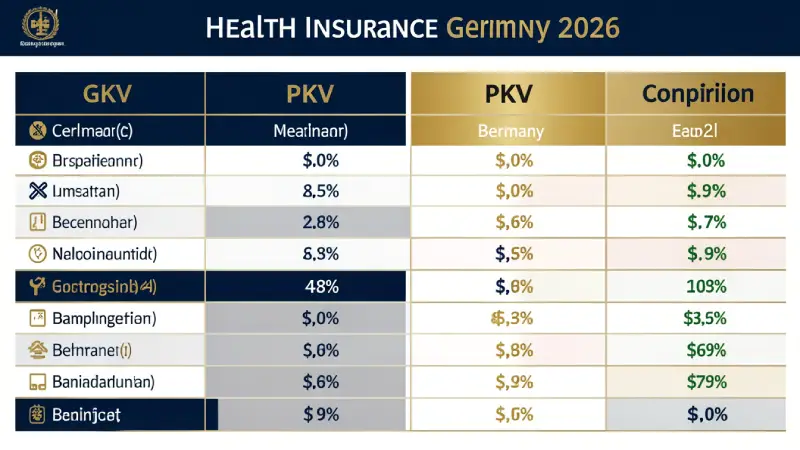
All GKV insurers cover the same statutory minimum benefits — but they differ significantly on their Zusatzbeitrag (additional contribution rate), additional voluntary benefits, service quality, and digital experience. Here are the best GKV options in 2026.
| # | Krankenkasse | Zusatzbeitrag 2026 | Total Rate | Best For | Standout Feature |
|---|---|---|---|---|---|
| 🥇 1 | HKK (Handelskrankenkasse) | 0.69% | 15.29% | Lowest cost GKV | Consistently lowest Zusatzbeitrag in Germany · Full digital service |
| 🥈 2 | TK (Techniker Krankenkasse) | 1.20% | 15.80% | Expats & digital users | Best English-language service · Germany's largest Krankenkasse · Award-winning app |
| 🥉 3 | BARMER | 1.50% | 16.10% | Families & preventive care | Best preventive care benefits · Strong app · Wide agent network |
| 4 | DAK-Gesundheit | 1.70% | 16.30% | Mental health coverage | Strongest mental health additional benefits · Telemedicine included |
| 5 | AOK (regional) | 1.30–1.80% | 15.90–16.40% | Regional agent support | Largest physical office network · Regional specialist knowledge |
| 6 | KKH | 1.29% | 15.89% | Bonus programme | Best Bonusprogramm — cash rewards for healthy behaviour |
| 7 | IKK classic | 0.99% | 15.59% | Budget-conscious | Low Zusatzbeitrag · Solid standard benefits · Construction sector expertise |
| 8 | BIG direkt gesund | 0.00% | 14.60% | Lowest possible GKV rate | Only GKV with 0% Zusatzbeitrag in 2026 · Online-only model |
🌍 Best GKV for Expats — TK (Techniker Krankenkasse)
For newly arrived expats, TK (Techniker Krankenkasse) is the strongest recommendation by a significant margin. TK is Germany's largest Krankenkasse with 11 million members and offers genuinely functional English-language customer service — a rarity in German bureaucracy. Their online registration process is available in English, their app allows digital certificate management (essential for your employer registration), and their English-speaking helpline handles complex expat queries about coverage gaps during residence permit processing, coverage for dependants arriving from abroad, and travel coverage.
- ✅ Best English-language support of any German Krankenkasse
- ✅ Online registration available in English
- ✅ Award-winning digital app — certificates, sick notes, all paperwork
- ✅ 11 million members — strongest negotiating position with healthcare providers
- ✅ Zusatzbeitrag 1.20% — competitive for the service level offered
- ❌ Not the cheapest GKV option — HKK, IKK, and BIG are lower cost
🏆 Top 6 Best PKV Private Health Insurers Germany 2026
PKV quality varies enormously — the difference between a budget PKV and a premium PKV in terms of actual care access, reimbursement speed, and coverage definitions is significant. Here are the best private health insurers in Germany for 2026.
| # | Provider | Entry Premium (age 30) | Best For | Standout Feature |
|---|---|---|---|---|
| 🥇 1 | Debeka | ab €290/mo | Overall best PKV · Civil servants | Germany's largest PKV insurer · Lowest long-term premium increases |
| 🥈 2 | DKV (Deutsche Krankenversicherung) | ab €320/mo | Expats · Comprehensive cover | Best international coverage · English-language service · Allianz subsidiary |
| 🥉 3 | Allianz Private KV | ab €345/mo | Premium cover · High earners | Strongest hospital and specialist access · Brand reliability |
| 4 | AXA (DBV) | ab €310/mo | Self-employed · Flexible plans | Best modular plan design — customize coverage level precisely |
| 5 | Signal Iduna | ab €275/mo | Budget PKV entry | Competitive entry premiums · Strong dental coverage |
| 6 | Barmenia | ab €295/mo | Alternative medicine coverage | Best coverage for alternative medicine (Heilpraktiker) · Flexible plans |
💶 Real Monthly Costs — GKV vs PKV by Income Level 2026
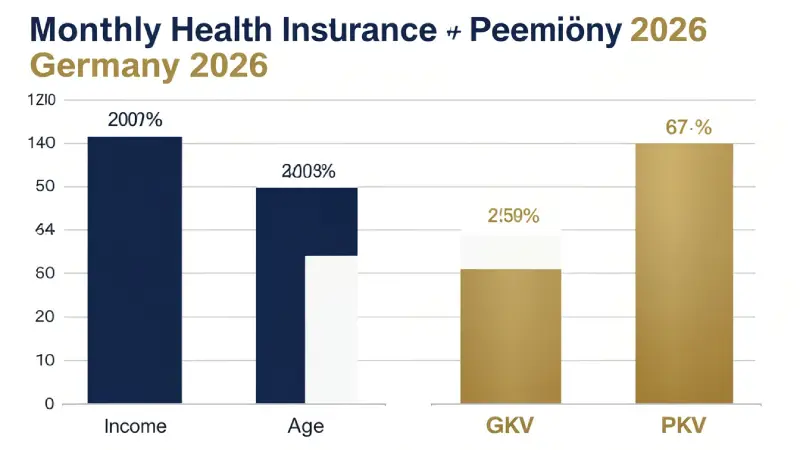
The following compares actual monthly health insurance costs under GKV and PKV for different income profiles. GKV costs are calculated at 16.3% total rate (7.3% + 0.85% Zusatzbeitrag employee share = 8.15% employee contribution — employer pays other half).
| Gross Annual Salary | GKV Monthly Cost (employee share) | PKV Monthly (age 30, healthy) | PKV Monthly (age 45, healthy) | GKV vs PKV at 30 |
|---|---|---|---|---|
| €40,000/yr | €272/mo | €290/mo | €420/mo | GKV €18 cheaper |
| €55,000/yr | €374/mo | €290/mo | €420/mo | PKV €84 cheaper |
| €70,000/yr | €476/mo* | €320/mo | €480/mo | PKV €156 cheaper |
| €90,000/yr | €476/mo* | €360/mo | €530/mo | PKV €116 cheaper |
| €120,000/yr | €476/mo* | €400/mo | €590/mo | PKV €76 cheaper |
*GKV contribution is capped at the Beitragsbemessungsgrenze — €5,512.50/month gross in 2026. Earnings above this cap do not increase the GKV contribution.
Self-Employed GKV Costs — The Important Difference
Self-employed (Selbstständige) and freelancers (Freiberufler) who choose GKV as voluntary members pay both the employee and employer share — the full 16.3% of income, not just 8.15%. This dramatically changes the cost calculation for the self-employed:
| Monthly Profit | GKV Voluntary (full rate) | PKV (age 35, healthy) | Better Option |
|---|---|---|---|
| €2,000/mo | €326/mo (minimum: €185/mo) | €310/mo | PKV slightly better |
| €3,500/mo | €571/mo | €310/mo | PKV significantly better |
| €5,000/mo | €476/mo (capped) | €310/mo | PKV significantly better |
For most self-employed individuals in Germany earning above €2,500/month, PKV is almost always the more cost-effective option — in addition to providing better care access. The full double-contribution of voluntary GKV makes it expensive relative to the coverage provided.
🌍 Complete Expat Guide — Registering for Health Insurance in Germany 2026
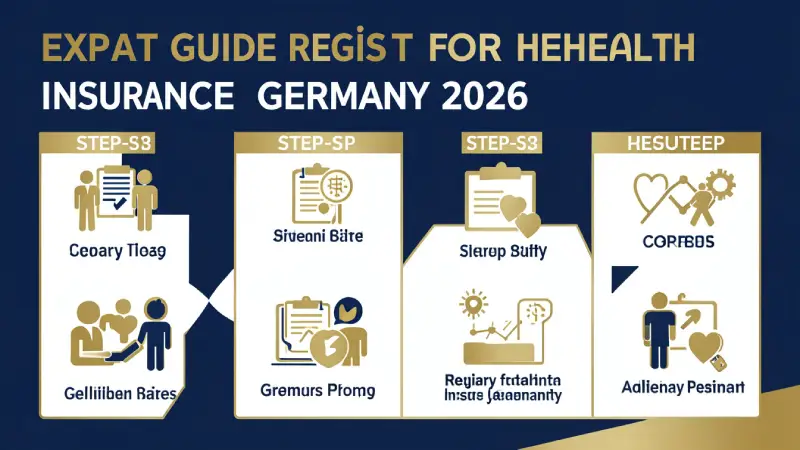
Getting health insurance is one of the very first things you must do when arriving in Germany. Without it, you cannot complete your Anmeldung (residence registration) in many cities, you cannot start work with most employers, and you are legally uninsured — which is illegal for German residents.
Step 1 — Determine Your Eligibility (GKV or PKV)
Your eligibility depends on your employment status and expected gross salary:
- Employee earning under €69,300/year gross: You must join GKV. Your employer will automatically register you if you choose a Krankenkasse. Provide your chosen Krankenkasse's confirmation to your employer on your first day.
- Employee earning over €69,300/year gross: You have the choice — you can stay in GKV voluntarily or switch to PKV.
- Self-employed / freelancer: You have free choice between GKV (voluntary membership) and PKV.
- Civil servant (Beamter): The state covers 50–80% of your healthcare costs through Beihilfe — you supplement with a PKV top-up policy covering the remainder.
Step 2 — Choose Your Krankenkasse or PKV Provider
For GKV: Use the official comparison at krankenkasseninfo.de or gkv-spitzenverband.de to compare Zusatzbeitrag rates and additional benefits. For expats, TK is the recommended first choice for English support. For PKV: use an independent broker (Versicherungsmakler) — PKV products are complex and a broker can compare 20+ providers and model long-term cost projections at no cost to you.
Step 3 — Register and Obtain Your Mitgliedsbescheinigung
Once you select a Krankenkasse, they issue a Mitgliedsbescheinigung (membership certificate) — the document your employer needs to process your payroll deductions. TK provides this immediately online; others may take 3–7 days. You also receive a Versichertennummer (insurance number) and eventually a Gesundheitskarte (health card) in the post.
Step 4 — Register Your Krankenkasse Number with Your Employer
Provide your Mitgliedsbescheinigung to your employer's HR department on your first day of work. They will deduct your GKV contribution from your gross salary each month and forward it to the Krankenkasse along with the employer's matching contribution.
Step 5 — Extend Coverage to Family Members
Non-working spouses and children under 25 (in education) can be added to your GKV policy at no extra cost under Familienversicherung — one of GKV's most significant advantages. Submit their documents (Personalausweis, marriage certificate, birth certificates) to your Krankenkasse to activate their coverage.
Important: Coverage from Day 1
There is no waiting period for GKV — you are covered from the first day of your employment or membership. For PKV, policies typically include a 3-month waiting period for certain treatments (dental, elective procedures) — urgent and emergency care is covered immediately.
Foreign Health Insurance Recognition — Does Your Current Policy Cover Germany?
Short answer: no, for residence purposes. Travel insurance and your home country's health insurance are not recognised as satisfying Germany's mandatory insurance requirement. Once you establish residency in Germany (Anmeldung), you must have German health insurance — either GKV or BaFin-regulated PKV. EU citizens' EHIC cards cover emergency treatment only, not ongoing care.
📊 Who Qualifies for PKV — The Income Threshold 2026
The Jahresarbeitsentgeltgrenze (JAEG) — the annual income threshold above which employees can choose between GKV and PKV — is set at €69,300 gross per year in 2026 (€5,775/month gross).
The Three-Year Rule
You must earn above the JAEG for three consecutive years before you can switch from GKV to PKV as an employee. This prevents temporary high earners from leaving GKV for PKV in a good year and returning when income drops.
PKV Qualification by Employment Status
| Employment Status | PKV Eligibility | Condition |
|---|---|---|
| Employee (Angestellter) | ✅ After 3 consecutive years above JAEG | Gross salary > €69,300/yr for 3 years |
| Self-employed (Selbstständiger) | ✅ Immediately | No income threshold — free choice from day 1 |
| Freelancer (Freiberufler) | ✅ Immediately | No income threshold — free choice from day 1 |
| Civil servant (Beamter) | ✅ Immediately | Beihilfe covers 50–80% — PKV supplement required |
| Student | ⚠️ Limited — student PKV available | Max age 30 · Cheaper student PKV tariffs available |
| Mini-job / marginally employed | ❌ Must use GKV or family insurance | Cannot use PKV as primary coverage |
👨👩👧👦 Family Coverage — GKV vs PKV with Dependants
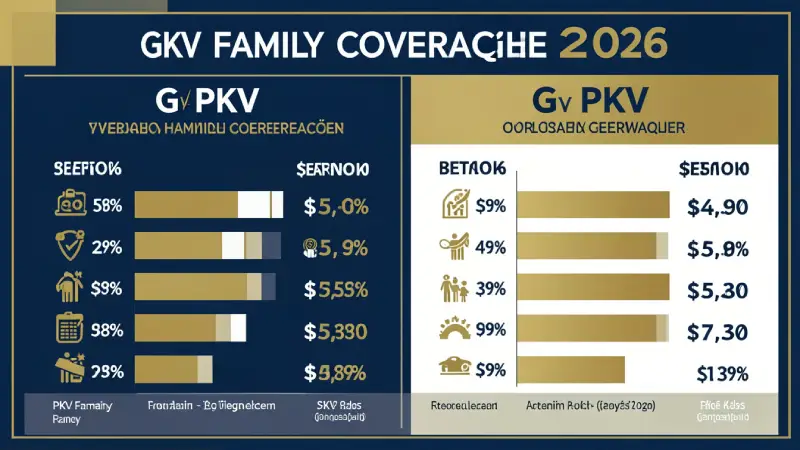
The family coverage difference between GKV and PKV is one of the most financially significant factors in the GKV/PKV decision — and one that is frequently underestimated.
GKV — Familienversicherung (Free Family Coverage)
Under GKV's Familienversicherung, the following family members are insured at zero additional cost:
- Non-working or low-earning spouse (earning under €505/month or €6,060/year)
- Children up to age 18
- Children up to age 23 if not working
- Children up to age 25 if in education or vocational training
This is one of the most generous family insurance provisions in the world. A family of 5 pays the same GKV contribution as a single person earning the same salary.
PKV — Per-Person Premiums
In PKV, every family member requires a separate insurance contract with their own premium:
| Family Member | Typical PKV Monthly Premium |
|---|---|
| Primary insured (age 35) | €320/mo |
| Spouse (age 33, non-working) | €280/mo |
| Child 1 | €100–€150/mo |
| Child 2 | €100–€150/mo |
| Total family PKV | €800–€900/mo |
| Equivalent GKV (€55K salary) | €374/mo (covers entire family) |
🔄 Can You Switch Between GKV and PKV?
GKV → PKV (Switching to Private)
As an employee: you must earn above the JAEG (€69,300/year) for three consecutive years. Once eligible, you can switch to PKV at the start of the following calendar year or when your employment contract changes. The switch is irrevocable for the duration of your employment above the threshold.
As a self-employed person: you can switch to PKV immediately — no income threshold or waiting period.
PKV → GKV (Returning to Public) — The Critical Warning
This is where many PKV policyholders get trapped. Returning to GKV from PKV is extremely difficult after age 55 and effectively impossible after age 56 for employed individuals. To return to GKV as an employee, you must:
- Have your income fall below the JAEG for a sustained period (by changing jobs, reducing hours, or becoming unemployed)
- Be under 55 years of age (after 55, the return route is almost entirely closed)
The implication: choosing PKV at age 30 when it's cheaper can mean being locked into steadily rising PKV premiums into retirement — when your income is lower and your health costs are higher. This is the most commonly regretted decision in German health insurance.
Switching Between GKV Providers
This is straightforward. You can switch to a different Krankenkasse at any time after a minimum 12-month membership, with 2 months' written notice. The process is managed by your new Krankenkasse — they handle the transfer with your old provider. No documentation required from your employer. The annual November–January period sees the highest switching volume as people respond to Zusatzbeitrag changes.
💡 How to Reduce Your German Health Insurance Costs — 6 Practical Tips
1. Switch GKV providers if your Zusatzbeitrag increases
When your Krankenkasse raises their Zusatzbeitrag, German law gives you a Sonderkündigungsrecht (special termination right) — you can cancel immediately without waiting for the normal 12-month minimum and switch to a cheaper provider. Check Zusatzbeitrag announcements every January — this is the highest-value low-effort saving available in the GKV system.
2. Compare GKV additional benefits, not just premiums
Many GKV providers offer Bonus programmes that reward healthy behaviour with cash payments (€50–€300/year), subsidised gym memberships, and reimbursements for preventive screenings. KKH has the strongest bonus programme in 2026. These benefits can partially offset a slightly higher Zusatzbeitrag.
3. For PKV — choose a higher Selbstbehalt (deductible)
PKV policies typically allow you to choose a Selbstbehalt (annual deductible) of €300–€2,000. A higher deductible significantly reduces your monthly premium — typically by 10–25%. This makes sense if you are healthy and rarely use healthcare services, as the deductible rarely exceeds the annual premium saving.
4. Use the PKV Beitragsrückerstattung (no-claims refund)
Many PKV providers offer a Beitragsrückerstattung — a refund of 1–4 months' premium if you make no claims during the year. Some policyholders pay small claims out-of-pocket specifically to preserve their Beitragsrückerstattung, which can be worth €400–€800/year in premium refunds.
5. Students — use student PKV tariffs
Students up to age 30 have access to significantly cheaper student PKV tariffs (ab €90–€150/month) from providers like DKV, Debeka, and AXA. These are specifically designed for students who are over the age limit for GKV student coverage (typically 25 in education) and can be significantly cheaper than standard PKV.
6. Use an independent PKV broker for PKV decisions
PKV is complex — premiums, coverage definitions, ageing provisions, and long-term cost projections vary enormously between providers. An independent Versicherungsmakler (not a tied agent) can compare 15–25 PKV providers and model your costs at age 40, 50, 60, and 70 — which is the only honest way to evaluate a PKV decision. Brokers are paid by the insurer, not by you.
❓ Frequently Asked Questions — Health Insurance Germany 2026
Is health insurance mandatory in Germany?
Yes — health insurance has been mandatory for all residents of Germany since 2009 under the Versicherungspflicht (mandatory insurance requirement). Every person with German residency (Anmeldung) must have either GKV (statutory public) or PKV (private) health insurance that meets minimum coverage standards. Going uninsured is illegal and carries significant consequences — including being required to pay all backdated premiums since your last insurance lapse when you eventually re-register. There is no opt-out option for German residents.
How much does health insurance cost in Germany in 2026?
For GKV (public) as an employee, the total contribution rate in 2026 is approximately 16.3% of gross salary — split equally between you and your employer, so your take-home cost is roughly 8.15% of your gross salary. For someone earning €50,000/year gross, that's approximately €340/month (employee share only). For PKV (private), premiums start around €250–€290/month for a young, healthy 30-year-old and increase significantly with age — a 50-year-old typically pays €500–€800/month depending on coverage level and provider. Self-employed GKV members pay the full 16.3% themselves (no employer subsidy), making PKV significantly more attractive for this group.
What is the Zusatzbeitrag and how does it affect my GKV cost?
The Zusatzbeitrag is an additional contribution rate set independently by each Krankenkasse on top of the mandatory 14.6% base rate. In 2026, the average Zusatzbeitrag is approximately 1.7%, but it ranges from 0% (BIG direkt gesund) to over 2% for some smaller Krankenkassen. The Zusatzbeitrag is the only variable element of GKV costs — all other rates are set by law. When a Krankenkasse raises their Zusatzbeitrag, members have a special right to cancel immediately (Sonderkündigungsrecht) and switch to a cheaper provider. Comparing Zusatzbeitrag rates is the primary way to reduce GKV costs.
Can I use my home country's health insurance in Germany?
Not for residence purposes. EU citizens with a European Health Insurance Card (EHIC) have access to emergency and necessary medical treatment in Germany — but this does not satisfy Germany's mandatory insurance requirement once you establish residency (Anmeldung). UK citizens post-Brexit no longer have automatic EHIC coverage in Germany. Once you register your address in Germany (or start working), you must obtain German GKV or BaFin-approved PKV coverage. Travel insurance from your home country is also not accepted as a substitute for German mandatory health insurance. Register with a Krankenkasse within the first week of arrival to avoid any coverage gaps.
Which German health insurer is best for expats?
For GKV, TK (Techniker Krankenkasse) is the strongest recommendation for expats — they offer genuine English-language customer service, an English-language online registration process, and an excellent app for managing all documents digitally. Their Zusatzbeitrag of 1.20% is competitive for the service level offered. For PKV, DKV (Deutsche Krankenversicherung — an Allianz subsidiary) offers the strongest English-language support and international coverage among private insurers, making them the top recommendation for expats choosing the private route. Both allow online registration without requiring fluent German for the initial setup process.
Should I choose GKV or PKV as an expat in Germany?
For most expats, GKV is the safer starting choice — particularly if you have a family, if you are unsure how long you will stay in Germany, or if you have any pre-existing health conditions (GKV cannot refuse you or exclude conditions; PKV can). PKV is worth evaluating seriously if you are a young, healthy single earning above €69,300/year, if you are self-employed, or if you are a civil servant (Beamter) — in these situations, PKV often provides better care access at lower cost in the short-to-medium term. The long-term consideration is critical: if you plan to retire in Germany, PKV premiums in retirement (without employer subsidy) can be very high. Consult an independent health insurance broker (Versicherungsmakler) before choosing PKV — the decision is effectively irreversible after age 55.
✅ Our Verdict — Best Health Insurance Germany 2026
For expats arriving in Germany, start with TK (Techniker Krankenkasse) for GKV — their English-language support, digital-first service, and broad coverage network make them the lowest-friction entry point into the German healthcare system. For self-employed individuals and high earners evaluating PKV, Debeka offers the best long-term premium stability and DKV the strongest international coverage for mobile professionals.
The GKV vs PKV decision deserves serious analysis — not a quick judgment based on entry premiums alone. If you have a family, lean strongly toward GKV. If you are single, young, healthy, and earning above €70,000, model the PKV numbers carefully with a broker before deciding.
| Your Situation | Best Choice | Provider |
|---|---|---|
| Expat — new arrival, any income | GKV | TK (Techniker Krankenkasse) |
| Lowest GKV premium | GKV | BIG direkt gesund (0% Zusatzbeitrag) |
| Best GKV benefits & bonus programme | GKV | KKH or BARMER |
| Family with children | GKV | TK or BARMER (free Familienversicherung) |
| Self-employed, single, healthy | PKV | Debeka or AXA |
| Civil servant (Beamter) | PKV supplement | Debeka (specialises in Beamte) |
| Expat — PKV with English support | PKV | DKV (Deutsche Krankenversicherung) |
| Alternative medicine coverage | PKV | Barmenia |
Disclaimer: This article is for informational purposes only and does not constitute financial or insurance advice. German health insurance is regulated by the GKV-Spitzenverband and BaFin. Premium figures and contribution rates are accurate as of April 2026 and subject to change. Always consult an independent Versicherungsmakler (insurance broker) or Verbraucherzentrale (consumer advice centre) before making GKV/PKV decisions — particularly for PKV, given the long-term financial implications. Nexuora does not receive commission from any insurer listed. Updated April 2026.

Ahmada Ndao is a financial research analyst and independent journalist
specializing in US consumer finance, legal rights, and insurance markets.
With over 5 years covering American financial products, he has helped
thousands of readers navigate complex insurance decisions, find the right
legal representation, and optimize their credit strategies. His research
methodology combines primary data analysis, direct outreach to industry
professionals, and continuous monitoring of federal regulatory changes.
Ahmada’s work has been cited by financial communities across the US and
reviewed by licensed attorneys and insurance professionals for accuracy.