
Chapter 7 vs Chapter 13 Bankruptcy 2026 — Which One Is Right for You & How to Decide
Personal bankruptcy filings in the United States rose 18% in 2025 — the largest single-year increase since 2010. In 2026, with consumer debt at a record $18.2 trillion and the Federal Reserve holding rates at 4.25–4.50%, millions of Americans are evaluating bankruptcy as a path to financial relief. But Chapter 7 and Chapter 13 are fundamentally different legal tools — choosing the wrong one can cost you your home, extend your repayment period by years, or leave you unable to file again when you need to most. We break down every critical difference between Chapter 7 and Chapter 13 bankruptcy in plain English — including the means test, exemptions, impact on your home, timeline, and which debts each chapter actually eliminates. No legal jargon. No scare tactics. Just the comparison you need to make the right decision.
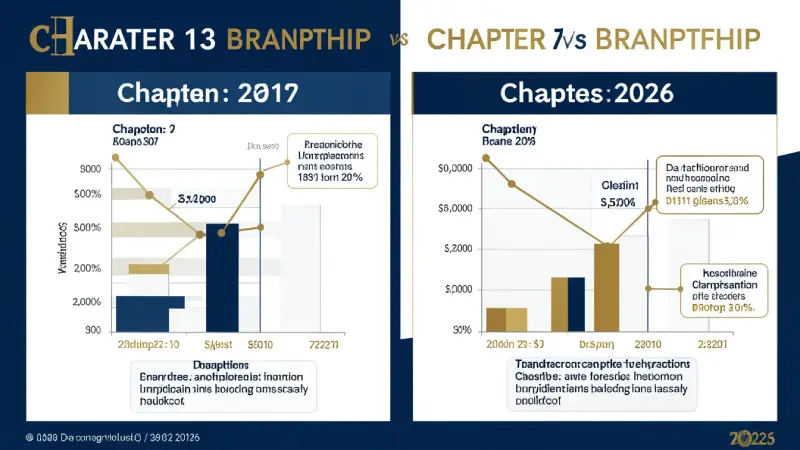
⚡ Quick Comparison — Chapter 7 vs Chapter 13 at a Glance
| Factor | Chapter 7 | Chapter 13 |
|---|---|---|
| Nickname | "Liquidation bankruptcy" | "Reorganization bankruptcy" |
| Who qualifies | Must pass means test (income below state median) | Regular income required · Debt limits apply |
| Timeline | 3–6 months from filing to discharge | 3–5 year repayment plan |
| Debt elimination | Most unsecured debt eliminated immediately | Repay portion over 3–5 years then discharge |
| Property | Non-exempt property sold by trustee | Keep all property — pay equivalent value |
| Home / mortgage | Cannot catch up arrears — risk foreclosure | Can cure mortgage arrears over plan period |
| Car loans | Surrender or reaffirm — no modification | Can cramdown car loan to current value |
| Credit report | Stays 10 years | Stays 7 years |
| Attorney fees (est.) | $1,000–$2,500 | $3,000–$5,500 |
| Filing fee 2026 | $338 | $313 |
| Re-filing wait (Chapter 7 again) | 8 years after prior Chapter 7 | 4 years after prior Chapter 7 |
| Best for | Low income · Unsecured debt · Fresh start | Save home · Higher income · Secured debts |
📘 Chapter 7 Bankruptcy — Complete Guide 2026
What Is Chapter 7?
Chapter 7 bankruptcy — often called "liquidation bankruptcy" or "straight bankruptcy" — is the fastest and most complete form of personal bankruptcy relief available under US law. A bankruptcy trustee reviews your assets, liquidates any non-exempt property, and distributes the proceeds to creditors. In exchange, most of your unsecured debt is permanently discharged — eliminated by court order — typically within 3–6 months of filing.
In practice, the vast majority of Chapter 7 cases are "no-asset cases" — meaning the debtor has no non-exempt property for the trustee to liquidate. In these cases, creditors receive nothing, but the debt is still discharged. This is the fresh start that Chapter 7 is famous for.
The Chapter 7 Process — Timeline
- Credit counseling (required): Complete an approved credit counseling course within 180 days before filing — costs $15–$50, takes 1–2 hours online.
- File petition and schedules: Your attorney (or you, if filing pro se) files the petition, schedules of assets and liabilities, statement of financial affairs, and means test calculation. Filing fee: $338.
- Automatic stay takes effect immediately: All collection calls, wage garnishments, lawsuits, and foreclosure proceedings stop the moment you file. This is one of the most immediately valuable aspects of bankruptcy.
- 341 Meeting of Creditors (typically 3–6 weeks after filing): A brief meeting with the bankruptcy trustee — usually 5–10 minutes. You answer questions about your finances under oath. Creditors can attend but rarely do.
- Trustee review (60 days after 341 meeting): The trustee has 60 days after the 341 meeting to object to your discharge or identify non-exempt assets. In most consumer cases, this period passes without incident.
- Discharge granted (approximately 3–6 months after filing): The court issues your discharge order — permanently eliminating all dischargeable debts. Creditors are legally prohibited from ever attempting to collect these debts again.
- Debtor education course: Required before discharge — covers personal financial management. $15–$50, 2 hours online.
Who Should File Chapter 7?
- Your income is below your state's median income (or you pass the full means test)
- Your primary debts are unsecured — credit cards, medical bills, personal loans
- You don't have significant non-exempt property you need to protect
- You are not behind on a mortgage you want to save
- You want the fastest possible debt relief — 3–6 months vs 3–5 years
- You have no realistic ability to repay your debts over any period
Chapter 7 Debt Limits
There are no debt limits for Chapter 7 — any amount of qualifying debt can be discharged. The only qualification is the means test (income-based).
📗 Chapter 13 Bankruptcy — Complete Guide 2026
What Is Chapter 13?
Chapter 13 bankruptcy — called "reorganization bankruptcy" or the "wage earner's plan" — allows individuals with regular income to restructure their debts under a 3–5 year court-approved repayment plan. Unlike Chapter 7, you keep all your property. Instead, you pay your disposable income into the plan each month, which the trustee distributes to creditors. At the end of the plan period, remaining eligible unsecured debt is discharged.
Chapter 13 is fundamentally about control and protection — protecting your home from foreclosure, protecting your car, protecting non-exempt assets, and managing your debts on your own timeline rather than a creditor's.
The Chapter 13 Process — Timeline
- Credit counseling (required): Same as Chapter 7 — 180-day window before filing.
- File petition and proposed repayment plan: Your attorney files the petition, all financial schedules, and a proposed 3–5 year repayment plan. Filing fee: $313.
- Automatic stay: Same immediate effect as Chapter 7 — all collection activity stops.
- 341 Meeting of Creditors (3–6 weeks): Similar brief meeting with the Chapter 13 trustee.
- Plan confirmation hearing (45–90 days after filing): The bankruptcy judge reviews and confirms your repayment plan. Creditors can object — your attorney responds. Most plans are confirmed with minor modifications.
- Monthly plan payments (36–60 months): You make monthly payments to the Chapter 13 trustee throughout the plan period. The trustee distributes these payments to creditors according to the confirmed plan.
- Discharge (after completing all plan payments): Once you complete all plan payments and meet all requirements (including the debtor education course), the court grants your discharge for any remaining eligible unsecured debt.
Chapter 13 Debt Limits — 2026
Chapter 13 has debt eligibility limits. As of 2026:
- Secured debts: No limit (updated by SBRA 2019 — previously $1,257,850)
- Unsecured debts: No limit (updated by SBRA 2019 — previously $419,275)
Note: The Bankruptcy Threshold Adjustment and Technical Corrections Act (2022) temporarily eliminated debt limits for Chapter 13 through June 2024, then reinstated them. Congress has continued to adjust these provisions — confirm current limits with your attorney at time of filing.
Who Should File Chapter 13?
- You are behind on mortgage payments and want to save your home from foreclosure
- Your income exceeds the Chapter 7 means test threshold
- You have non-exempt property (a second home, investments, business equipment) you want to protect
- You want to pay off non-dischargeable debts (certain taxes, student loans in some cases) through the plan
- You need to strip a second mortgage or home equity loan (lien stripping — only available in Chapter 13)
- You want to "cramdown" a car loan — reduce the loan balance to the vehicle's current market value
- You filed Chapter 7 within the past 8 years and need bankruptcy protection again
🧮 The Means Test — Do You Qualify for Chapter 7? (2026 Thresholds)
The means test is a two-part calculation designed to prevent high-income earners from filing Chapter 7. If you pass, you qualify for Chapter 7. If you fail, you must file Chapter 13 (or dismiss your case).
Part 1 — Income Comparison to State Median
Calculate your average monthly income for the 6 months before filing × 12 = annual income. Compare to your state's median income for your household size. If your income is at or below the state median, you automatically pass the means test and qualify for Chapter 7.
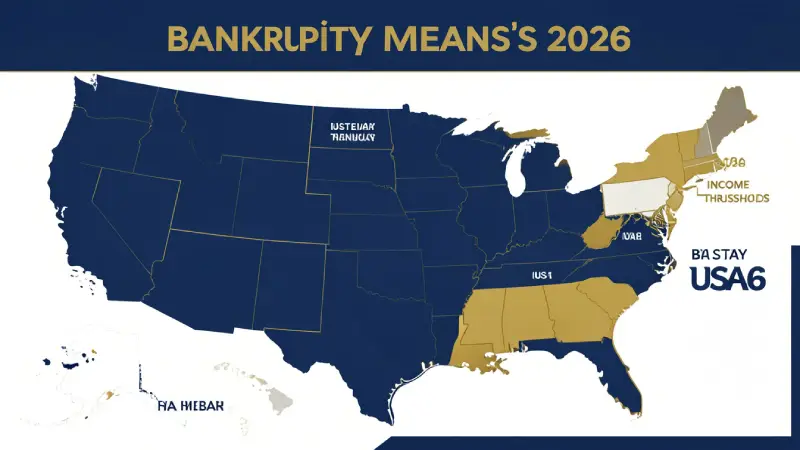
2026 Means Test — National Median Income Thresholds
| Household Size | National Median (2026) | CA | TX | FL | NY | IL |
|---|---|---|---|---|---|---|
| 1 person | $59,610 | $72,480 | $55,290 | $56,180 | $68,950 | $61,340 |
| 2 people | $78,241 | $95,820 | $72,640 | $73,810 | $90,480 | $80,620 |
| 3 people | $89,490 | $105,240 | $82,150 | $84,290 | $101,640 | $92,870 |
| 4 people | $108,720 | $124,680 | $98,840 | $101,320 | $120,150 | $111,430 |
| 5 people | $118,620 | $134,580 | $108,840 | $111,320 | $130,150 | $121,430 |
Part 2 — If Your Income Exceeds the Median
If your income exceeds the state median, you do not automatically fail. Part 2 of the means test calculates your "disposable monthly income" — income minus allowed expenses (IRS national standards for food, clothing, healthcare + actual housing, transportation, and certain other expenses). If this disposable income figure is below a threshold after the deductions, you still qualify for Chapter 7.
Part 2 calculations are complex and require a bankruptcy attorney or experienced preparer to complete accurately. Many people who initially appear to fail the means test qualify after the Part 2 expense deductions are correctly applied.
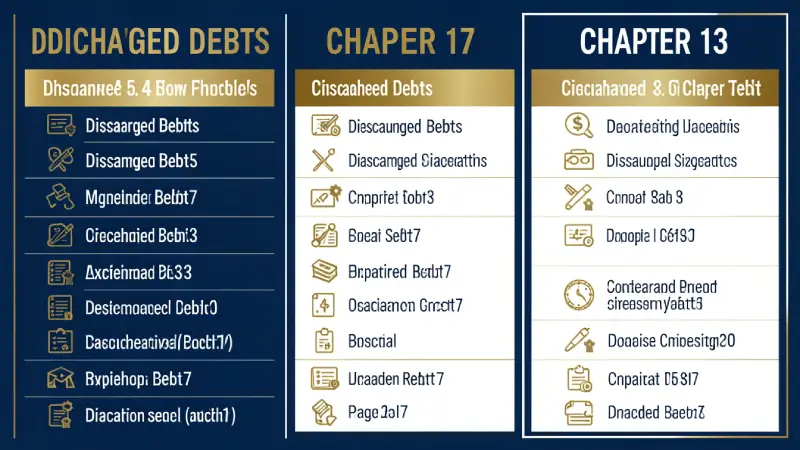
📋 Which Debts Are Discharged — Chapter 7 vs Chapter 13
| Debt Type | Chapter 7 | Chapter 13 | Notes |
|---|---|---|---|
| Credit card debt | ✅ Discharged | ✅ Discharged (remaining after plan) | Fraud exceptions apply |
| Medical bills | ✅ Discharged | ✅ Discharged (remaining after plan) | One of the cleanest discharges |
| Personal loans | ✅ Discharged | ✅ Discharged (remaining after plan) | — |
| Utility arrears | ✅ Discharged | ✅ Can be paid through plan | — |
| Mortgage arrears | ❌ Not cured — risk foreclosure | ✅ Cured over plan period | Key Chapter 13 advantage |
| Car loan arrears | ❌ Surrender or reaffirm | ✅ Cramdown possible | Cramdown: reduce to car's current value |
| Student loans | ❌ Not discharged (except hardship) | ❌ Not discharged (except hardship) | Brunner test for hardship discharge |
| Child support / alimony | ❌ Never discharged | ❌ Never discharged — must be paid in full | Priority debt in Chapter 13 |
| Tax debt (3+ years old) | ✅ May be dischargeable | ✅ Can be paid through plan | Complex rules — consult attorney |
| Tax debt (<3 years old) | ❌ Not discharged | ✅ Paid through plan as priority debt | Must be paid in full in Chapter 13 |
| Debt from fraud | ❌ Not discharged | ❌ Not discharged | Creditor must file adversary proceeding |
| Criminal fines / restitution | ❌ Not discharged | ❌ Not discharged | — |
| 2nd mortgage (lien stripping) | ❌ Not available | ✅ Available if home value < 1st mortgage | Major Chapter 13 advantage |
🏠 Property Exemptions — What You Can Keep in Bankruptcy 2026
Both Chapter 7 and Chapter 13 allow you to protect certain property through exemptions. In Chapter 7, the trustee can sell non-exempt property. In Chapter 13, you keep all property but must pay creditors at least the value of non-exempt assets through your plan.
Key Federal Exemptions (2026 — Adjusted April 2025)
| Exemption | Federal Amount (2026) | Notes |
|---|---|---|
| Homestead exemption | $27,900 | Equity in primary residence protected up to this amount |
| Motor vehicle | $4,450 | Equity in one vehicle protected |
| Household goods & furnishings | $700 per item / $14,875 total | Clothing, appliances, furniture |
| Jewelry | $1,875 | — |
| Tools of trade | $2,800 | Equipment needed for your job or business |
| Retirement accounts (401k, IRA) | Unlimited (ERISA-qualified) / $1,512,350 (IRAs) | One of the most important exemptions |
| Wildcard exemption | $1,475 + unused homestead | Apply to any property |
| Life insurance cash value | $14,875 | — |
🏡 Your Home in Bankruptcy — Critical Differences 2026
How bankruptcy affects your home is often the deciding factor between Chapter 7 and Chapter 13. Here's the critical analysis:
Chapter 7 and Your Home
In Chapter 7, if you are current on your mortgage and your equity is within your homestead exemption, you can keep your home by continuing to make payments (reaffirming the mortgage). However, Chapter 7 cannot cure mortgage arrears — if you are behind on payments, filing Chapter 7 only temporarily delays foreclosure through the automatic stay. Once the stay lifts (or the lender gets relief from stay), foreclosure proceeds.
Bottom line for Chapter 7 and home: Current on mortgage → likely fine. Behind on mortgage → Chapter 13 is usually necessary to save the home.
Chapter 13 and Your Home
Chapter 13 is specifically designed to save homes from foreclosure. The plan allows you to:
- Cure mortgage arrears — spread your past-due mortgage payments over 3–5 years through the plan, while continuing current mortgage payments outside the plan
- Strip a second mortgage or HELOC — if your home is worth less than the balance on your first mortgage (underwater), a second mortgage can be treated as unsecured debt and discharged at the end of the plan (lien stripping)
- Prevent foreclosure — the automatic stay immediately stops any pending foreclosure sale
| Situation | Chapter 7 | Chapter 13 |
|---|---|---|
| Current on mortgage, equity within exemption | ✅ Keep home — continue payments | ✅ Keep home — continue payments |
| Behind on mortgage (arrears) | ❌ Cannot cure arrears — foreclosure risk | ✅ Cure arrears over 3–5 year plan |
| Home equity exceeds exemption | ❌ Trustee may force sale | ✅ Pay equivalent to non-exempt equity through plan |
| Second mortgage / underwater home | ❌ Lien stripping not available | ✅ Strip second mortgage if underwater |
| Foreclosure sale already scheduled | ⚠️ Temporary stay — does not resolve arrears | ✅ Stops sale — cure arrears through plan |
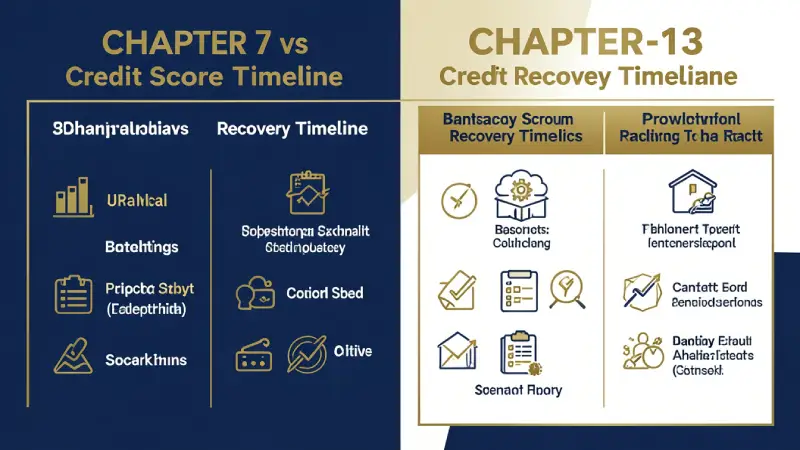
📉 Impact on Your Credit Score — Chapter 7 vs Chapter 13
| Factor | Chapter 7 | Chapter 13 |
|---|---|---|
| Stays on credit report | 10 years from filing date | 7 years from filing date |
| Immediate credit score impact | 100–200 point drop typically | 100–200 point drop typically |
| Credit score recovery timeline | 2–4 years to rebuild to 700+ | 2–3 years after discharge (5–8 years total) |
| New credit after filing | Secured cards available immediately | Court approval needed for new credit during plan |
| Mortgage eligibility after filing | FHA: 2 years post-discharge · Conv: 4 years | FHA: 1 year into plan (with court approval) |
| Auto loan after filing | Available 1–2 years post-discharge (higher rate) | Requires court approval during plan |
💰 Real Costs — Bankruptcy Filing Fees & Attorney Fees 2026
| Cost Item | Chapter 7 | Chapter 13 |
|---|---|---|
| Court filing fee | $338 | $313 |
| Credit counseling course | $15–$50 | $15–$50 |
| Debtor education course | $15–$50 | $15–$50 |
| Attorney fees (average) | $1,000–$2,500 | $3,000–$5,500 |
| Total estimated cost | $1,368–$2,938 | $3,343–$5,913 |
| Can attorney fee be paid through plan? | No — paid upfront | ✅ Yes — often paid through Chapter 13 plan |
| Fee waiver available? | ✅ Yes — income below 150% poverty line | ❌ No — installment plan available |
⚖️ Do You Need a Bankruptcy Attorney? Honest Answer.
Chapter 7 — Can You File Pro Se (Without an Attorney)?
Technically yes — and some people do file Chapter 7 without an attorney, particularly in straightforward cases with minimal assets and purely unsecured debt. The bankruptcy forms are standardised, and the court system has self-help resources. However, errors in the means test calculation, schedules, or exemption claims can result in case dismissal, loss of your discharge, or the trustee recovering assets you intended to protect. A $1,500 attorney fee that protects $30,000 in exempt assets is excellent value.
Chapter 13 — Do Not File Without an Attorney
Chapter 13 is genuinely complex — drafting a confirmable plan, calculating disposable income correctly, navigating creditor objections, modifying plans when circumstances change, and managing the 3–5 year plan period all require professional expertise. The statistical evidence is stark: only about 33% of pro se Chapter 13 cases successfully complete to discharge, compared to approximately 60% of attorney-represented cases. The complexity of Chapter 13 makes professional representation effectively mandatory for a successful outcome.
How to Find a Bankruptcy Attorney
- National Association of Consumer Bankruptcy Attorneys (NACBA) — nacba.org — directory of consumer bankruptcy specialists
- American Bankruptcy Institute (ABI) — abi.org — find certified specialists
- Legal aid societies — free bankruptcy assistance for low-income filers in most states
- State bar referral services — your state bar can refer vetted bankruptcy attorneys
- Free consultations — most bankruptcy attorneys offer a free 30-minute consultation
❓ Frequently Asked Questions — Chapter 7 vs Chapter 13 Bankruptcy 2026
Will I lose my house if I file bankruptcy?
Not necessarily — it depends on which chapter you file and your mortgage situation. In Chapter 7, if you are current on your mortgage and your home equity is within your state's homestead exemption, you can keep your home by reaffirming the mortgage and continuing payments. However, Chapter 7 cannot cure mortgage arrears — if you are behind on payments, filing Chapter 7 only delays foreclosure temporarily. In Chapter 13, you can cure mortgage arrears over 3–5 years through your repayment plan, effectively stopping foreclosure permanently as long as you complete the plan. If saving your home from foreclosure is your priority, Chapter 13 is almost always the right choice.
Can bankruptcy eliminate student loan debt?
In most cases, no — student loans are not dischargeable in either Chapter 7 or Chapter 13 under standard rules. However, the "undue hardship" exception (Brunner test) allows discharge of student loans if you can prove: (1) you cannot maintain a minimal standard of living for yourself and dependants based on current income and expenses; (2) your financial situation is likely to persist for a significant portion of the loan repayment period; (3) you have made good-faith efforts to repay the loans. This is a high bar — historically met by only 1–2% of filers who sought discharge. However, 2024–2025 saw a shift in judicial interpretation in some circuits, with more courts applying a "totality of circumstances" test instead of the strict Brunner test. The Biden-era student loan discharge guidance (partially reversed in 2025) created additional pathways. Consult a bankruptcy attorney specifically experienced in student loan discharge if this is your primary concern.
How long does bankruptcy stay on my credit report?
A Chapter 7 bankruptcy filing stays on your credit report for 10 years from the filing date. A Chapter 13 bankruptcy stays on your credit report for 7 years from the filing date. These are the maximum periods under the Fair Credit Reporting Act (FCRA) — some credit bureaus remove the entry sooner, but you cannot force early removal of an accurate bankruptcy entry. The practical impact on credit diminishes significantly after 2–3 years as you rebuild credit through secured cards, on-time payments, and responsible credit use. Most bankruptcy filers can qualify for mortgage financing 2–4 years after Chapter 7 discharge or 1–2 years into a Chapter 13 plan (with court approval).
What is the automatic stay in bankruptcy?
The automatic stay is one of the most powerful and immediate benefits of filing bankruptcy — it goes into effect the moment you file, without any court hearing. The automatic stay immediately stops: all collection calls and letters; wage garnishments; bank account levies; civil lawsuits (pauses them — doesn't dismiss them); foreclosure proceedings; utility shutoffs (for 20 days); and repossession actions. Creditors who violate the automatic stay can be held in contempt of court and face sanctions. The stay remains in effect throughout the bankruptcy case — until discharge in Chapter 7, or until the plan is completed in Chapter 13. Creditors can file motions for "relief from stay" if they have secured interests (like a mortgage or car loan) that aren't being paid — the court then decides whether to maintain or lift the stay for that specific creditor.
Can I file bankruptcy if I'm self-employed?
Yes — self-employed individuals can file both Chapter 7 and Chapter 13 bankruptcy. However, self-employment creates complexity in the means test calculation for Chapter 7, because business income and expenses must be carefully documented over the 6-month pre-filing period. Business expenses can significantly reduce your "current monthly income" for means test purposes — making Chapter 7 available to many self-employed people who might initially appear to earn too much. For Chapter 13, self-employed filers must demonstrate "regular income" — which can include business income, though it must be shown to be sufficiently stable to support a 3–5 year repayment plan. A bankruptcy attorney with self-employment experience is strongly recommended.
How soon after bankruptcy can I buy a home?
After Chapter 7 discharge: FHA loans are available 2 years post-discharge; conventional (Fannie Mae/Freddie Mac) loans require 4 years post-discharge; VA loans for veterans require 2 years post-discharge; USDA loans require 3 years post-discharge. After Chapter 13 discharge: FHA loans are available 2 years after discharge (and in some cases 1 year into an active plan with court approval and 12 months of on-time plan payments); conventional loans require 2 years post-discharge. These waiting periods apply regardless of how well you rebuild your credit — they are lender eligibility requirements, not just credit score thresholds. Rebuilding credit aggressively during the waiting period significantly improves the rate you'll qualify for when you become eligible.
✅ Our Verdict — Chapter 7 vs Chapter 13: Which Is Right for You?
Choose Chapter 7 if: You pass the means test, your primary debts are unsecured (credit cards, medical bills), you are current on any secured debts you want to keep, and you want the fastest possible debt relief. Chapter 7's 3–6 month timeline and complete unsecured debt discharge make it the most powerful fresh start available in the US legal system for those who qualify.
Choose Chapter 13 if: You are behind on your mortgage and want to save your home, your income exceeds the Chapter 7 means test threshold, you have non-exempt assets to protect, you want to strip a second mortgage, or you need to discharge debts that aren't available in Chapter 7. Chapter 13 requires more commitment — 3–5 years of plan payments — but provides tools that Chapter 7 simply does not have.
When in doubt: Consult a bankruptcy attorney. Most offer free 30-minute consultations. The right chapter — chosen with professional guidance — can mean the difference between losing your home and saving it, between 10 years on your credit report and 7, and between a plan you can sustain and one that fails.
| Your Situation | Best Choice |
|---|---|
| Income below state median, mainly credit card/medical debt | Chapter 7 |
| Behind on mortgage, want to save home | Chapter 13 |
| Income too high for Chapter 7 means test | Chapter 13 |
| Have non-exempt assets to protect | Chapter 13 |
| Need fastest possible debt relief | Chapter 7 |
| Have second mortgage on underwater home | Chapter 13 (lien stripping) |
| Car loan — want to reduce to current value | Chapter 13 (cramdown) |
| Filed Chapter 7 within past 8 years | Chapter 13 |
| Old income tax debt (>3 years) | Chapter 7 (may discharge) |
| Recent tax debt — need structured payoff | Chapter 13 |
Disclaimer: This article is for informational purposes only and does not constitute legal advice. Bankruptcy law is complex and state-specific. Always consult a licensed bankruptcy attorney before filing. Means test income thresholds are current as of November 2025 IRS update and are subject to change. Filing fees and exemption amounts accurate as of March 2026. Nexuora does not provide legal services and does not receive referral fees from any attorney or firm. Updated March 2026.

Ahmada Ndao is a financial research analyst and independent journalist
specializing in US consumer finance, legal rights, and insurance markets.
With over 5 years covering American financial products, he has helped
thousands of readers navigate complex insurance decisions, find the right
legal representation, and optimize their credit strategies. His research
methodology combines primary data analysis, direct outreach to industry
professionals, and continuous monitoring of federal regulatory changes.
Ahmada’s work has been cited by financial communities across the US and
reviewed by licensed attorneys and insurance professionals for accuracy.