Last updated: September 22, 2026
Nexuora is reader-supported. This article is for educational purposes only and is not individualized financial or insurance advice. Rates, discounts, fees and program terms change and vary by state, insurer and driver profile — always confirm current details directly with Progressive or Allstate, or with a licensed agent, before enrolling.
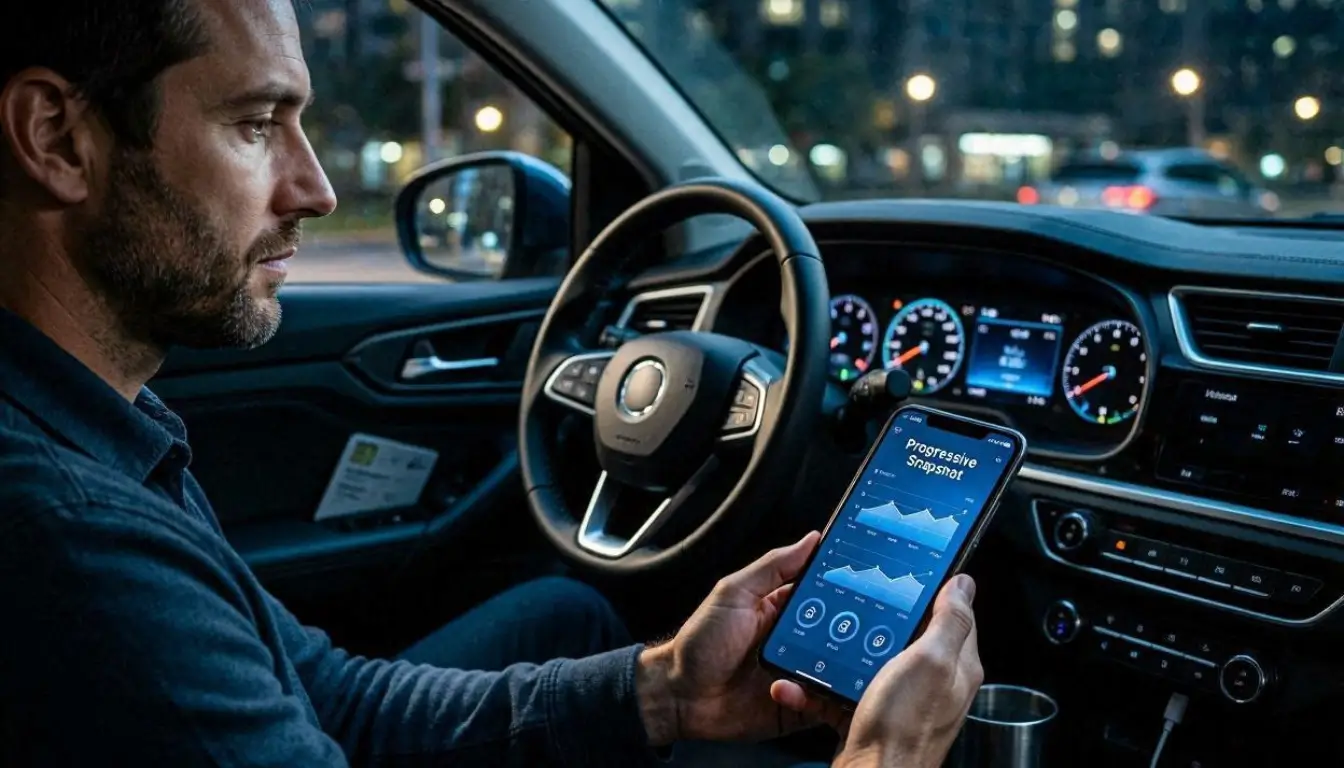
Usage-based insurance (telematics) programs remain one of the most talked-about ways U.S. drivers try to cut rising auto insurance costs in 2026. Two of the longest-running and most widely used programs are Progressive Snapshot and Allstate Drivewise. Both promise a personalized rate based on how, how much, and when you drive — but they price, track and reward safe driving differently, and each comes with trade-offs most comparison pages gloss over.
This guide breaks down what each program actually tracks, realistic (not just advertised) savings, the privacy trade-offs, state availability, mobile app experience, and which type of driver each one suits best.
If you're comparing auto insurance companies more broadly in 2026, see our full GEICO vs. State Farm comparison.
Key Takeaways
- Progressive Snapshot generally rewards low-mileage drivers, remote workers and drivers who avoid late-night trips.
- Allstate Drivewise is app-only (no plug-in device option) and leans heavily on a smartphone-based safe-driving score.
- Neither program advertises identical numbers to everyone — Progressive discloses average dollar savings rather than a flat percentage, while Allstate advertises a percentage range.
- Both programs can raise your rate for risky driving; Progressive has said roughly one in five Snapshot participants sees an increase.
- Snapshot is not available in California, and its sign-up discount doesn't apply in Hawaii or New York. Drivewise is unavailable in California and Alaska.
- Drivers should review each program's privacy and data-collection policy before enrolling.
What Is Usage-Based Insurance?
Usage-based insurance (UBI), also called telematics insurance, tracks real driving behavior through:
- Smartphone apps
- Plug-in OBD-II devices
- Built-in connected-vehicle telematics
Insurers use that data — typically mileage, hard braking, rapid acceleration, speed, phone handling and time of day — to adjust pricing instead of relying only on traditional rating factors like age, credit-based insurance score or ZIP code.
Looking for a broader comparison of telematics providers? See our complete guide to the Best Usage-Based Car Insurance in the USA (2026 Guide).
External source: Insurance Information Institute — What Is Usage-Based Insurance
Progressive Snapshot Overview
Official Snapshot page: progressive.com/auto/discounts/snapshot
Snapshot is one of the longest-running telematics programs in the U.S. Drivers can participate through the mobile app or a plug-in device (device availability varies by state).
Snapshot mainly rewards:
- Lower mileage
- Smooth, gradual braking
- Limited late-night driving
- Minimal phone handling while driving
Progressive doesn't advertise a single maximum percentage discount. Instead, it discloses average dollar savings: reported figures for the initial sign-up discount have ranged from roughly $47–$169 depending on the source and time period, with average savings at renewal for safe drivers reported between roughly $150 and $322 a year.[1][2] Your own results depend entirely on your driving data and state.
Progressive has also disclosed that about 1 in 5 Snapshot participants sees a rate increase rather than a discount, based on their driving data.[3]
Availability: Snapshot is offered in every state except California. The sign-up discount specifically is not available in Hawaii or New York, though drivers there can still earn a renewal discount based on driving results.[4]
Allstate Drivewise Overview
Drivewise is Allstate's smartphone-based telematics program (there is no plug-in device option). It runs through the Allstate Mobile app and tracks trips automatically once activated.
Drivewise monitors:
- Speed
- Hard braking
- Phone handling
- Time of day
- Trip consistency
Allstate advertises an initial enrollment discount of up to 10% just for signing up, plus a safe-driving discount of up to 40% at renewal.[5][6] Several independent review sites note that realistic average savings tend to land closer to 20–25% once you factor in typical driving scores.[7] Allstate has stated Drivewise is designed not to raise your base rate for poor driving in most states, but some state-specific programs and third-party reviews note exceptions — confirm the rules for your state with an agent before enrolling.
Availability: Drivewise is not available in California or Alaska.[8]
Snapshot vs. Drivewise — Key Differences
| Feature | Progressive Snapshot | Allstate Drivewise |
|---|---|---|
| How discount is advertised | Average dollar savings (not a flat %) | Up to 10% at sign-up, up to 40% at renewal |
| Tracking method | App or plug-in device | App only |
| Monitors phone usage | Yes | Yes |
| Weighs night driving heavily | Yes | Yes, moderately |
| Can rates increase? | Yes — about 1 in 5 participants | Uncommon; varies by state |
| Not available in | California (device/app); HI & NY (sign-up discount only) | California, Alaska |
| Non-customers can try it free | Yes, via Snapshot Road Test (select states) | Yes, Drivewise for non-Allstate customers (rewards points) |
Snapshot vs. Drivewise: Driver Profile Comparison
| Driver Type | Snapshot | Drivewise |
|---|---|---|
| Remote worker / low mileage | Strong fit | Good fit |
| Daily daytime commuter | Good fit | Strong fit |
| Frequent night driver | Weak fit | Fair fit |
| Young / new driver | Good fit | Good fit |
| Delivery / rideshare driver | Weak fit | Weak fit |
| Already bundled with the insurer | Good fit | Strong fit |
How Much Can Drivers Actually Save in 2026?
Advertised numbers (a flat percentage from Allstate, or average dollar figures from Progressive) describe best-case outcomes. Most drivers fall into one of three tiers:
Higher savings potential
- Remote workers and low-mileage drivers
- Daytime-only, predictable commuters
- Drivers who already avoid hard braking and phone use behind the wheel
Moderate savings potential
- Average suburban commuters
- Families with occasional long trips
Lower savings potential (or risk of an increase)
- Frequent night drivers
- Delivery or rideshare drivers
- Drivers with frequent hard-braking or speeding events
For many households, usage-based insurance can meaningfully lower a premium, but neither program guarantees savings, and both can technically raise a rate for risky driving patterns.
How We Evaluated Snapshot and Drivewise
This comparison was built from publicly available information published by Progressive and Allstate directly, along with independent review coverage from Bankrate, NerdWallet, WalletHub, ValuePenguin and Insurify, and consumer-protection resources from the Insurance Information Institute (III) and the National Association of Insurance Commissioners (NAIC). We compared advertised discounts against independently reported real-world averages, tracking methods, state availability, privacy practices and the driver profiles each program tends to favor. Nexuora did not conduct proprietary surveys or first-hand telematics testing — figures above are drawn from insurer disclosures and third-party reporting, cited throughout.
The Privacy Trade-Off
Both programs collect more data than many drivers expect, including trip routes, timing, frequency, braking/acceleration patterns and, for app-based tracking, phone motion data. The National Association of Insurance Commissioners (NAIC) encourages consumers to review a telematics program's privacy policy — including how long data is retained and whether it's shared with third parties — before enrolling.
Who Should Avoid Telematics Insurance?
Usage-based insurance isn't a fit for every driver. You may want to think twice about Snapshot or Drivewise if you:
- Drive frequently at night
- Work in delivery or rideshare
- Have a long, unavoidable highway commute
- Use your phone hands-on while driving
- Are uncomfortable with location and driving-behavior data collection
Some drivers do see their rate increase after a monitoring period, so it's worth weighing that risk against the potential discount.
Considering an EV? Read This Next
Electric vehicle owners often face different insurance pricing because of higher repair and battery-replacement costs. If you drive a Tesla, Rivian, Hyundai Ioniq or Ford EV, see our Best Electric Vehicle Insurance USA 2026 guide, our Best Tesla Insurance Companies USA 2026 ranking, or our direct Tesla Insurance vs. GEICO 2026 comparison.
Snapshot vs. Drivewise for Young Drivers
Young drivers typically pay the highest premiums of any age group, and telematics programs can help teens and young adults earn a discount faster than waiting out traditional age-based pricing. The trade-off: aggressive driving — hard braking, speeding, frequent late-night trips — can work against a young driver's score just as easily as it can help it. Parents adding a teen to either program should periodically review the driving reports both apps provide.
Alternatives to Telematics-Based Discounts
If you're not comfortable with usage-based tracking, both insurers — and most major carriers — offer other ways to reduce a premium, including multi-policy (bundling) discounts, good-student discounts, multi-car discounts, paid-in-full discounts, and defensive-driving-course discounts. Comparing quotes across insurers directly, rather than relying on a single telematics discount, is often the larger lever for lowering your overall cost.
Common Mistakes Drivers Make With Telematics Programs
- Assuming the advertised maximum discount (30–40%) is typical rather than a best-case outcome
- Enrolling without checking whether the program is even available, or fully available, in their state
- Not reading the data-retention and sharing sections of the privacy policy
- Driving normally for the first week, then reverting to old habits once curiosity fades — most programs score the full monitoring period
- Assuming a low score guarantees a rate increase rather than confirming their state's specific rules
Which Program Should You Choose?
Progressive Snapshot may be a better fit if you:
- Drive relatively few miles
- Rarely drive late at night
- Want the option of a plug-in device instead of an app
- Want detailed trip-by-trip analytics
Allstate Drivewise may be a better fit if you:
- Want a simpler, app-only setup
- Drive mostly consistent daytime routes
- Are already bundled with Allstate
- Prefer a program with a stated goal of not raising your base rate for poor scores
For most low-mileage, daytime drivers, both programs can produce meaningful savings — the better choice usually comes down to whether you're already insured with one of the two carriers and whether you'd rather use an app or a plug-in device. Usage-based insurance works best for disciplined, predictable drivers; for everyone else, a traditional policy or a broader rate comparison may still offer better value.
If you're evaluating more than two insurers, see our Allstate vs. GEICO vs. Progressive vs. State Farm 2026 comparison, or our GEICO vs. State Farm 2026 guide.
FAQ
Is Progressive Snapshot worth it for low-mileage drivers?
Often, yes. Low-mileage, daytime drivers tend to see the strongest results since Snapshot weighs mileage and night driving heavily.
Does Allstate Drivewise track every trip?
Drivewise tracks trips through the Allstate Mobile app automatically once activated, monitoring speed, braking, phone handling and time of day.
Can telematics insurance lower premiums for young drivers?
It can. Consistently safe driving can help a young driver qualify for a lower rate faster than relying on age-based pricing alone, though risky habits can offset the benefit.
Which program is easier to use?
Drivewise may feel simpler to set up since it's app-only. Snapshot offers a plug-in device as an alternative for drivers who prefer not to use a smartphone app.
Are Snapshot and Drivewise available in every state?
No. Snapshot is unavailable in California, and its sign-up discount doesn't apply in Hawaii or New York. Drivewise is unavailable in California and Alaska. Always confirm current availability directly with the insurer.
Can nighttime driving reduce a telematics discount?
Yes. Both programs weigh time of day, and frequent late-night trips can lower the eventual discount on either program.
Can either program raise my rate?
Yes, in some cases. Progressive has disclosed that roughly one in five Snapshot participants sees a rate increase based on driving data. Allstate has said Drivewise is generally designed not to raise a driver's base rate, though this varies by state — confirm your state's rules before enrolling.
Is telematics insurance a good fit for privacy-conscious drivers?
Not necessarily. Both programs collect detailed trip and location data. Privacy-conscious drivers should read each program's data policy carefully, or consider a non-telematics discount instead.
Sources
- Progressive — Snapshot official program page and state availability list
- Allstate — Drivewise program disclosures (via independent reviewer summaries)
- Insurance Information Institute (III) — usage-based insurance overview
- National Association of Insurance Commissioners (NAIC) — telematics privacy guidance
- Bankrate, NerdWallet, WalletHub, ValuePenguin, Insurify, AutoInsurance.com — independent program reviews (2026)
Data checked and article substantively updated September 22, 2026. Rates, discounts, fees, availability and program rules vary by state and change over time — verify current terms directly with Progressive or Allstate before enrolling.

Ahmada Ndao is a financial research analyst and independent journalist
specializing in US consumer finance, legal rights, and insurance markets.
With over 5 years covering American financial products, he has helped
thousands of readers navigate complex insurance decisions, find the right
legal representation, and optimize their credit strategies. His research
methodology combines primary data analysis, direct outreach to industry
professionals, and continuous monitoring of federal regulatory changes.
Ahmada’s work has been cited by financial communities across the US and
reviewed by licensed attorneys and insurance professionals for accuracy.